
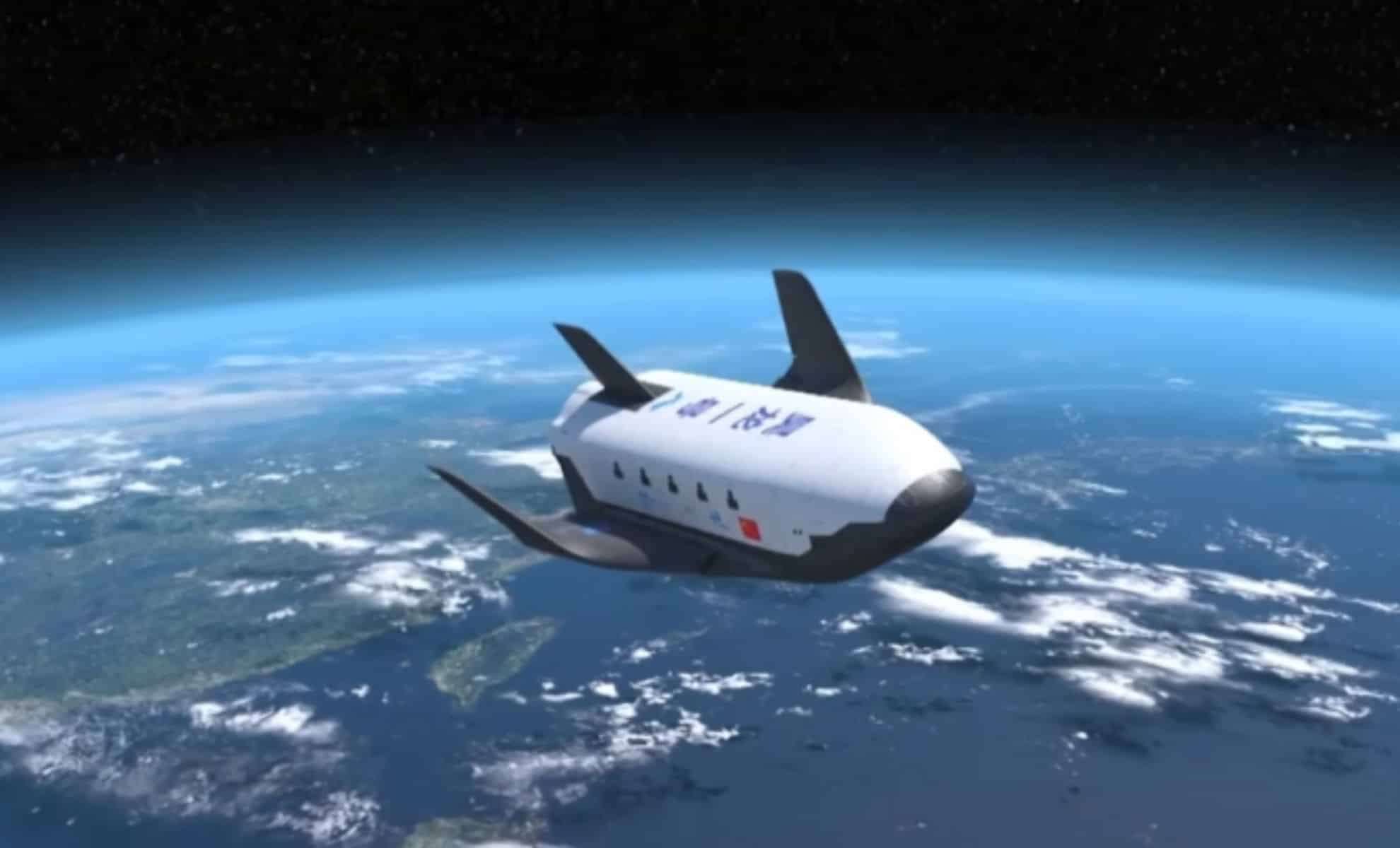
China has introduced Haolong, an innovative reusable cargo spacecraft engineered to ferry supplies to its Tiangong space station. This cutting-edge shuttle aims to offer an affordable and environmentally friendly alternative to traditional cargo ships. Currently in the engineering validation phase, Haolong will also be showcased at the upcoming 15th China Air Show. The design reflects China’s push to strengthen its leadership in space while enhancing Tiangong support with advanced, frequent resupply capabilities.
Advancing Reusable Spacecraft Technology
Developed by the Chengdu Aircraft Design and Research Institute under the Aviation Industry Corporation of China (AVIC), Haolong represents a leap forward for China’s space exploration efforts. The craft combines features of both aircraft and spacecraft, enabling launches atop rockets and horizontal runway landings upon return. This hybrid model contrasts with China’s current single-use Tianzhou cargo ships, which burn up during re-entry. Haolong’s chief designer, Fang Yuanpeng, explained, “The Haolong space cargo shuttle is designed as a winged aircraft with an aerodynamic profile featuring a large wingspan and high lift-to-drag ratio. Its blunt-nosed body and expansive, swept-back delta wings merge spacecraft and aircraft traits, allowing rocket launches and runway landings like a conventional plane.”
Measuring 32.8 feet long with a 26.2-foot wingspan, Haolong is considerably smaller and lighter, weighing under 31,000 pounds. This reduction in size and mass makes it a cost-efficient option for steady supply runs to Tiangong. The streamlined form decreases fuel needs for launch, further cutting expenses. This economical approach aligns with China’s vision for affordable and sustainable space operations while supporting future expansion of Tiangong.

Enhancing Tiangong’s Supply Chain
Haolong’s development is a key milestone in China’s plan to sustain and expand the Tiangong station throughout the coming decade. The existing three-module complex is projected to grow to six modules, necessitating a highly capable logistics system to deliver supplies, scientific instruments, and experimental payloads regularly. Haolong will dock autonomously with Tiangong, enabling crew members to transfer cargo efficiently. After detaching, the shuttle will autonomously deorbit, re-enter the atmosphere, and land horizontally on a runway. Post-mission, it will undergo inspection and maintenance to prepare for subsequent flights.
This reusable design marks a major advancement in China’s space operations, greatly lowering the costs tied to deploying new cargo vessels for each mission. Although Tianzhou vessels provided reliable, single-use service, their inability to return to Earth limited their long-term sustainability. Haolong’s reusability offers the possibility of more frequent missions, ensuring consistent supply deliveries—a vital capability as China pursues more ambitious space projects.
Joining the Global Push for Reusable Spacecraft
China is part of a growing international movement toward reusable spacecraft. The U.S. company Sierra Space is developing the Dream Chaser, a cargo shuttle that similarly blends spacecraft and aircraft technologies to enable horizontal landings and streamlined recovery. Both Haolong and Dream Chaser demonstrate potential for establishing new benchmarks in cost-effective, reusable cargo transport, which may fuel greater collaboration and competition between nations.
As noted by Space.com, Haolong’s distinctive design and cost-conscious approach highlight China’s commitment to leading reusable spaceflight technology. By making Haolong central to Tiangong’s supply chain, China underscores the broader geopolitical stakes in mastering sustainable spacecraft. Haolong could substantially boost cargo capacity and operational flexibility in orbit, encouraging future partnerships and innovation within the global space industry.
Haolong is positioned to become a cornerstone of China’s space program, ensuring Tiangong remains well-equipped and operational. With ongoing plans to develop Tiangong further, Haolong’s reusable concept may inspire other space agencies and commercial ventures seeking sustainable solutions for orbital cargo transport.
- Categories:
- News








0 comments
Sign in to Comment