
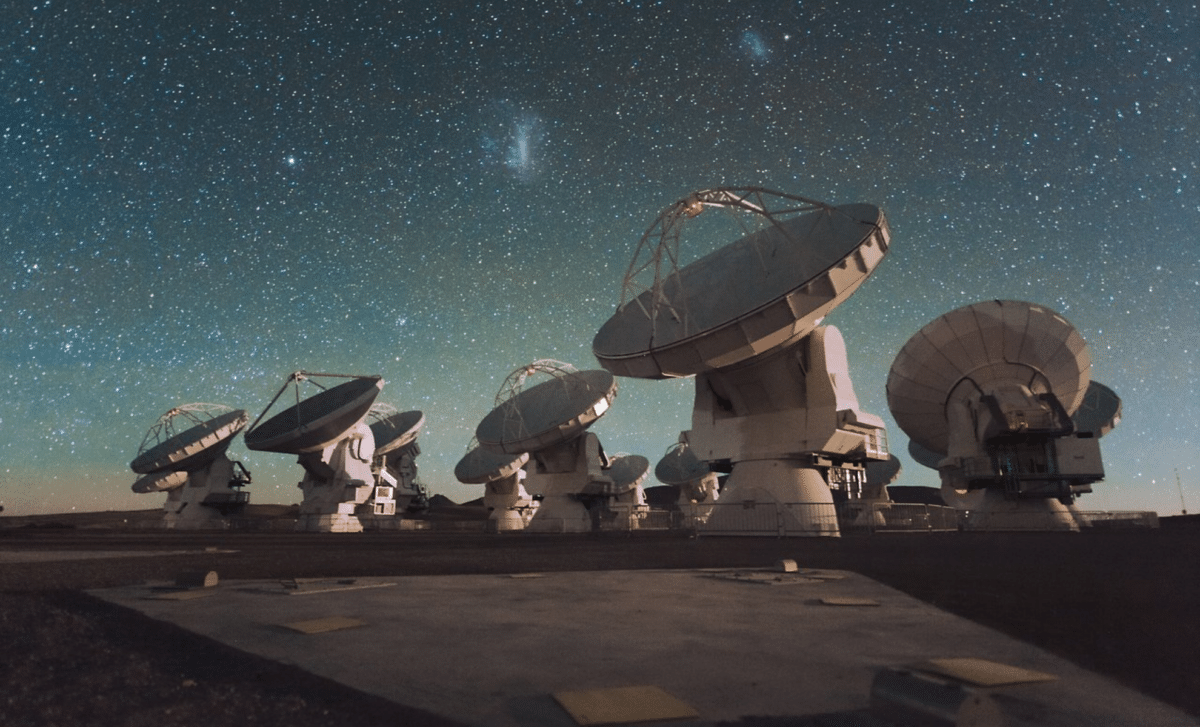
Perched high in the Chilean Andes, the Atacama Large Millimeter/Submillimeter Array (ALMA) has served as a vital instrument for astronomers exploring the farthest and most mysterious corners of space. Recently, its performance has been significantly enhanced by the integration of 145 advanced low-noise amplifiers (LNAs), elevating its ability to capture millimeter and submillimeter wavelengths.
Advanced Technology Elevates ALMA’s Detection Sensitivity
The remarkable capacity of ALMA to observe faint cosmic signals is largely due to its sensitivity. The new 145 LNAs designed for Band 2, which detects signals between 2.6 and 4.5 mm wavelengths, represent a major upgrade. These amplifiers enable ALMA to pick up the most subtle millimeter and submillimeter emissions from objects billions of light-years distant, thereby opening new windows into previously unseen phenomena. They are based on monolithic microwave integrated circuits (MMICs) constructed from indium gallium arsenide (InGaAs), a material known for its excellent amplification with very low noise interference.
Dr. Fabian Thome, lead of the subproject at Fraunhofer IAF, highlights the importance of these upgrades: “Our amplifiers achieve an average noise temperature of just 22 K, unrivaled anywhere on the globe.” This ultra-low noise level is critical for enhancing the precision of ALMA’s receivers, enabling them to detect signals from the deepest reaches of the cosmos. This breakthrough further strengthens ALMA’s role in unraveling the mysteries surrounding the universe’s birth.

Low-Noise Amplifiers: The Backbone of Radio Telescope Precision
Low-noise amplifiers (LNAs) serve as fundamental components within radio telescopes; their job is to boost weak incoming signals while keeping added noise to a bare minimum. For ALMA, LNAs sit at the forefront of the receiver chain and play a decisive role in determining the quality of the collected data. Hence, the effectiveness of these amplifiers directly impacts ALMA’s capability to analyze distant astronomical signals with high fidelity.
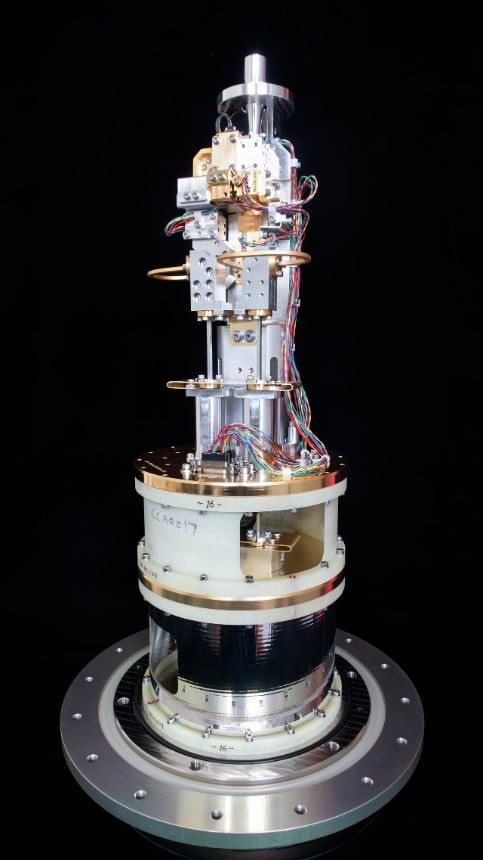
The newest LNAs for ALMA’s Band 2 utilize state-of-the-art metamorphic high-electron-mobility transistors (mHEMTs), a semiconductor technology offering outstanding noise suppression. This advancement allows ALMA to capture radio emissions from molecular clouds—frigid, dense areas where star formation occurs. Enhanced sensitivity to these weak signals enables astronomers to study star birth environments, distant galaxies, and even potential origins of life with improved accuracy.
Collaboration Spurs Technological Breakthrough
The development and deployment of these amplifiers resulted from a fruitful partnership between Fraunhofer IAF and the Max Planck Institute for Radio Astronomy (MPIfR). Fraunhofer IAF, noted for its semiconductor expertise, was responsible for designing and manufacturing the amplifier components. Meanwhile, MPIfR, an ALMA partner working closely with the European Southern Observatory (ESO), took charge of module assembly, testing, and certification.
“This partnership demonstrates that our amplifiers are not only produced in Germany but are also world-leading technology,” remarks Prof. Dr. Michael Kramer, MPIfR’s executive director. Their collaboration marks a significant leap forward for ALMA, reinforcing its standing as one of the most advanced radio telescope arrays on the planet.
ALMA’s Prime Location Amplifies Observational Excellence
The Chajnantor Plateau in Chilean Andes, rising to an elevation of 5,000 meters, grants ALMA a strategic vantage point. Its positioning minimizes atmospheric interference, allowing clearer detection of millimeter and submillimeter emissions. The arid, high-altitude environment ensures that atmospheric water vapor—which typically absorbs and disperses electromagnetic waves at these wavelengths—has less impact on the observations.
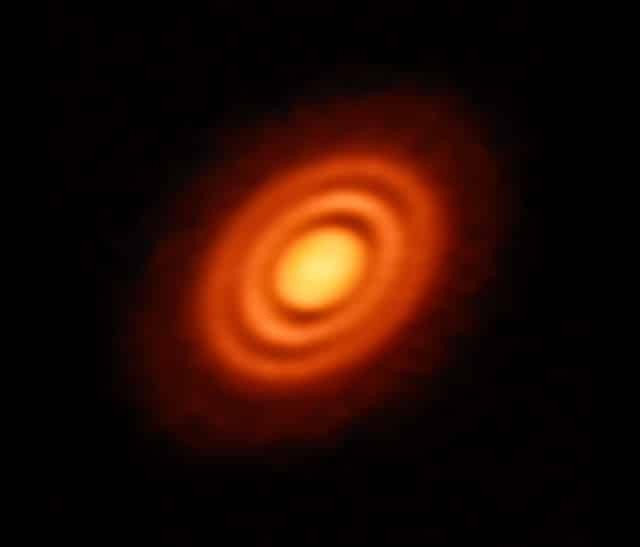
This exceptional location enables precision radio astronomy that reveals parts of the cosmos otherwise obscured. With its new amplifier upgrades, ALMA is better equipped to collect distant cosmic signals with improved clarity, empowering scientists to delve deeper into the formation of stars, galaxies, and perhaps life itself.
Revealing the Cold Interstellar Medium with Band 2
One of the main goals of ALMA’s Band 2 is to investigate the cold interstellar medium (ISM)—a mixture of gas, dust, radiation, and magnetic fields instrumental in star and galaxy development. This elusive region emits extremely weak radiation, posing a challenge for conventional instruments.
Thanks to the newly installed low-noise amplifiers, ALMA’s Band 2 can now study these chilly cosmic environments in unprecedented detail. Researchers focus on uncovering the processes behind star formation and the creation of complex organic molecules that act as potential precursors to life's chemical building blocks. By examining these phenomena in nearby galaxies and molecular clouds, ALMA’s enhanced sensitivity promises fresh insight into some of astrophysics’ most profound questions.
- Categories:
- News








0 comments
Sign in to Comment