
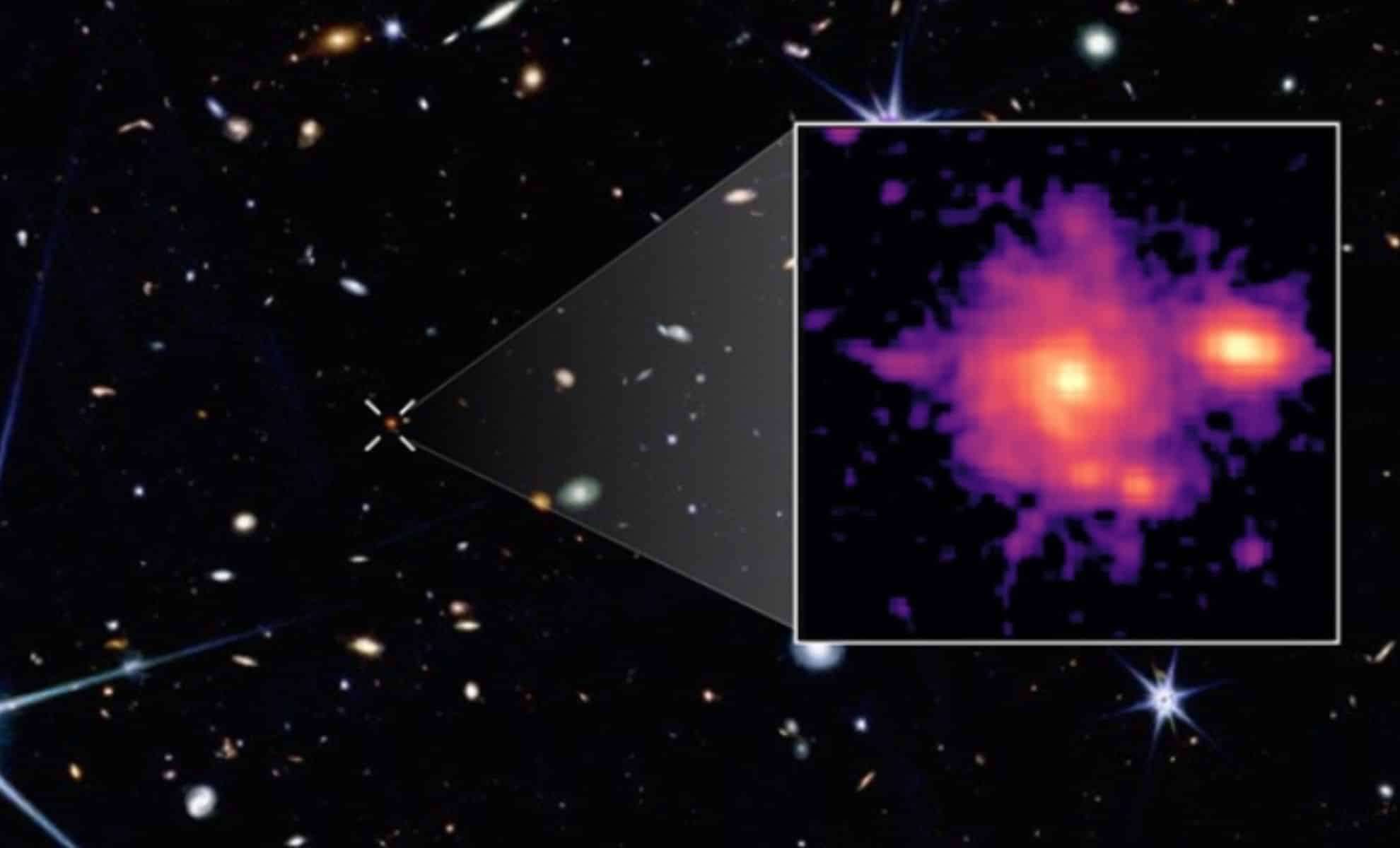
The identification of Zhúlóng, an enormous spiral galaxy observed as it existed roughly 12.8 billion years ago, reshapes our understanding of how early galaxies, comparable to our own Milky Way, developed shortly after the Big Bang. By analyzing data obtained through the James Webb Space Telescope (JWST) as part of its PANORAMIC survey, researchers pinpointed Zhúlóng as a classic grand-design spiral galaxy exhibiting a defined structural form. Discovering such an ordered galaxy so long ago defies prior expectations since spiral galaxies are seldom detected beyond 11.5 billion years ago. Measuring around 62,000 light-years across with a stellar mass akin to the Milky Way, Zhúlóng represents a groundbreaking find that challenges existing timelines for the emergence of fully-formed galaxies. This discovery provides fresh clues about the rapid assembly and evolution of galaxies during the Cosmic Dawn.
Zhúlóng’s Structure Indicates Early Galactic Sophistication
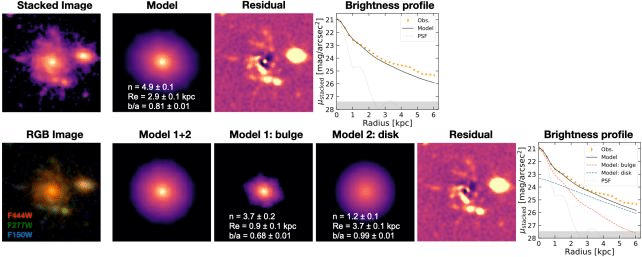
“Zhúlóng demonstrates that galaxies with mature features appeared significantly sooner than traditionally believed within the universe's first billion years,” notes a research team led by Mengyuan Xiao from the University of Geneva. Their comprehensive study published in Astronomy & Astrophysics, describes the galaxy’s "remarkably developed morphology: a classical bulge typical of quiescent galaxies, a star-forming disk, and prominent grand-design spiral arms." Stretching from the core to its outer regions, these spiral arms define the galaxy’s elegant design. Such features are intricate and usually connected to more mature galaxies, making Zhúlóng’s appearance barely a billion years post Big Bang particularly noteworthy. Its early complexity suggests rapid growth and challenges earlier models that assumed longer periods were necessary for such structures to form.
Repercussions for Understanding Galaxy Formation
“This discovery provides crucial constraints for theories about how massive galaxies emerged and how spiral patterns originated during the universe’s infancy,” the scientists explain. Earlier assumptions held that spiral galaxies took extensive time, appearing only well beyond the first billion years after the Big Bang. Zhúlóng’s presence suggests the physical mechanisms responsible for galaxy assembly—including star formation, disk stabilization, and spiral arm development—acted much faster than thought. This will prompt scientists to revisit models involving gas dynamics, star formation efficiency, and dark matter’s gravitational influence. Demonstrating such swift maturation roughly 800 million years post-Big Bang offers an important reference point for refining cosmological simulations and theories.

An Unprecedented Milky Way Analog
“Zhúlóng is remarkable because of its striking resemblance to the Milky Way in scale, form, and mass,” says Xiao. Spanning about 62,000 light-years across with stellar mass comparable to our galaxy, it serves as a distant relative despite its extreme age. Observations indicate its central black hole is currently inactive, consistent with a reduced star formation rate, estimated between 20 and 155 solar masses annually. This hints at a gradual shift from a vigorous star-forming phase toward a steadier, mature condition. Alongside this, the coexistence of a clear classical bulge and a star-forming disk confirms Zhúlóng’s advanced level of structural complexity. Such similarities offer an exceptional insight into what the Milky Way might have looked like during its early stages.
Shifting Perspectives on Early Galaxy Development
Zhúlóng’s existence so soon after the Big Bang signifies that massive galaxies could form up to ten times quicker than previously estimated. This accelerated formation timeline challenges long-held ideas about the pace of cosmic evolution in the universe's earliest billion years. Investigating the factors enabling Zhúlóng’s rapid assembly will enhance understanding of primordial environments, including the abundance of cold gas, star formation dynamics, and feedback from black holes or supernovae. As the JWST continues to probe the Cosmic Dawn, galaxies like Zhúlóng will shed light on the processes that transitioned the universe from an initial hot, chaotic state to a cosmos rich in complex galactic structures like our own.
- Categories:
- News


0 comments
Sign in to Comment