
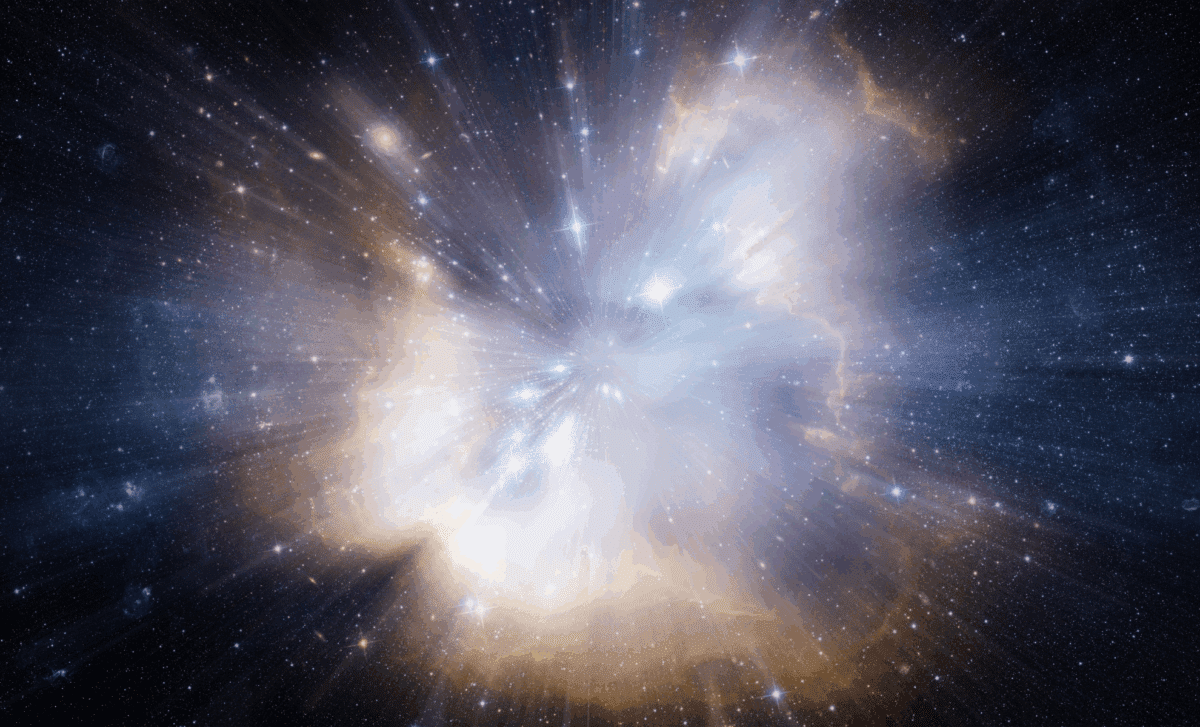
For centuries, the question of how the universe began has fascinated both scientists and thinkers. A recent study featured in Living Reviews in Relativity unveils a groundbreaking approach using numerical relativity to delve into the earliest moments of the Big Bang. By extending Einstein’s equations beyond their traditional scope, this method could finally shed light on the universe’s most mysterious origins, potentially addressing cosmic enigmas such as inflation and string theory.
Numerical Relativity: Revolutionizing Our View of the Cosmos
While Einstein’s theory of general relativity transformed our conception of space, time, and gravity, it falters under the extreme conditions present during the Big Bang. The inability to fully capture this chaotic, ultra-dense phase has long hampered our understanding of the universe’s birth. Numerical relativity, a computational technique, now presents a powerful new way to overcome these hurdles.
Developed initially in the 1960s to explore merging black holes, numerical relativity relies on sophisticated simulations that solve Einstein’s field equations numerically. This enables researchers to investigate scenarios unattainable through conventional analytical methods. According to Professor Eugene Lim of King’s College London, speaking to IFLScience,

“I am most excited about using numerical relativity to explore how the Big Bang began, and how it can be used to solve some long-standing problems in string theories.”
Such computational simulations are opening new windows into regions of the cosmos once thought inaccessible. The findings published in Living Reviews in Relativity represent a monumental leap in tackling fundamental questions about our cosmic origins.
Unlocking the Secrets of Cosmic Inflation
One of the primary applications of numerical relativity lies in investigating cosmic inflation—the rapid expansion phase immediately following the Big Bang. Although inflation explains the universe’s remarkable uniformity, the reasons behind this accelerated growth remain elusive. What mechanisms triggered such a dramatic swelling in the universe’s infancy?
Numerical relativity could be key to unlocking answers.
“Because inflation itself is not a full theory, but a theory that must be derived from something more fundamental (in technical terms, we call inflation an ‘effective theory’),” Lim explains.
By simulating the conditions that led to inflation, scientists aim to identify the fields or forces responsible for this cosmic surge. These insights may guide us toward a deeper foundational theory that clarifies both inflation and the universe’s genesis.
Connecting the Dots Between String Theory and Cosmic Beginnings
String theory proposes that the universe’s fundamental particles are tiny, vibrating strings rather than point-like entities. While it offers a framework for unifying nature’s forces, string theory has struggled to produce testable predictions about the universe’s birth.
Numerical relativity could serve as a bridge linking string theory with cosmological phenomena like inflation and the Big Bang. Computational models might detect unique fields or forces predicted by string theory. Such findings could provide the first tangible evidence that string theory plays a crucial role in the universe’s earliest moments.
The Complexity Behind Numerical Relativity
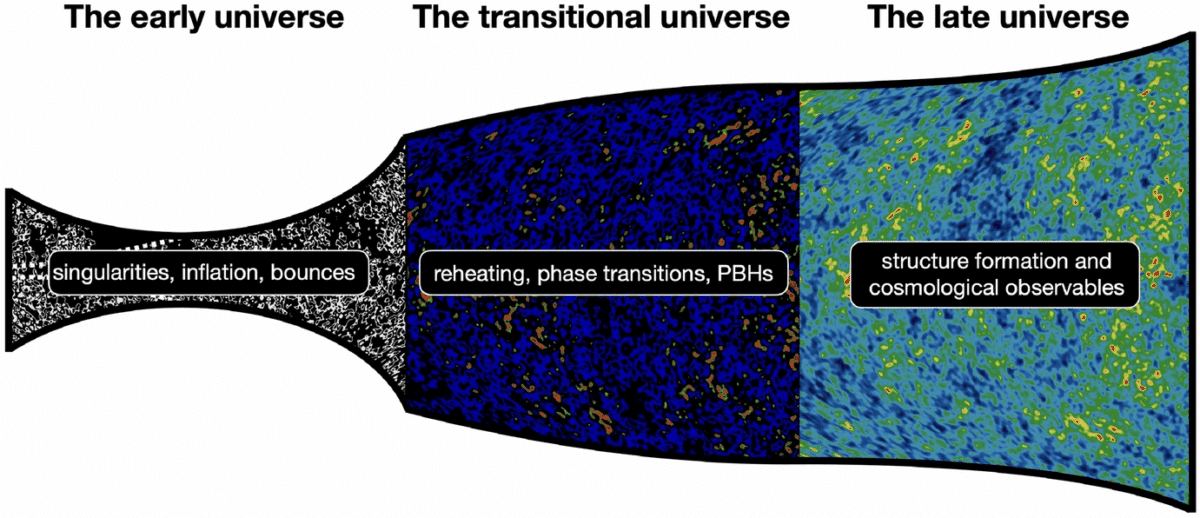
Despite its promise, numerical relativity is a demanding field requiring vast computational resources. The simulations must handle extensive datasets and variables to accurately represent the intense conditions near the universe’s inception. Advances in supercomputer technology have made such studies feasible, although the process remains intricate and time-consuming.
These computational breakthroughs have unlocked the ability to model phenomena once deemed unsolvable, including black hole collisions and gravitational waves. Enhanced simulation precision could lead to paradigm-shifting discoveries about the cosmos.
Probing the Pre-Big Bang Universe
Perhaps the most intriguing prospect of this research is its potential to explore what existed before the Big Bang. Conventional cosmology often treats the Big Bang as the start of time itself, but emerging theories hint that space and time might have had a prior existence, inviting a radical rethinking of cosmic history.
Numerical relativity could simulate these "pre-Big Bang" scenarios, helping scientists examine conditions leading up to the universe’s birth. Concepts like the “Big Bounce” suggest our cosmos might be part of an eternal cycle of expansion and contraction, with the Big Bang being one phase in a repeating sequence. If confirmed, such models could revolutionize our understanding and challenge established cosmological frameworks.
- Categories:
- News







0 comments
Sign in to Comment