

Groundbreaking discoveries in China are reshaping perspectives on human origins. Researchers have identified a possible new ancestor species, Homo juluensis, distinguished by unusually large skulls. This revelation is sparking lively discussions about the complex tree of human lineage.
Fossils Exhibiting Remarkable Traits
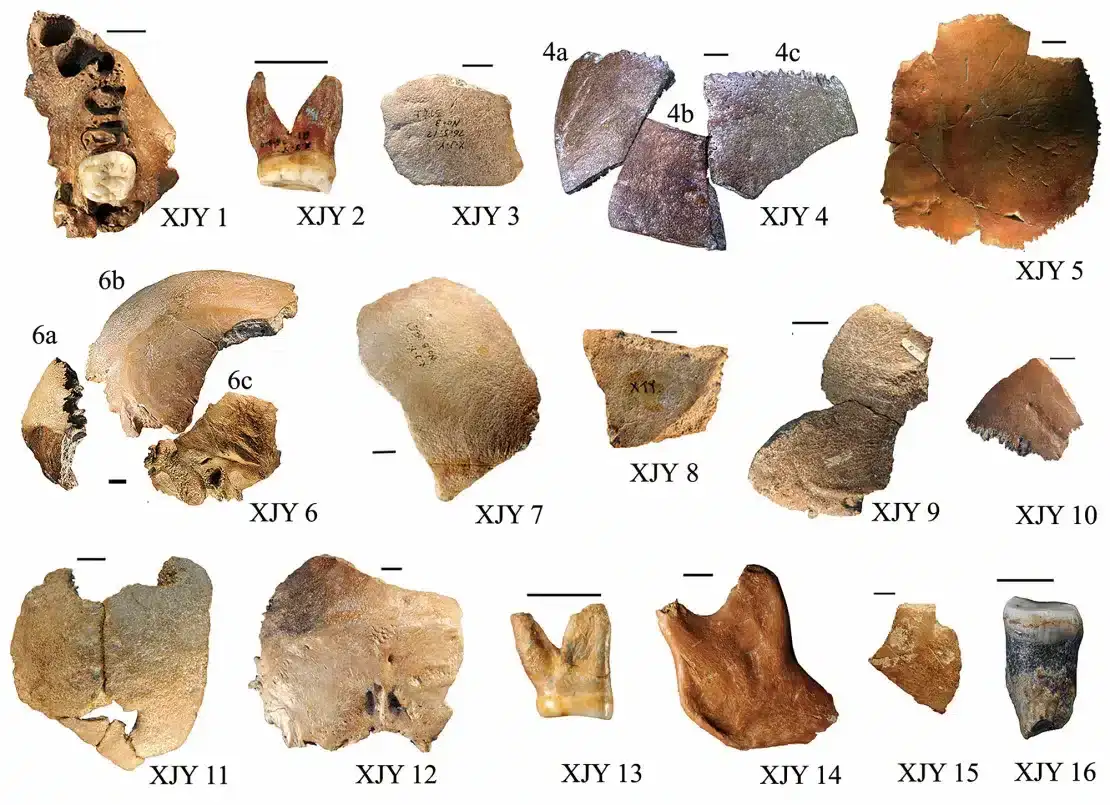
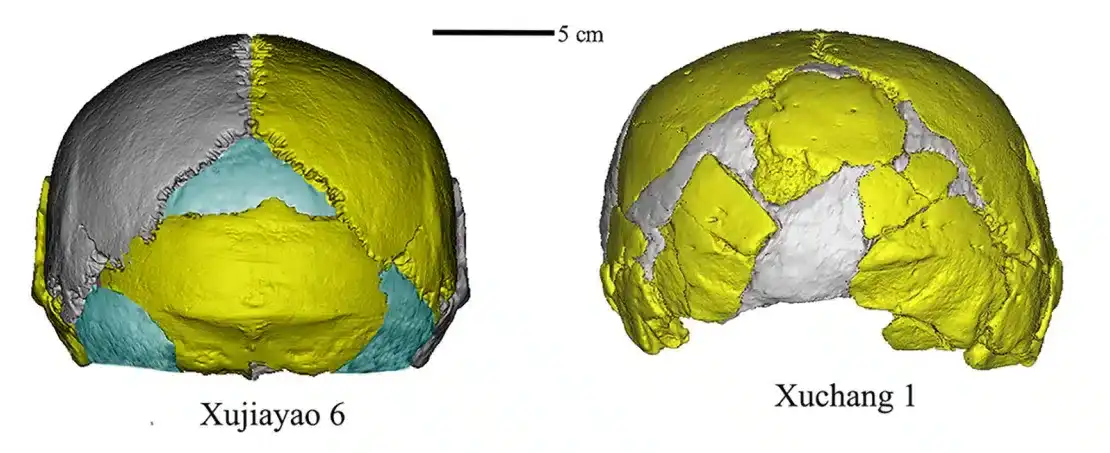
Unearthed from multiple Chinese archaeological sites, the fossilized remains consist of skull fragments, teeth, and jawbones. Dating between 100,000 and 300,000 years ago, these fossils exhibit unique attributes not seen in other hominin species. Notably, Homo juluensis boasts an extraordinary cranial volume estimated between 1,700 and 1,800 cubic centimeters, surpassing modern human brain size.
The species name derives from the Chinese phrase “ju lu,” meaning “giant head.” Led by Christopher Bae at the University of Hawaii and Wu Xiujie from Beijing’s Institute of Vertebrate Paleontology and Paleoanthropology, the team emphasizes the distinctive cranial size and morphology. Their findings, detailed in Nature Communications, stem from investigations at key sites including Xujiayao in northern China and Lingjing in central China.

Linking the Fossils to Denisovans
The discovery invites exploration of potential connections with the enigmatic Denisovans, an extinct group first recognized through genetic analysis of a finger bone from Siberia’s Denisova Cave. While traces of Denisovan DNA endure in present-day human populations—especially in Asia and Oceania—very few physical fossils have been recovered, leaving gaps in understanding their appearance and distribution.
Researchers Bae and Wu propose that the Xujiayao fossils and others might belong to Denisovans or a closely related branch. Labeling them as Homo juluensis could unify previously isolated evidence. Yet, this assertion is met with caution since there is no direct genetic confirmation linking these fossils to Denisovans.
Controversy in Species Identification
The suggestion of a new hominin species has sparked debate. Critics highlight that skull morphology alone offers limited evidence. Paleoanthropologist Ryan McRae from the Smithsonian National Museum of Natural History notes the absence of complete Denisovan skulls for direct comparison. Without genetic data, distinguishing between a separate species or variants of Denisovans remains difficult.
Experts like Xijun Ni at the Institute of Vertebrate Paleontology and Paleoanthropology caution against premature species declaration, emphasizing the need for solid evidence and broad scientific agreement before naming a new species.
Expanding the Picture of Human Diversity
The identification of Homo juluensis adds to a growing appreciation for the diversity that characterized ancient humans. Traditional views of a linear evolution from Homo erectus to modern Homo sapiens have given way to a more nuanced understanding. Discoveries such as Homo floresiensis in Indonesia and Homo naledi in South Africa highlight that multiple hominin species coexisted, each adapting uniquely to their environments.
Stony Brook University’s Carrie Mongle argues that Asia’s fossil evidence warrants closer scrutiny. Instead of attributing these finds to a single species, the possibility of multiple distinct lineages should be explored.
Examining the “Dragon Man” Connection
An alternative theory connects these fossils to Homo longi, known as “Dragon Man,” identified from a nearly intact skull unearthed in Harbin, China, in 1933 and described formally in 2021.
Some scientists, including Chris Stringer from London’s Natural History Museum, suggest that Xujiayao fossils and Denisovan remains might align better within the Homo longi category, showcasing the ongoing debate over classification of these archaic humans.
Implications for Human Evolution
The emergence of Homo juluensis profoundly impacts our comprehension of human development. It contradicts the idea of modern humans as the inevitable pinnacle of a straightforward evolutionary progression. Instead, it reveals a complex network of coexisting hominin groups interacting over time.
The massive brain size of Homo juluensis prompts curiosity about its mental capacities and lifestyle. Did this species employ sophisticated tools or cultural behaviors? What influence might it have had on the genetic and cultural foundations of modern humans?
The Path Forward in Fossil Studies
Continued examination of these fossils, leveraging advances like ancient DNA retrieval and high-resolution imaging, may unlock further secrets. The field of paleoanthropology continues to evolve, and discoveries such as Homo juluensis exemplify how much remains to be discovered.
Despite ongoing taxonomic debates, the importance of these fossils is clear. They offer valuable insight into a past where human evolution was far more varied and dynamic than previously assumed, enriching our understanding of humanity’s shared heritage.
- Categories:
- Science










0 comments
Sign in to Comment