

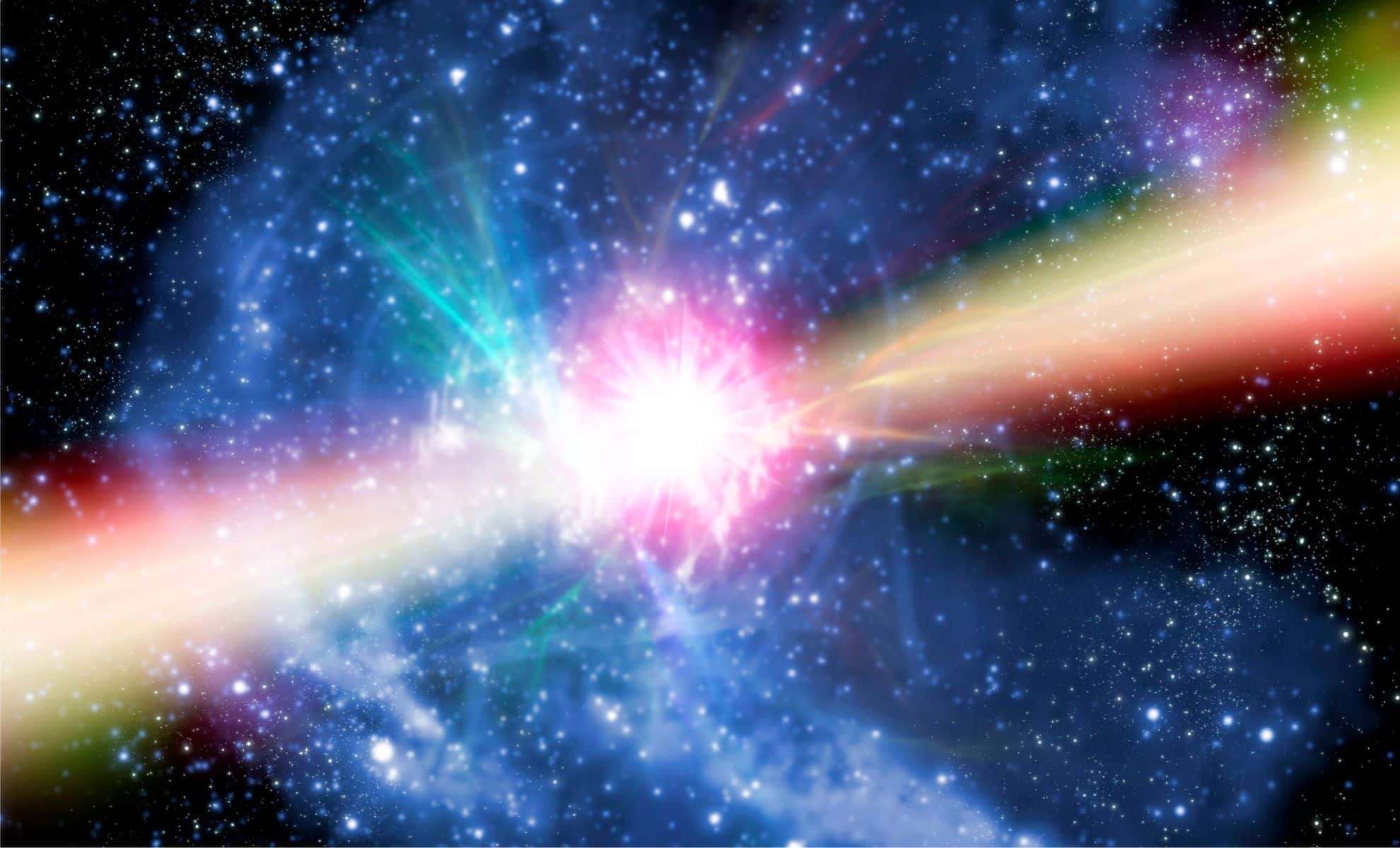
Scientists have uncovered evidence of enormous, unseen entities drifting through space that might be crossing the line of sight to pulsars, briefly interrupting their rhythmic light emissions.
These observations point toward vast, hidden formations in the Milky Way, fueling discussions about their origins and possible links to dark matter.
Pulsars: Nature’s Precise Timekeepers
Pulsars are rapidly spinning remnants of collapsed stars, emitting highly stable beams of radiation like cosmic lighthouses. These objects provide some of the universe’s most reliable clocks, only outmatched by the most sophisticated artificial devices. Researchers utilize their consistent signals to track time with atomic precision and detect gravitational waves. Yet, occasionally, these steady beats experience minuscule timing shifts, leading to fascinating insights.

Professor John LoSecco at the University of Notre Dame remarked, “I have been warned not to call them planets, not to call them dark matter, just call them mass concentrations because, just by looking in the radio, you can’t determine what they are.” These bodies, which might be brown dwarfs, white dwarfs, or other unexplored entities, induce subtle microsecond delays in the pulsar signals.
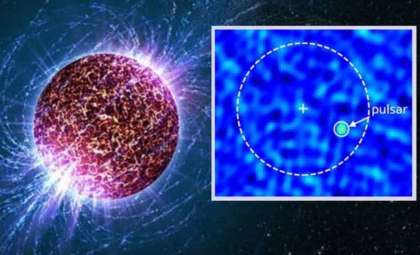
Pulsars function as exceptional cosmic clocks owing to their precision and steady nature, being leftover neutron stars from supernova explosions. These rapidly rotating stars emit beams of electromagnetic radiation that sweep across the cosmos similarly to lighthouse beams. When these beams align with Earth, they manifest as regular radio wave pulses. Their extraordinary consistency allows scientists to investigate the gravitational landscape of our galaxy.
Spotting Invisible Masses
LoSecco and team have been compiling a list of these enigmatic masses by studying timing data from seven radio observatories worldwide. By examining tiny shifts in pulse arrival times caused by changes in distance between these masses and the pulsar-observer line, they uncovered 12 candidates linked to eight separate pulsars.
LoSecco explained, “This work might offer clues about dark matter, the elusive substance believed to constitute roughly 85% of the universe’s matter but never directly observed. We leverage the fact that Earth, the Sun, the pulsars, and even dark matter itself are all in motion.” This complex celestial choreography enables the detection of these masses, which subtly influence the timing of pulsar signals.
The study focused on millisecond pulsars, prized for their rapid spins and remarkable stability. These pulsars serve as natural laboratories for examining how gravity affects time. By precisely tracking pulse timings, scientists can identify tiny disruptions caused by massive objects passing between pulsars and our planet.
The Influence of General Relativity
This investigation is grounded in general relativity, which states that time is affected by gravitational fields. If a massive body crosses the path to a pulsar, it causes a slight delay in when its pulses arrive. A solar-mass object would create a delay around 10 microseconds. Although tiny by human standards, this effect is significant when working with the extraordinary precision of Pulsar Timing Arrays.
LoSecco highlighted the complexity of isolating timing changes: “Pulsars aren’t stationary; many millisecond pulsars orbit companions, and the Earth orbits the Sun. We must correct for all these movements to extract the true pulse arrival times.”
Understanding how gravity distorts time, as Einstein predicted, is essential here. When a dense object like a brown dwarf or a dark matter clump aligns with a pulsar, its gravity bends the light path—a gravitational lensing effect—causing the pulses to take a longer route and arrive slightly delayed.
The Mystery Behind Mass Concentrations
The true identity of these mass concentrations remains unknown. They might be wandering planets, stellar remnants like brown dwarfs or white dwarfs, or even aggregations of dark matter. LoSecco urges caution, saying, “I can’t confirm they’re dark matter; they could just as well be brown dwarfs, white dwarfs, or other objects.”
This research continues, and LoSecco invites feedback from other scientists: “I welcome critiques, as they inspire deeper analysis and healthy skepticism.”
Discovering these masses opens new avenues for exploring the hidden features of our galaxy. If some are made of dark matter, it could illuminate one of cosmology’s greatest mysteries. Even if they turn out to be exotic celestial bodies, this would broaden our understanding of the Milky Way’s diverse inhabitants.
- Categories:
- Astronomy ,
- News ,
- Science ,
- Space ,
- Physics










0 comments
Sign in to Comment