

Emerging research highlights Earth's singular geological makeup—featuring plate tectonics, expansive oceans, and distinct continents—as a possible reason why advanced alien civilizations remain undetected.
This fresh viewpoint offers a compelling avenue to address the Fermi Paradox, which asks why, despite the universe's enormity, there is no clear evidence of extraterrestrial intelligence.
The Distinctive Geological Features of Our Planet
The Earth’s lithosphere consists of multiple tectonic plates that move dynamically and interact in complex patterns—a process known as plate tectonics, unique among the planets in our solar system. These movements give rise to key geological formations like mountain ranges, volcanic structures, and ocean trenches.

Moreover, plate tectonics enables the ongoing cycling of essential nutrients through weathering and erosion, fostering diverse ecosystems that support the evolution of complex life.
Dr. Robert Stern, a professor specializing in sustainable Earth systems at the University of Texas at Dallas, remarks on plate tectonics’ critical role: “While life has existed on Earth for roughly four billion years, complex multicellular organisms appeared only about 600 million years ago, coinciding with a modern phase of plate tectonic activity. This geological process effectively acts as an engine for evolutionary progress.”
Reconsidering the Drake Equation
The Drake Equation, proposed by Dr. Frank Drake in 1961, estimates the number of advanced civilizations in our galaxy by evaluating factors like star formation rates, the prevalence of planets, and probabilities related to life arising and developing intelligence. This new research advocates for including plate tectonics as a fundamental variable.
The scholars suggest that previous models might have overestimated the chances for intelligent life by overlooking how rare active plate tectonics are. Earth remains the only known planet with this dynamic geological activity, while most planets exhibit a static outer shell—termed single-lid tectonics. As Stern clarifies, “Most planets possess a continuous solid shell, which contrasts starkly with Earth’s fragmented plates. However, plate tectonics plays a far more pivotal role than single-lid tectonics in fostering advanced life.”
The Fermi Paradox and the Scarcity of Complex Civilizations
The Fermi Paradox, named after physicist Enrico Fermi, challenges the expectation that extraterrestrial civilizations should be evident given the vastness of space and the assumptions of the Drake Equation. The new theory proposes that without plate tectonics, the emergence of advanced, communicative civilizations (ACCs) becomes exceedingly unlikely.
Dr. Stern and his team argue that a mix of vast oceans, sprawling continents, and sustained plate tectonic activity creates the essential conditions for life to evolve into intelligent, communicative beings capable of technological achievements. Stern explains, “Life’s progress from night sky curiosity to mastery of fire, metallurgy, and eventually space exploration likely requires land-based environments shaped by plate tectonics.”
Evolutionary Significance and Earth's Geological History
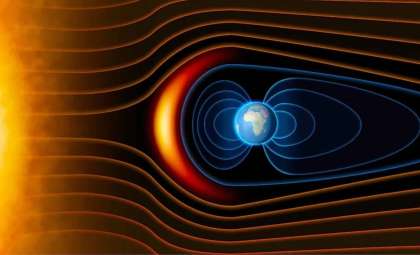
The unusual nature of plate tectonics not only limits how many advanced civilizations might exist but also profoundly influences Earth's biological history. The Cambrian Explosion, around 539 million years ago, a period of rapid animal diversification, is believed to stem from geological processes powered by tectonic shifts. Other factors, like fluctuating magnetic fields and solar-driven UV radiation, have also impacted evolutionary paths.
Ultimately, this theory underscores the importance of Earth’s one-of-a-kind geology in nurturing advanced life forms. By integrating the role of plate tectonics into the Drake Equation, scientists gain a more nuanced understanding of intelligent life's scarcity and offer a credible justification for the Fermi Paradox. Ongoing studies may profoundly affect how we search for alien life and inspire greater recognition of the rare conditions that make Earth exceptional.
- Categories:
- News ,
- Science ,
- Extraterrestrial life







0 comments
Sign in to Comment