
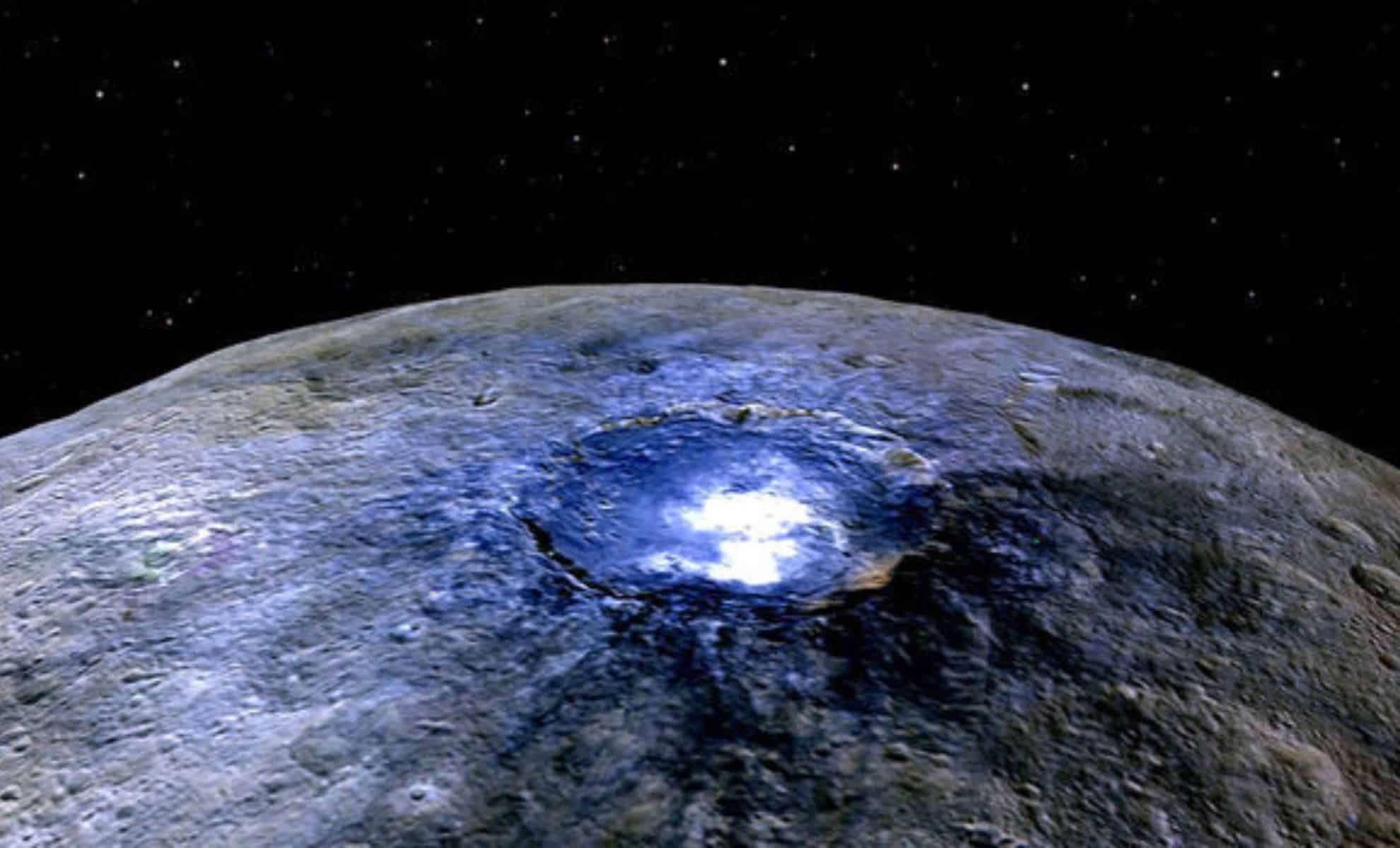
New research reveals that Ceres, the largest entity within the asteroid belt located between Mars and Jupiter, might conceal vital organic molecules beneath its surface. Scientists have identified aliphatic hydrocarbons—key organic compounds linked to life—especially near the Ertunet Crater, suggesting these molecules formed within the last 10 million years. This finding points to the possibility that Ceres’ subsurface ocean could have contributed to the synthesis of such life-related chemicals.
Why Aliphatic Hydrocarbons Matter on Ceres
Aliphatic hydrocarbons are fundamental components in the architecture of complex life, so their presence on Ceres marks a significant breakthrough. These hydrocarbons, comprising alkanes, alkenes, and alkynes, are simple yet essential organic molecules that form the basis of carbon-centered biology. Earlier missions detected similar organic traces on moons such as Enceladus and Titan around Saturn, and now Ceres is joining this intriguing group. The localization of these compounds around Ertunet Crater enriches the dialogue surrounding the potential for extraterrestrial life.
The rapid degradation of these hydrocarbons due to space weathering—where cosmic rays and solar wind particles break down surface compounds—makes this finding particularly compelling. Laboratory tests simulating Ceres’ environment indicate these molecules haven't persisted on the surface longer than 10 million years. This timeframe implies recent generation or replenishment of organics, hinting that active processes might still be producing organic substances either on or beneath Ceres’ surface.

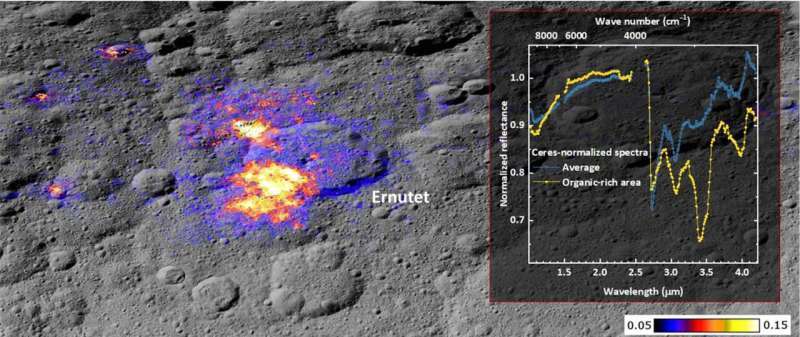
Exploring Ceres’ Subsurface Ocean as a Source of Organics
The presence of aliphatic hydrocarbons has prompted scientists to examine the impact of hidden oceans beneath Ceres’ icy exterior. It’s thought that Ceres once housed an extensive liquid water ocean beneath its crust, with isolated pockets of briny water potentially remaining today. These subterranean reservoirs could have facilitated chemical interactions fostering the production of biologically relevant molecules, similar to the hydrothermal vent activity known to support life on Earth's seafloor.
Lead researcher Maria Cristina De Sanctis commented, “The organic molecules discovered near Ertunet Crater could have developed over millions of years within Ceres’ subsurface ocean.” This suggests a long history of dynamic water-rock interactions providing sufficient energy for organic synthesis. Reactions between saline water and minerals beneath the surface might have created conditions favorable for generating these hydrocarbons, raising intriguing prospects about Ceres’ habitability through time.
Unlike many other celestial bodies where organics primarily arrive via asteroid or comet impacts, models indicate that on Ceres, the majority of these compounds likely formed within the planet itself. This internal origin hypothesis suggests that Ceres has maintained geologically active processes capable of sustaining organic molecule formation, possibly promoting environments conducive to life.
Why Ertunet Crater Is Central to Upcoming Investigations
The region around Ertunet Crater—one of Ceres’ largest impacts—has attracted considerable scientific interest due to the notable concentration of aliphatic hydrocarbons. This site offers crucial insights into ongoing geological phenomena and the mechanisms behind the recent generation of organic materials. Scientists propose that Ceres’ subsurface ocean may have transported organics to the surface through geological activity.
Characteristics of Ertunet Crater make it an ideal location for advanced study. The surface here contains organic layers that appear to be geologically young, suggesting ongoing or recent delivery of materials from beneath the crust. This activity designates Ertunet as a prime target for direct exploration or even sample-return missions designed to deepen our understanding of Ceres’ internal chemistry and water reservoirs.
The research team noted, “This region presents a promising site for future missions to acquire in situ samples or return materials from Ceres.” Such investigations could shed light on the composition, age, and origin of these hydrocarbons, potentially confirming that active processes inside Ceres are responsible. Studying this crater closely would greatly enhance knowledge about the dwarf planet’s oceanic history and its capacity to support prebiotic chemistry.
Impacts on the Search for Life Beyond Earth
Discovering aliphatic hydrocarbons on Ceres significantly advances the field of astrobiology, which examines life's cosmic origins. If these organics are indeed formed inside the body, it represents a novel pathway for organic molecule generation among icy bodies in our solar system. This realization redefines how researchers consider oceanic worlds like Europa and Enceladus, reinforcing the idea that life-supporting elements may be widespread.
This breakthrough strengthens evidence that water and organics are common throughout the outer solar system, extending the scope of habitable environments beyond conventional expectations. The implications for potential life, or its fundamental components, being present on icy dwarf planets and moons open exciting avenues for future research.
For scientists focused on planetary exploration and astrobiology, these findings emphasize the importance of studying hydrocarbon-rich celestial bodies as part of understanding life’s universal emergence. As discoveries at Ceres continue to reveal intricate organic chemistry, prospects rise for missions targeting its geological and chemical legacy to explore conditions under which life might arise.
A Strategic Exploration Target Within the Asteroid Belt
Ceres’ unique placement within the asteroid belt affords an exceptional location for upcoming exploration campaigns. Its promise as a site harboring active organic synthesis and subsurface water layers positions it as a compelling destination. While the Dawn mission greatly expanded our understanding of Ceres, future endeavors focusing on sampling or drilling into its interior hold the potential to unlock deeper mysteries of this dwarf planet.
Finding aliphatic hydrocarbons alongside evidence of saltwater beneath the surface suggests Ceres could become a key natural laboratory to examine how water, minerals, and organic substances interact in extraterrestrial settings. As interest in icy worlds intensifies, Ceres stands out as a fascinating target for unraveling processes linked to life's building blocks within our solar system.
In summary, the identification of aliphatic hydrocarbons on Ceres presents a pivotal advancement for planetary science and astrobiology. Being the largest body in the main asteroid belt, Ceres offers unique insights into how essential organic molecules may form in distant, harsh environments. With renewed focus and fresh missions anticipated, we are poised to uncover even more about this intriguing world’s potential to foster life.
- Categories:
- Astronomy ,
- News ,
- Science ,
- Physics










0 comments
Sign in to Comment