

Despite lacking a brain, neurons, or any nervous system, a plant appears capable of counting. This remarkable discovery comes from William & Mary psychology professor Peter Vishton and his former student Paige Bartosh. Their research focused on Mimosa pudica, also known as the shy plant or touch-me-not, revealing that the plant’s leaf movements depend not just on time but on the number of light-dark intervals it has undergone.
Published in Cognitive Science in late 2025, the study is the first to provide evidence that plants may possess the ability to enumerate, or count and differentiate distinct events in their surroundings—a skill previously linked only to organisms with nervous systems.
Mimosa pudica famously closes its sensitive, feathery leaves in response to touch or disturbance, reopening them later. The plant also follows a daily folding and unfolding cycle called nyctinasty, closing at night and opening at dawn. This inherent rhythm was the key behavioral metric used by Vishton and Bartosh.

A Shy Plant That Anticipates
Within a controlled room at William & Mary’s Integrated Science Center, the team created a humid environment where plants were subjected to a repeating three-day cycle. Days one and two featured 12 hours of light followed by 12 hours of darkness, but on the third day, the lights remained off all day.
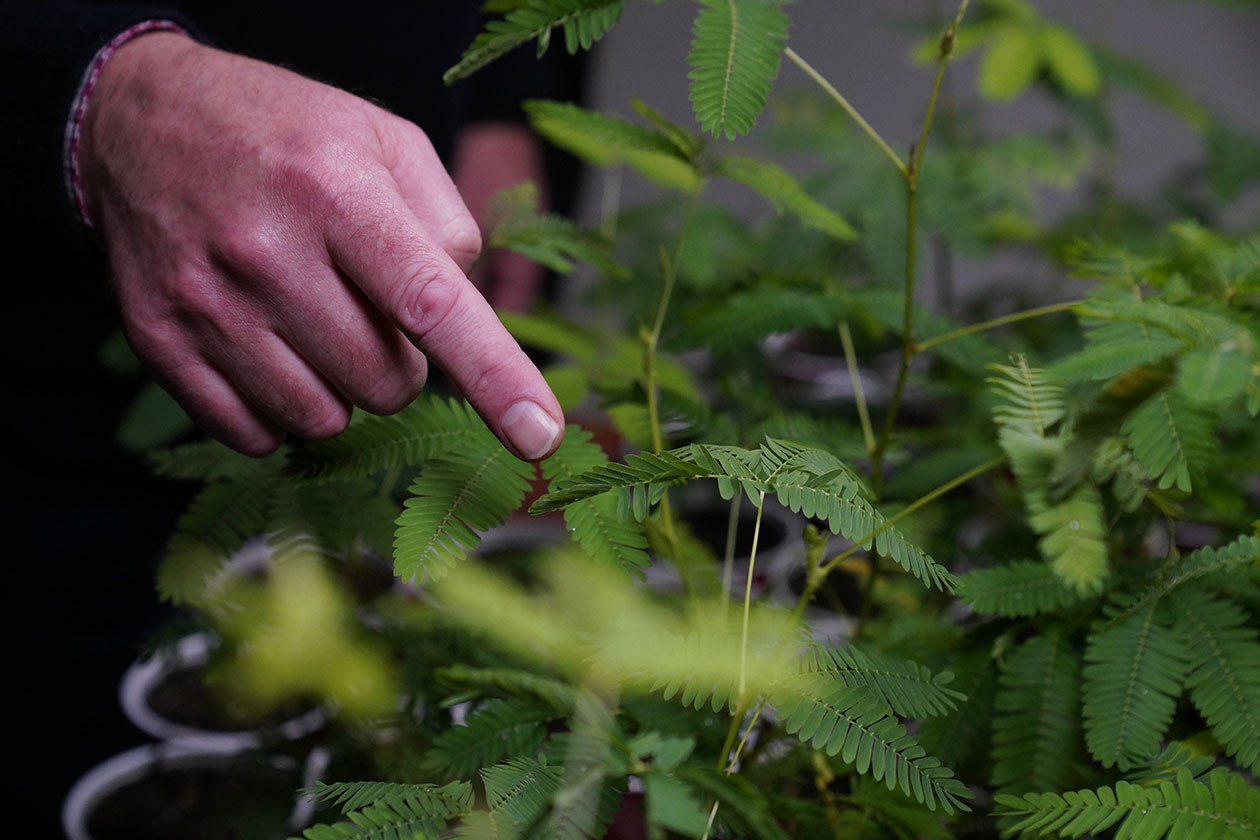
After about five cycles, the plants started moving more during the dark periods just before the onset of light, but only on the days when light was expected. On the completely dark third day, this anticipatory activity diminished. The plants seemed to have learned the sequence.
Vishton compared this learning pattern to known results from animal experiments: “Teaching a rat to perform a sequence involves an initial learning phase followed by steady improvement in prediction.” The plants displayed a similar trajectory, quickly adapting and then maintaining consistent prediction behaviors.
It's Not Just an Internal Clock
One obvious explanation was that the plants were responding to their circadian rhythm, a natural 24-hour biological timer common in many species. Since many plants open and close leaves based on this rhythm, the team needed to test beyond a simple time-based response.
By shortening the daily cycle to 20 hours, the plants quickly adjusted their leaf movements to the new schedule, suggesting that a rigid internal clock was not the sole driver of the behavior.
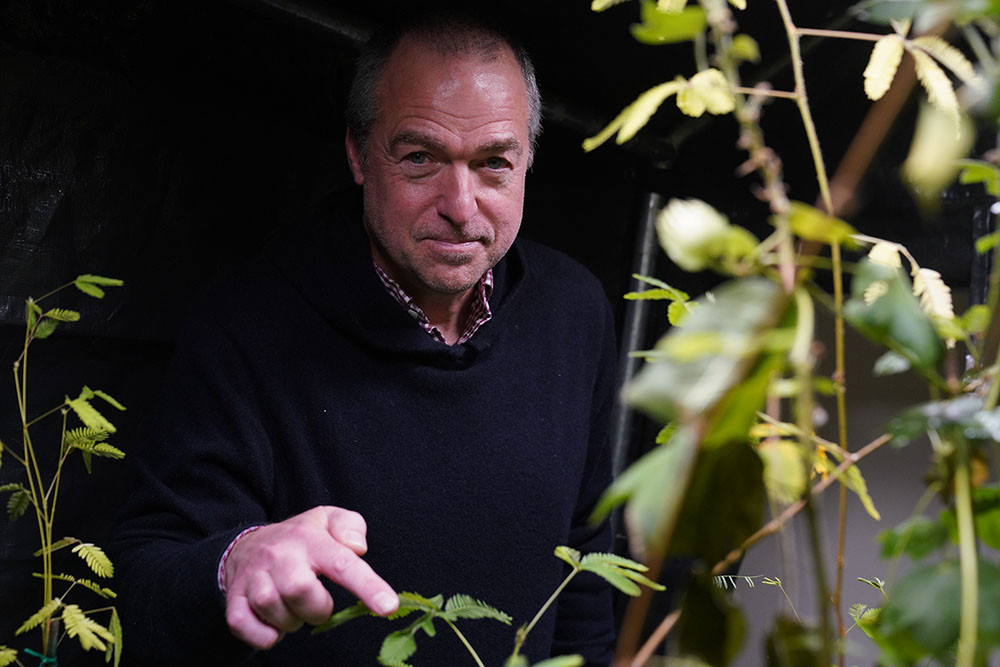
In further trials, they exposed the plants to random light-dark cycles lasting anywhere from 10 to 32 hours. When intervals were shorter than 12 or longer than 24 hours, the plant’s anticipatory movements faltered. However, within that 12-to-24 hour range, the plants sustained their predictive behavior.
“The most straightforward interpretation,” Vishton stated, “is that these plants are keeping track of the number of environmental events rather than merely tracking elapsed time.”
The breakdown at timing extremes implies biological limits: a necessary minimum duration to register each light event and a maximum interval after which the memory of the pattern fades.
Cognitive Abilities Without Neurons
These findings challenge the view that cognitive-like abilities require neurons. “Most memory and decision-making theories depend on neurons,” Vishton noted. “Plants don’t have neurons, yet they seem to display cognitive-like functions—though not in the same way animals do.”
Mimosa pudica moves its leaves via pulvini, specialized structures at the leaf bases containing two motor cell layers. Movement originates from rapid changes in cell turgor pressure driven by ionic exchanges involving potassium, chloride, and calcium—completely neuron-free. This suggests that if the plant truly processes environmental information, it does so through uncharted biochemical and cellular pathways.

While Vishton’s expertise lies in behavior, he hopes that chemists and biologists will delve deeper to uncover the mechanisms underlying these intriguing capabilities.
The research also raises questions about the potential for non-neuronal cells in animals and humans to participate in learning processes. Vishton pointed out, “Many cells aren’t neurons, and we often don’t consider their role in learning—but perhaps we should.”
What the Authors Emphasize
The researchers carefully qualify their conclusions, acknowledging variability in some data points and calling for further replication with additional controls before solidifying the plant’s counting ability as fact.
They speculate on future applications such as plant-based sensing technologies, bio-inspired computational devices, and insights into how cellular learning mechanisms might influence human habits and behavioral changes—topics that remain exploratory at this stage.
- Categories:
- Science










0 comments
Sign in to Comment