
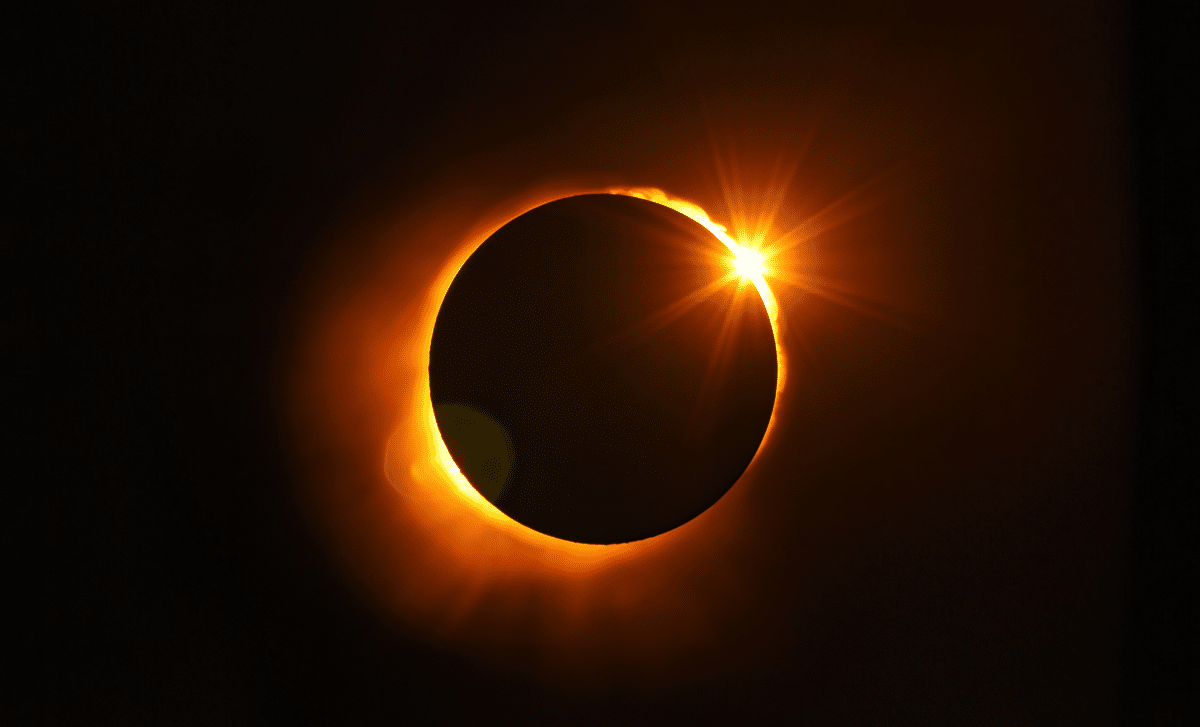
On February 17, 2026, an extraordinary annular solar eclipse, famously known as the "ring of fire," will grace the skies above Antarctica. Although the full annular eclipse will be seen only over the southern polar region, observers in southern South America and southern Africa will witness partial phases of this celestial event. This striking phenomenon will captivate sky enthusiasts and coincide with significant cultural festivities such as Chinese New Year and Ramadan. This report draws from a comprehensive Forbes article highlighting the eclipse and its broader relevance.
Understanding the Annular Solar Eclipse
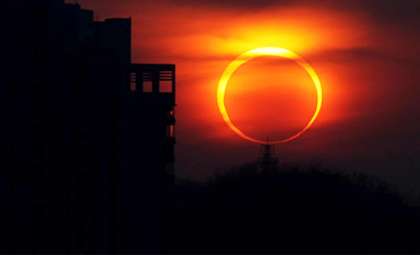
An annular solar eclipse takes place when the moon aligns directly between the Earth and the sun but appears smaller due to its distance, leaving a glowing ring of sunlight visible around the moon’s shadow. This differs from a total eclipse's deep darkness, offering instead a striking halo known as the "ring of fire." The moon conceals approximately 96% of the sun’s surface during this event, which can last up to 2 minutes and 20 seconds.
Such a dramatic interplay of shadow and light makes for a captivating display. However, it's essential to observe the eclipse only with certified eclipse glasses, as looking directly at the sun without proper protection can lead to irreversible eye injury.

Tracking the Annularity: The Antarctic Experience
The annular eclipse track on February 17, 2026 will stretch across the icy terrains of Antarctica, providing a rare spectacle for scientists based at isolated stations like the Concordia Station on the Dome C Plateau and Mirny Station near the Davis Sea coast. Per Forbes, this event coincides with Antarctica's summer, when research teams numbering between 50 and 200 personnel typically staff these facilities.
The eclipse’s path will span up to 472 miles wide. Although the full annular effect will be confined to Antarctica, audiences in southern stretches of Chile and Argentina will have partial views, along with select locations in South Africa. Even the partial eclipse will provide a rare astronomical moment for these regions.
Partial Views Extend to Southern South America and Africa
While the full annular spectacle is limited to Antarctica, residents of southern South America and southern Africa can expect a partial eclipse display. In South America, this occurs shortly after dawn, giving spectators in southern Chile and Argentina an impressive chance to witness the moon covering a portion of the sun.
Meanwhile, parts of South Africa will also experience the moon partially obscuring the sun. Though the complete "ring of fire" remains exclusive to Antarctica, the partial eclipse event is sure to captivate many skywatchers.
Linking Celestial Events with Cultural Celebrations
The upcoming eclipse is more than an astronomical marvel; it resonates culturally across the globe. The new moon marking the eclipse coincides with the start of the Chinese New Year on February 17, heralding the Year of the Fire Horse, a symbol of courage and energy in Chinese zodiac traditions. This alignment adds symbolic depth to the festivities.
Simultaneously, the eclipse aligns with the commencement of Ramadan, the Islamic holy month, beginning with the sighting of the crescent moon on February 18. To many, this event underscores the profound connection between natural celestial phenomena and spiritual observances.
Safe Viewing: Guidelines to Witness the Eclipse
For those fortunate enough to be within the annular eclipse’s path, safety remains paramount. Only eclipse glasses certified for solar viewing should be used, as ordinary sunglasses cannot adequately protect the eyes. Indirect viewing methods, such as using a pinhole projector, are also recommended. The eclipse will start at 07:01 UTC, offering a brief but memorable viewing window lasting up to 2 minutes and 20 seconds.
Viewers in zones witnessing only the partial eclipse should follow the same precautions. Even without the striking "ring of fire," the gradual lunar passage across the sun presents a beautiful spectacle.
Upcoming Annular Eclipses to Watch
If you miss the 2026 event, future annular eclipses are not far off. The next significant one will occur on February 6, 2027, accessible from locations in Chile, Argentina, Brazil, and parts of West Africa. Further opportunities await in Ecuador, Peru, and Brazil on January 26, 2028, and on June 1, 2030, people in Algeria, Tunisia, Greece, Turkey, China, and Japan will witness another breathtaking annular eclipse.
These events provide continuous chances for sky admirers and astronomers worldwide to engage with one of nature’s most captivating light shows.
- Categories:
- Astronomy






0 comments
Sign in to Comment