
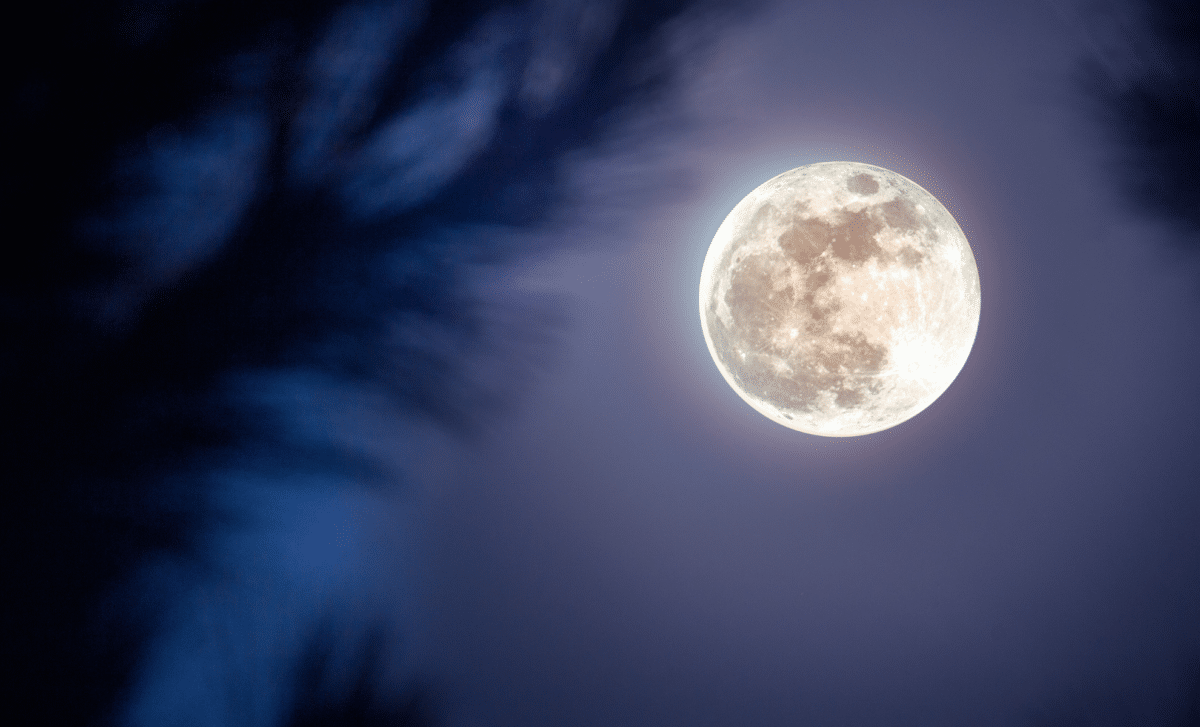
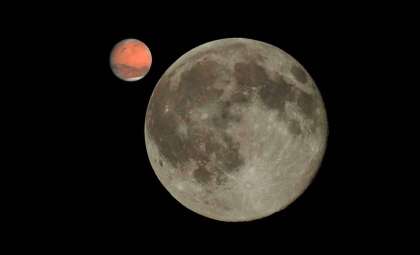
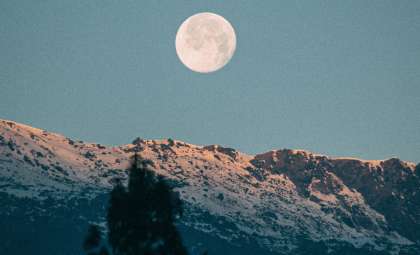
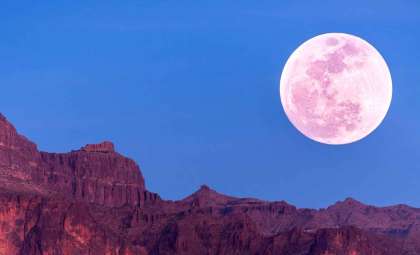
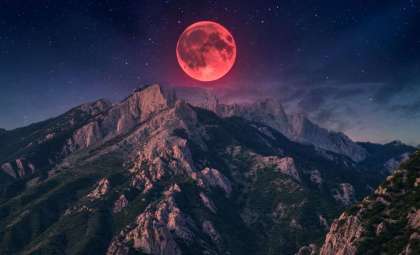
The February full moon, commonly known as the Snow Moon, promises a breathtaking sight in the night sky at the start of February 2026. This lunar event captivates astronomers and sky enthusiasts alike, drawing attention for its brightness and cultural significance. In this article, we’ll guide you through the timing and best locations to witness the Snow Moon, explain its storied background, and provide expert advice for capturing it through photography. Drawing on details from Space.com, this overview helps you prepare to enjoy this remarkable celestial event.
Timing and Viewing Locations for the Snow Moon
The Snow Moon in February 2026 will be fully illuminated at 5:09 p.m. EST (2209 GMT) on February 1, 2026. At this precise moment, the lunar orb will be positioned directly opposite the sun from Earth’s perspective, glowing brightly in the night sky. As noted by Space.com, the optimal viewing window is just after sunset on that day, when the moon ascends in the eastern sky near the Cancer constellation. Observers will also enjoy the “moon illusion,” where the moon appears larger and more dramatic when close to the horizon due to visual context with nearby terrestrial objects.
Residents of the Northern Hemisphere are especially well-positioned to admire this spectacle, with the moon shining prominently throughout the evening. Depending on atmospheric conditions and your location, the moon may exhibit a subtle yellow or orange glow. This effect occurs because the moonlight passes through Earth’s atmosphere, which scatters shorter blue wavelengths and enhances the longer red and orange tones.

Exploring the Cultural and Natural Importance of the Snow Moon
Known as the Snow Moon because of the frequent snowfall during this month in the Northern Hemisphere, this full moon symbolizes the depth of winter’s chill, with snowy landscapes dominating much of the region. It has also been called the “Hungry Moon,” reflecting the scarcity of food resources typical of winter’s harshness. Among various Indigenous peoples of North America, it is referred to as the “Bear Moon,” marking the time when bear cubs emerge in early spring.
Besides its natural symbolism, the Snow Moon carries spiritual and cultural resonance worldwide. In India, it coincides with Guru Ravidas Jayanti, a festivity honoring Guru Ravidas, a revered spiritual figure who championed equality and social justice; the day is marked with celebrations and rituals. The full moon also aligns with Magha Purnima, a significant day for fasting, communal prayers, and charitable deeds in Hindu tradition.
The Lunar Trajectory and Additional Celestial Highlights
The Snow Moon event offers more than just a lunar spectacle; the evening sky nearby will present other striking astronomical sights. Jupiter will stand out as a luminous “evening star” near the eastern horizon. Adjacent to Jupiter in the sky, the bright stars Castor and Pollux of the Gemini constellation will be visible. Observers on February 1 can also find the renowned constellation Orion, along with the striking red giant Aldebaran, which represents the eye of the Taurus bull.
On February 2, viewers in select regions of North America and Africa will witness a rare celestial event where the Snow Moon will occult Regulus, the brightest star in the Leo constellation. This phenomenon occurs as the moon obscures Regulus briefly while passing in front of it.
- Categories:
- Astronomy





0 comments
Sign in to Comment