
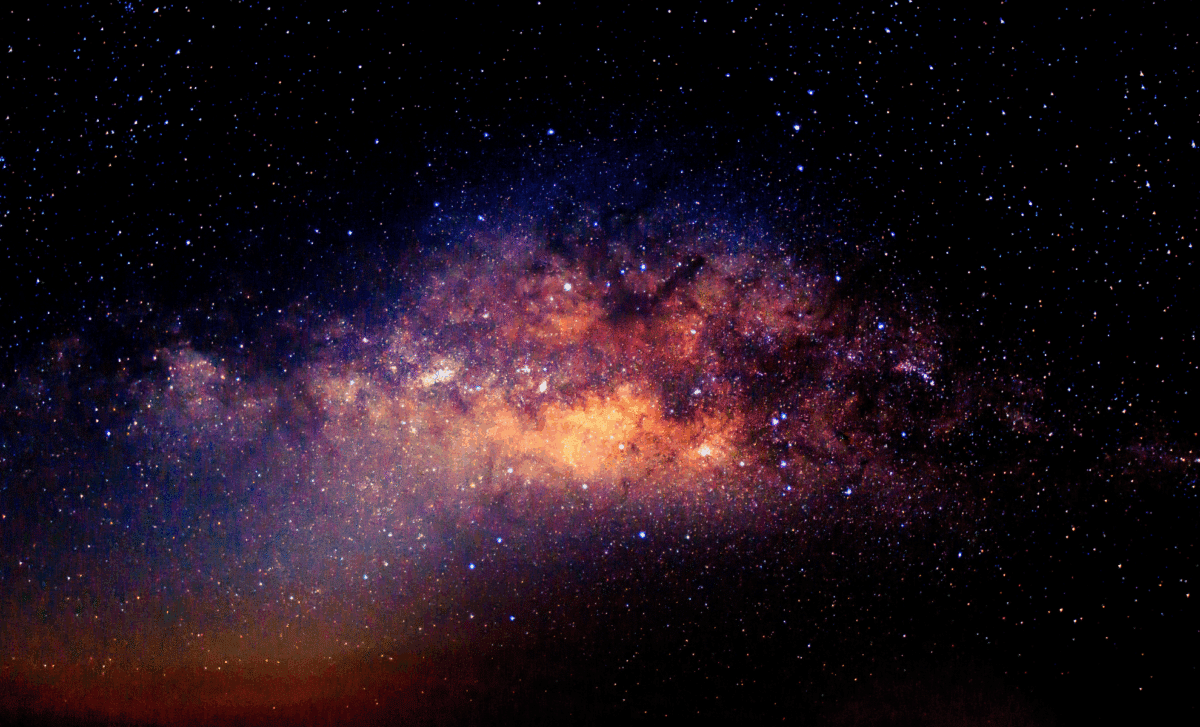
The Milky Way, an intricate and dynamic galaxy, continues to surprise astronomers with its hidden features. Leveraging advanced radio telescope technology, researchers Silvia Mantovanini and Natasha Hurley-Walker from Curtin University have produced a highly detailed view of the galaxy’s central plane. Their findings, published in the Publications of the Astronomical Society of Australia, provide new perspectives on the galaxy’s structure using cutting-edge radio imaging methods, bringing us closer to decoding the Milky Way’s complexities.
Illuminating the Milky Way’s Complex Internal Structure
From our vantage point on Earth, the Milky Way appears as a bright band stretching across the sky. Yet this view only hints at the galaxy’s true intricacies. To explore deeper layers, scientists utilize radio astronomy, revealing elements hidden from standard optical observations.
Radio waves grant astronomers access to phenomena such as magnetic fields, charged particles, and obscured gaseous regions. For many years, radio telescopes have been instrumental in charting the Milky Way’s layout. The recent research shared in the Astronomical Society of Australia offers a more detailed method for mapping the galaxy’s galactic plane, which could reshape our understanding of its cosmic evolution.

Revolutionizing Galactic Imaging Through Radio Observations
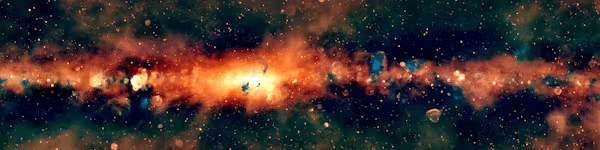
Utilizing data from the Murchison Widefield Array (MWA) in Australia’s remote outback, this study delivers the most detailed radio image of the Milky Way to date. The MWA consists of over 4,000 antennas spread across vast terrain, gathering detailed signals from the southern sky to build a comprehensive radio map.
As outlined in the study,
“This low-frequency image allows us to unveil large astrophysical structures in our galaxy that are difficult to image at higher frequencies.”
The GLEAM-X survey, which advances earlier work, provides exceptional views of the Milky Way, helping to distinguish features like cosmic dust and the remnants of supernovae. Large red circles highlight areas where stars have detonated, while smaller blue spots represent active star-forming regions, or stellar nurseries.
“You can clearly identify remnants of exploded stars, represented by large red circles. The smaller blue regions indicate stellar nurseries where new stars are actively forming,” Mantovanini said.
These observations unlock previously invisible details of our galaxy, capturing faint and elusive structures often obscured by Earth’s atmospheric interference.

A Landmark Success in Radio Astronomy
The research represents a breakthrough in low-frequency radio imaging. “This is the first time such a detailed low-frequency radio image of the entire Southern Galactic Plane has been assembled,” Mantovanini stated. The image covers roughly 95% of the Milky Way visible from the southern hemisphere and spans frequencies between 72 and 231 MHz, capturing different emissions such as cosmic rays, hot gas, and stellar remnants, all showcased through distinct radio color coding.
Creating this panorama involved integrating thousands of individual observations from the GLEAM and GLEAM-X projects. Complex algorithms corrected distortions caused by the ionosphere, Earth’s atmospheric layer that can interfere with radio waves. The final image required over a million hours of computing power on supercomputers to achieve its remarkable resolution.
Peering Ahead: The Promise of SKA-Low
While this image is a milestone, it marks just the beginning of what radio telescopes can reveal. The upcoming SKA-Low telescope, planned for completion within the next decade, will greatly surpass the MWA’s capabilities in both sensitivity and image clarity.
“Only the world’s largest radio telescope, the SKA Observatory’s SKA-Low telescope, set to be completed in the next decade on Wajarri Yamaji Country in Western Australia, will have the capacity to surpass this image in terms of sensitivity and resolution,” said Associate Professor Natasha Hurley-Walker, a key contributor to the study.
The SKA-Low will offer sensitivity thousands of times greater, unlocking even finer details about the galaxy’s composition and evolution. This groundbreaking work paves the way for future discoveries, bringing us closer to unveiling the Milky Way’s deepest secrets.
- Categories:
- News







0 comments
Sign in to Comment