
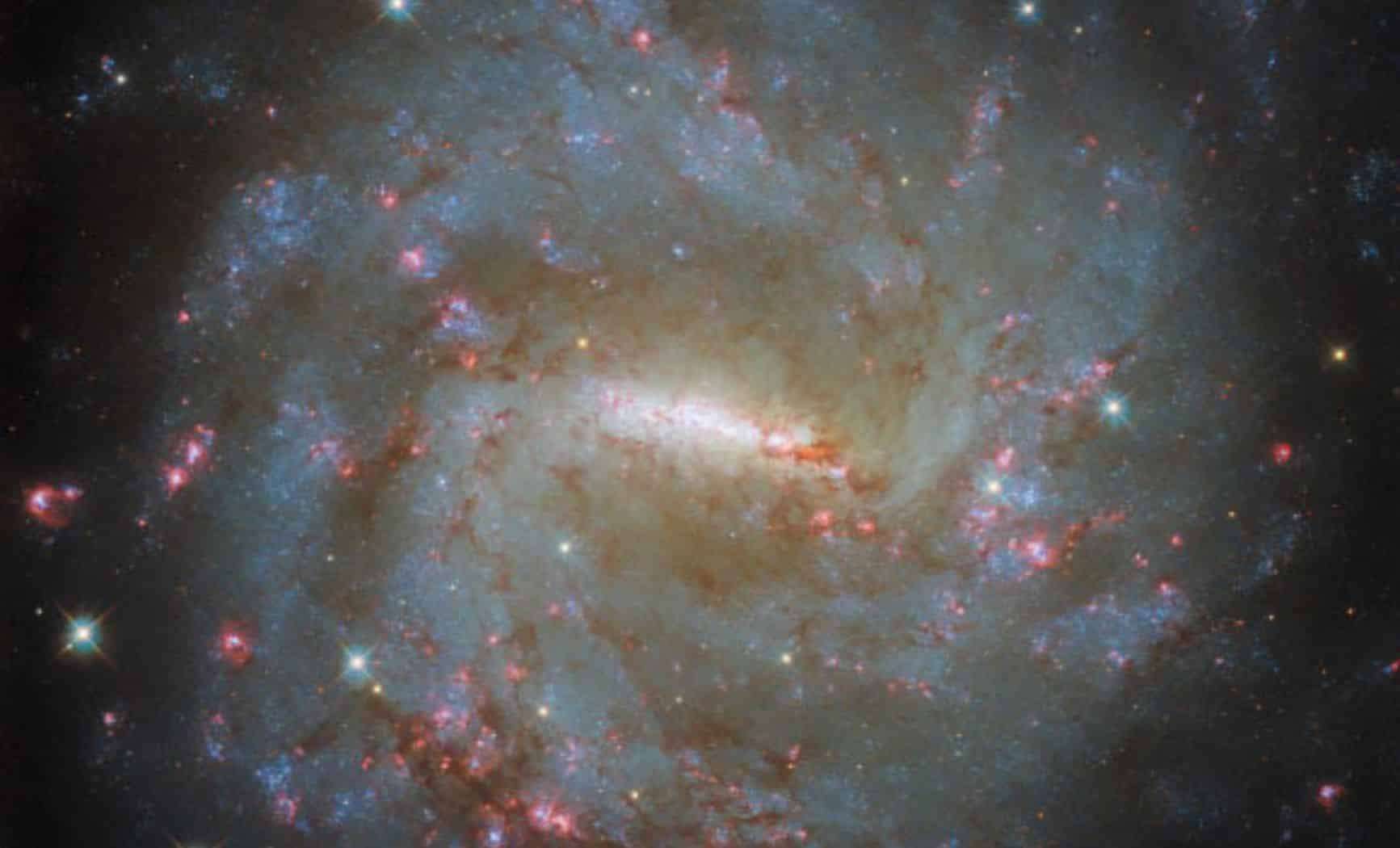
The Hubble Space Telescope has delivered a captivating image of the barred spiral galaxy NGC 3059, situated roughly 57 million light-years away in the Carina constellation.
This stunning capture not only highlights the galaxy’s visual allure but also sheds light on the mechanisms behind star formation. The detailed observations made possible by Hubble reveal the complex and vibrant structure of NGC 3059, showcasing numerous regions rich in star birth and other intriguing characteristics.
Insights from the Observation
In May 2024, Hubble’s Wide Field Camera 3 (WFC3) obtained this data using a variety of filters, notably including the narrow-band H-alpha filter. This filter isolates the H-alpha emission line at 656.46 nanometers, an essential tracer of star-formation activity.

Utilizing this technique, astronomers can pinpoint the galaxy areas where stars are actively forming. These pockets often stand out as bright red spots, signifying concentrations of hydrogen gas involved in stellar creation.
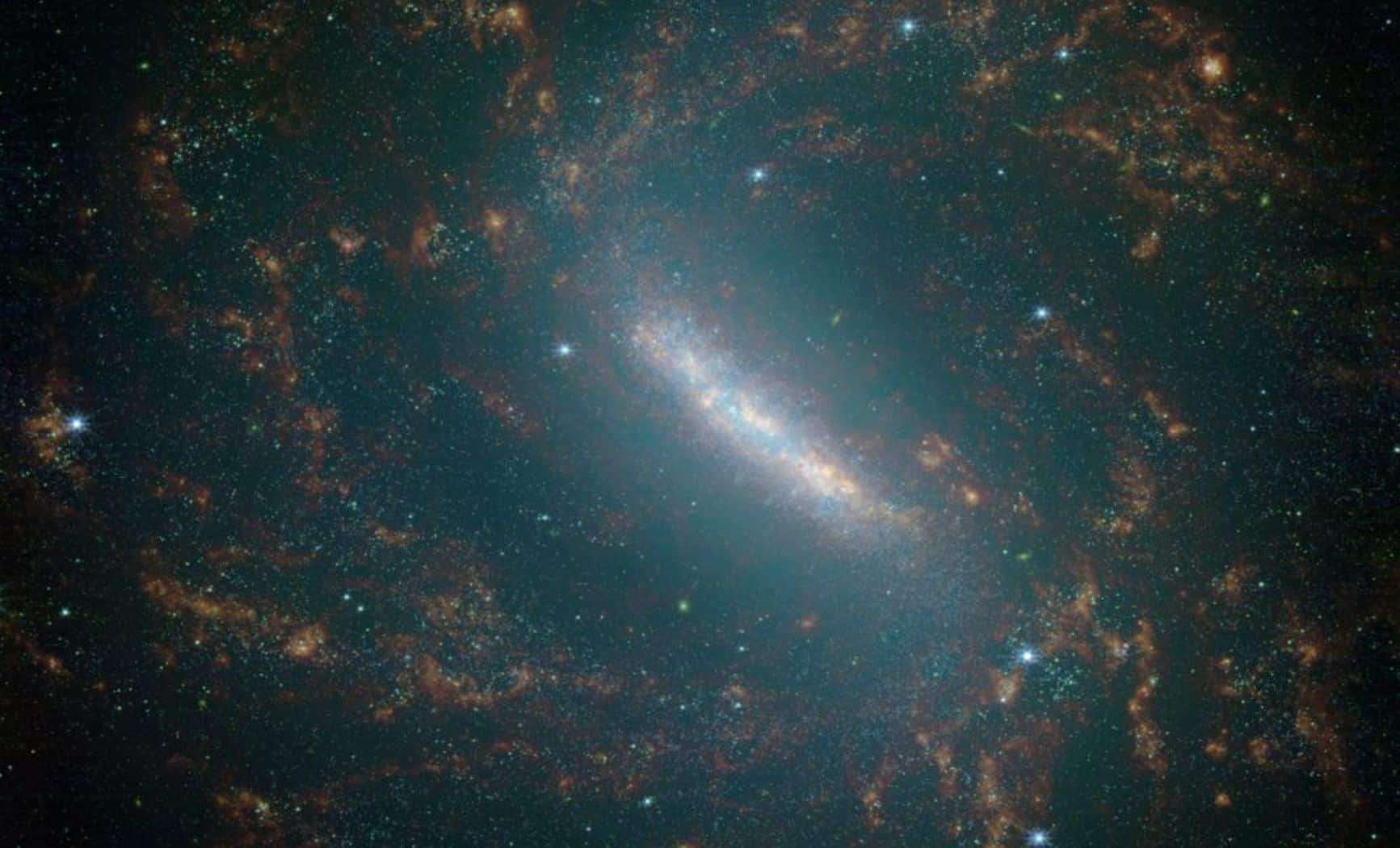
The red light from H-alpha emission originates when hydrogen atoms emit energy at a specific wavelength, typically linked to new star formation. This spectral line is a fundamental tool for researchers investigating both star formation and the conditions inside galaxies.
The image distinctly reveals multiple such active zones within NGC 3059, emphasizing its energetic and evolving nature. These observations deepen our understanding of stellar life cycles and galaxy development.
The Importance of Astronomical Filters
Filters are essential in astronomy as they allow scientists to focus on specific light wavelengths. Narrow-band filters like H-alpha are especially useful for detecting precise physical and chemical events occurring in the universe.
These filtering methods enable astronomers to carry out in-depth analyses of various celestial phenomena. In this case, the H-alpha filter highlights areas of ionized hydrogen indicative of ongoing star formation.
Besides the narrow-band filter, the NGC 3059 image incorporates data from five broad-band filters, which capture a wide spectrum of light from ultraviolet to near-infrared. This broader light sampling helps portray different galactic elements, such as the spiral arms, central bar, and distinct star clusters.
Combining narrow- and wide-band data results in a richly detailed visual representation that outlines both the galaxy’s overall structure and its specific features. This multi-wavelength approach is key for exploring the interactions between star systems and the interstellar medium.
Impact of This Discovery
Known also as ESO 37-7, IRAS 09496-7341, and LEDA 28298, NGC 3059 spans about 55,000 light-years in diameter. It was first identified by John Herschel on February 22, 1835. Hubble’s recent observations offer fresh perspectives on the internal dynamics of this galaxy, especially the drivers behind star formation. The observations map where star creation occurs and its intensity, shedding light on NGC 3059’s history and development.
Investigations of galaxies like NGC 3059 are vital to assembling a comprehensive picture of how galaxies evolve and how stars progress through their life stages. This galaxy’s active star-forming regions confirm it as a lively, evolving system.
By analyzing these observations, astronomers learn about the early phases of star birth and the environments that promote such activity. The research also reveals how galactic bars, like the one in NGC 3059, channel gas inward, sparking central star formation bursts.
The influence of NGC 3059’s central bar is especially notable. Such bars are believed to drive gas flows toward galactic centers, which can trigger heightened star-forming episodes. Studying this effect in NGC 3059 supplies crucial data for refining models of galaxy behavior and evolution, thereby enhancing our knowledge of how galaxies similar to the Milky Way have transformed over cosmic time.
- Categories:
- Astronomy ,
- News ,
- Space ,
- Nasa








0 comments
Sign in to Comment