
Amid growing global turmoil and environmental challenges, Bill Gates is sounding a clear alarm. In an extensive discussion with L’Express, the tech pioneer and philanthropist delivered a stark warning: humanity stands at a pivotal moment, and choices made in the coming twenty years will have lasting consequences for future generations.
Though Gates has often issued bold forecasts, his message now carries a heightened sense of urgency. He highlights a rapid decline in global unity as nationalism surges and support for development projects diminishes, threatening the fabric of international collaboration.
However, Gates’s caution extends beyond merely identifying problems. It serves as an urgent appeal for renewed dedication. He plans to allocate almost his entire wealth to the Bill & Melinda Gates Foundation, convinced that the solutions to the world’s pressing issues already exist—provided we choose to act.

Decreasing Aid as Challenges Intensify
Data from the Organisation for Economic Co-operation and Development (OECD) indicates a nearly 5% drop in official development aid from key donor nations in 2023, despite rising climate crises, food shortages, and fragile health systems across much of the Global South.
Gates interprets this decline as part of a wider withdrawal by affluent countries from multilateral commitments. “The urge to prioritize domestic issues has never been greater,” he explained to L’Express. Beyond funding cuts, volatile political environments and economic doubts have pushed global obligations to the background.
The consequences of this inaction are stark. A World Bank report predicts that over 570 million people may remain trapped in extreme poverty by 2030, putting vital United Nations development goals out of reach. Gates cautions, “We’re facing the risk of cementing worldwide inequality.”
Progress in Child Survival—But More Work Needed
Gates identifies child health as an area of both significant achievement and ongoing vulnerability. In 1990, the annual death toll of children under five exceeded 12 million. By 2021, that figure had dropped to 5 million, based on UNICEF estimates, thanks to expanded vaccination, better sanitation, and improved maternal care.
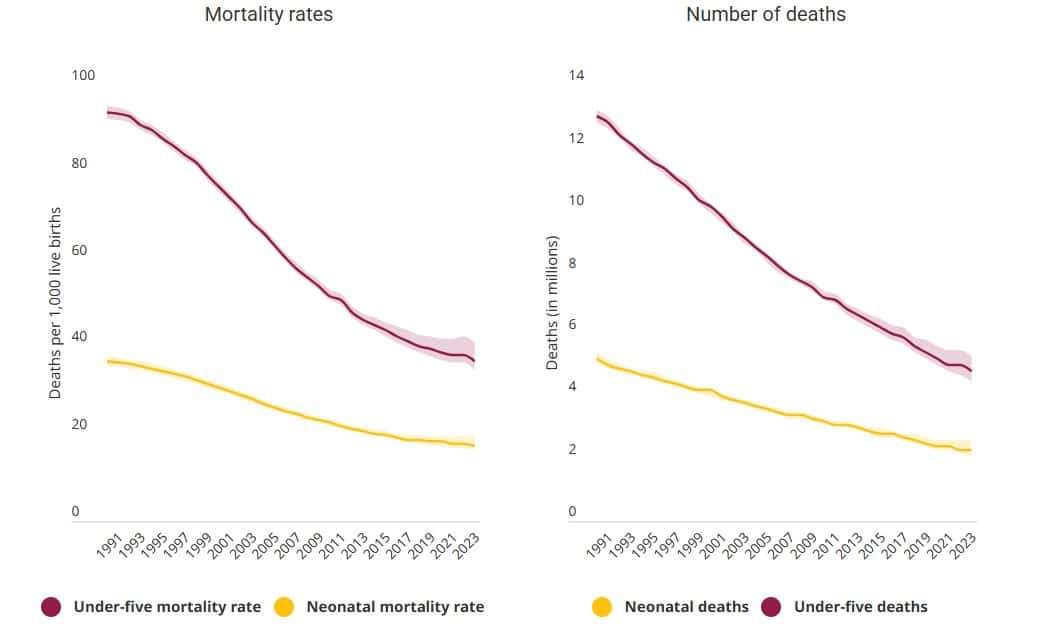
He believes child deaths can be reduced further—to around 2 million by the 2040s—with continued investment in worldwide healthcare infrastructure. Through collaborations with groups like the World Health Organization (WHO) and Gavi, the Vaccine Alliance, the Gates Foundation has played a key role in immunizing hundreds of millions of children.
Nonetheless, these gains face renewed peril. The COVID-19 pandemic disrupted vaccination efforts in more than 70 nations, while hesitancy toward vaccines has increased since. According to a 2023 study in The Lancet, it may take years for immunization programs to bounce back in low-income countries. Without deliberate focus, child mortality rates risk stagnation or even reversal.
The Interlinked Challenges of Climate Change and Technological Progress
According to Gates, climate change intensifies existing development hurdles. “Each extreme weather event erodes years of advancement,” he noted. A UN Environment Programme (UNEP) report estimates that climate adaptation will require over $300 billion annually by 2030, far surpassing current financial pledges.
Despite these daunting figures, Gates remains hopeful about innovation. Via Breakthrough Energy, he backs research into carbon capture technologies, advanced nuclear energy, and sustainable protein alternatives. He asserts that equitable deployment of climate tech can drive a transition to a low-carbon economy.
Yet he cautions that technology alone cannot solve these issues. “Innovations must be combined with forward-thinking policies, global partnership, and fairness. Otherwise, even the best advances risk benefitting only a privileged few,” he explained.
Philanthropy’s Timetable
Gates envisions philanthropy as a temporary measure. He has pledged that the Gates Foundation will wind down within 25 years of his and Melinda French Gates’ passing. The intent is to act decisively while solutions remain viable and time allows.
This approach matches findings from Stanford University’s Center on Philanthropy and Civil Society, which observes that time-delimited philanthropic projects tend to be more experimental and system-oriented. They often embrace riskier, long-term initiatives that others avoid.
Gates acknowledges that philanthropy cannot replace governmental duties but can step in where public institutions falter. “Governments must take the lead,” he affirmed. “Philanthropy can respond quickly, assume risks, and address areas politics won’t touch.”
- Categories:
- News






0 comments
Sign in to Comment