
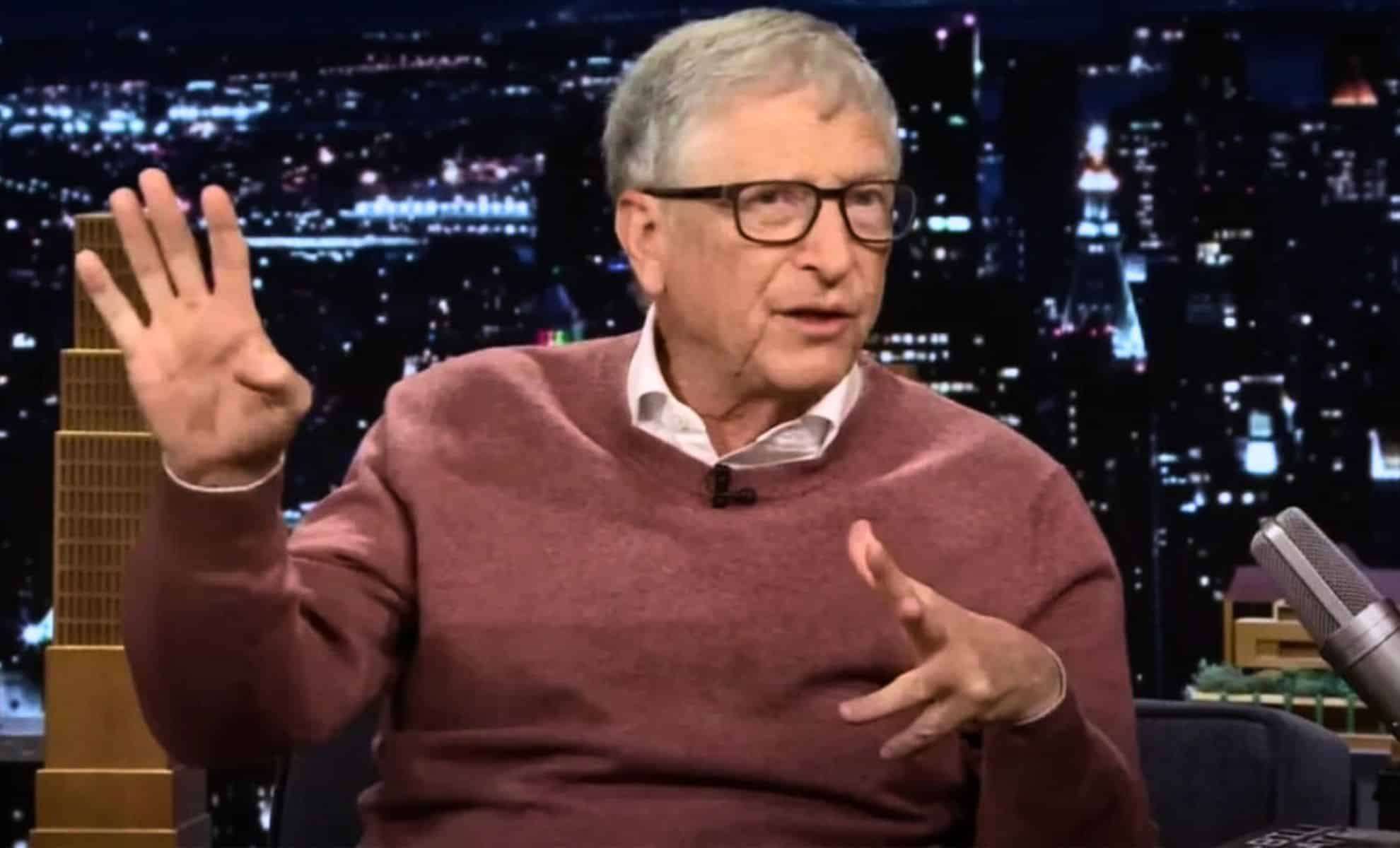
With artificial intelligence becoming an integral part of our everyday activities, world leaders are reconsidering how human employment will evolve. AI's capacity to revolutionize sectors such as education, healthcare, and manufacturing is no longer hypothetical—it is actively reshaping these fields. Microsoft co-founder Bill Gates recently shared his insights on how this wave of innovation may influence jobs worldwide.
During an appearance on The Tonight Show with Jimmy Fallon, Gates discussed the rapid progression of AI technology. He commented, “Within the next ten years… human involvement won’t be necessary for most tasks.” Calling AI-powered advancements both “profound and a bit unsettling,” he envisioned a future of readily accessible expert knowledge delivered instantly by intelligent machines.
AI's Growing Influence in Healthcare and Education
Gates predicts that AI will soon surpass human abilities in crucial areas like healthcare and education. “Top-tier medical guidance and personalized tutoring will become universally available at no cost,” he remarked on Fallon’s show. This could significantly lower the reliance on specialized professionals, extending expert-level resources to a broader audience.

In a discussion with Harvard University’s Arthur Brooks, Gates highlighted that AI’s impact will reach beyond mere efficiency gains. He envisions breakthroughs in combating climate change, improving public health, and tailoring education to individual learners. According to him, “The pace is incredibly fast, with no apparent limits,” underscoring AI's exponential evolution.
Three Career Areas AI May Struggle to Automate
Despite the widespread disruption anticipated, Gates pinpointed three professions that are less likely to be entirely replaced by AI: software development, energy management, and biological research. He attributes this resilience to the intricate nature of human discernment and decision-making in these domains.
In software engineering, Gates emphasizes the necessity of human involvement. While AI can assist with simple coding tasks, expert programmers are vital for troubleshooting, designing complex systems, and driving innovation. He asserted, “Even over the next century, AI will not supplant the imaginative aspect of programming.” This resonates with industry consensus that AI tools support but do not fully replace the creative and strategic skills essential in software design.
Reliance on Human Skill in Energy and Biological Fields
The energy sector also presents significant challenges for full AI automation. Managing nuclear facilities and integrating renewable energy sources are highly sensitive tasks where safety is paramount, requiring vigilant human oversight. AI has yet to demonstrate the capability to handle such complex, high-stakes environments independently.
In biological sciences, Gates underlines the significance of human creativity in research. Although AI excels at analyzing data and diagnostics, generating novel scientific hypotheses and directing innovation remain human endeavors. Additionally, as he noted in an interview with France Inter, budget constraints in biological research demand strategic decision-making by scientists, a nuance beyond AI's current scope.
The Future of Jobs: Automation and Human Roles
While software developers, energy professionals, and biologists may continue to be indispensable, various other roles face heightened threat from automation. Gates mentioned that with advances in machine precision, occupations like chefs and surgeons could eventually be overtaken by robotics, although societal acceptance of machines in caring or artisanal roles remains hesitant.
Conversely, positions such as administrative assistants and graphic designers are already experiencing AI-driven transformations. Generative AI tools capable of producing documents, visuals, and data insights are altering the landscape of these jobs. Insights from France Travail also stress the significance of critical thinking and problem-solving abilities in successfully navigating these changes.
Adapting to an AI-Dominated Workforce
Gates maintains a hopeful outlook regarding AI’s benefits but acknowledges the hurdles ahead. Though current AI systems impress, they remain vulnerable to errors and misinformation. He advocates for entrepreneurship and adaptability as key strategies. “I encourage young talent at Microsoft, OpenAI, and elsewhere: ‘this is the new frontier,’” he said.
Looking forward, Gates anticipates shorter workweeks—potentially as brief as three days—driven by gains in productivity brought on by automation. Yet, he cautions that professionals outside the adaptable sectors may need to reconsider their career choices. His advice is clear: “embrace working alongside AI rather than fearing it.”
- Categories:
- News










0 comments
Sign in to Comment