

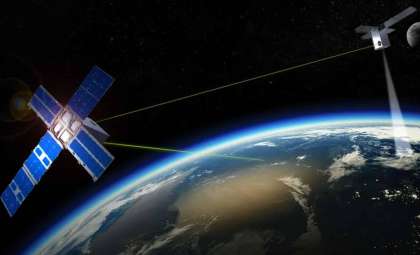
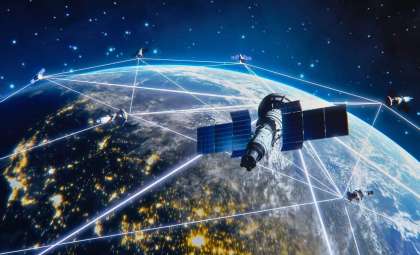
Chinese researchers have made a remarkable stride in space communication by employing an ultra-low power laser to achieve data transfer speeds surpassing those of Starlink satellites. From a geostationary orbit at approximately 36,000 kilometers altitude—significantly higher than Starlink's typical 550-kilometer orbit—this Chinese satellite has set a new benchmark in high-speed data transmission from space.
A Breakthrough in Laser Communication
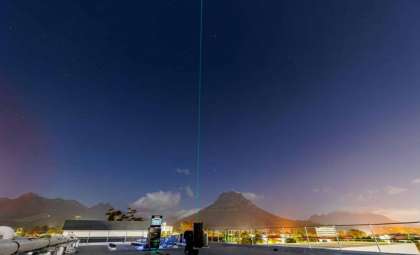
The key to this accomplishment is a modest 2-watt laser capable of transmitting information at an impressive rate of 1 gigabit per second (Gbps). This rate exceeds Starlink’s data throughput by a factor of five, despite the Chinese satellite’s lower-powered beam. As reported by InterestingEngineering, the faint laser successfully navigated the challenges posed by Earth's fluctuating atmosphere, overcoming a longstanding barrier in satellite laser communication: atmospheric distortion.
This breakthrough results from the combined efforts of Professor Wu Jian from Peking University and Liu Chao of the Chinese Academy of Sciences, who engineered a novel technique dubbed AO-MDR synergy. By integrating Adaptive Optics with Mode Diversity Reception, the system dynamically adjusts and stabilizes the laser signal, effectively combating atmospheric disturbances and maintaining data integrity even under turbulent conditions.

Addressing Atmospheric Distortion Challenges
Atmospheric turbulence has historically posed a significant obstacle for laser satellite communication by scattering and distorting light signals, resulting in unstable links. Prior approaches utilizing either AO or MDR independently fell short during intense atmospheric fluctuations.
By merging these two strategies, the AO-MDR synergy not only corrects wavefront distortions but also collects scattered light more effectively. This dual-action approach fortifies the signal's strength and stability, facilitating reliable data transmission with minimal laser power. This development marks a pivotal moment in mitigating one of the most difficult obstacles in the realm of space communications.
Implications for Satellite Connectivity
Beyond the raw speed improvements, this development heralds a new era for long-distance, high-quality satellite data transmissions. The ability to sustain strong signals over 36,000 kilometers with minimal degradation and without extensive ground infrastructure could revolutionize global data networks. This technology promises enhanced dependability vital for sectors such as telecommunications, live media broadcasting, and space exploration reliant on immediate data exchange.
For consumers and industries, improved bandwidth could translate to smoother HD streaming with fewer interruptions, opening opportunities for next-generation connected services worldwide.
Looking Ahead: Global Impact and Technological Leadership
This advancement represents not only a leap forward for China's space technology ambitions but also a significant contribution to international scientific progress. By extending the frontiers of laser-based communication, these innovations pave the way for faster internet speeds, more resilient communication channels for space missions, and enhanced accuracy in global navigation systems.
With ongoing refinement, satellite laser communication technology is poised to outperform conventional radio frequency methods, offering greater data capacity, increased speeds, and lower latency. This milestone underscores China’s emerging leadership in space communications while intensifying the competitive landscape in the quest to dominate future satellite networks.
- Categories:
- News







0 comments
Sign in to Comment