
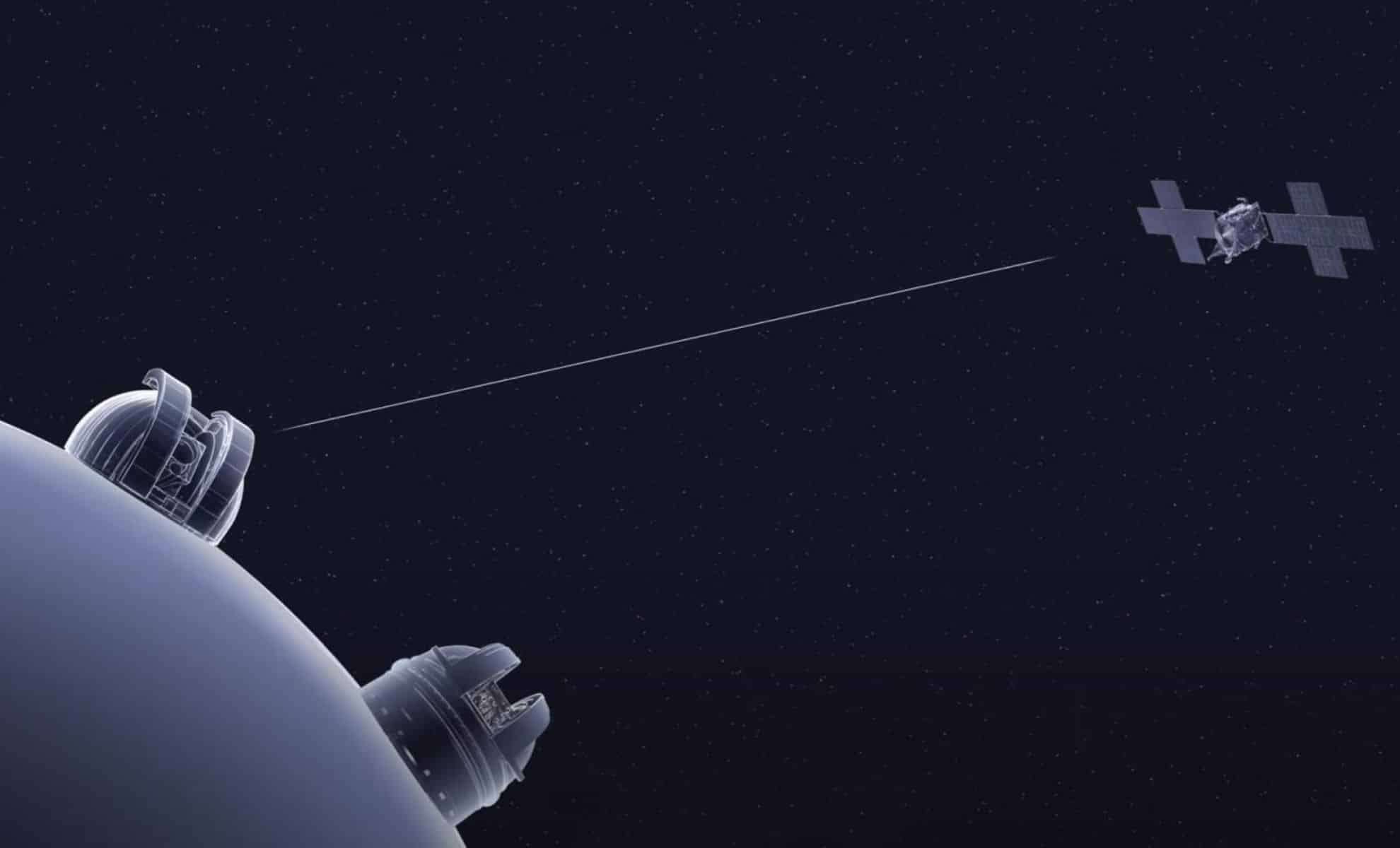
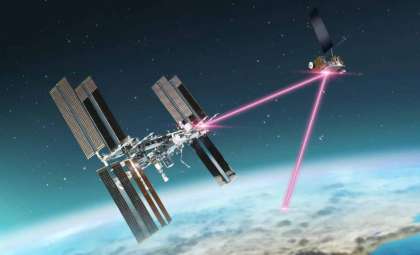
NASA has recently set a remarkable benchmark in space communication by successfully transmitting laser signals over a distance of 290 million miles (460 million kilometers) — approximately the greatest distance between Earth and Mars. This achievement concludes the initial phase of the Deep Space Optical Communications (DSOC) demonstration, which launched onboard the Psyche spacecraft on October 13, 2023. Harnessing laser technology, NASA is revolutionizing space communications to deliver faster and more efficient data transfer for upcoming missions targeting Mars and outer space.
Advancing Communication Through Laser Technology
The DSOC experiment explores replacing traditional radio frequency transmissions with lasers—a shift that could enhance data rates by up to 100 times. This breakthrough promises to transform space exploration. As Meera Srinivasan, operations lead at NASA’s Jet Propulsion Laboratory (JPL), stated, “This milestone is crucial. Laser communication demands extreme precision, and before Psyche’s launch, we were uncertain about performance degradation at such vast distances.” She emphasized, “Our tracking and pointing techniques have now been validated, proving optical communications as a powerful tool for exploring our solar system.”
DSOC operates through a laser transceiver mounted on the Psyche spacecraft combined with two Earth-based stations. The Hale Telescope at Caltech’s Palomar Observatory receives the deep space laser signals, while JPL’s Optical Communications Telescope Laboratory at Table Mountain transmits data using a robust 7-kilowatt laser. This setup allows NASA to send detailed scientific information, ultra-clear images, and videos over unprecedented distances and speeds.

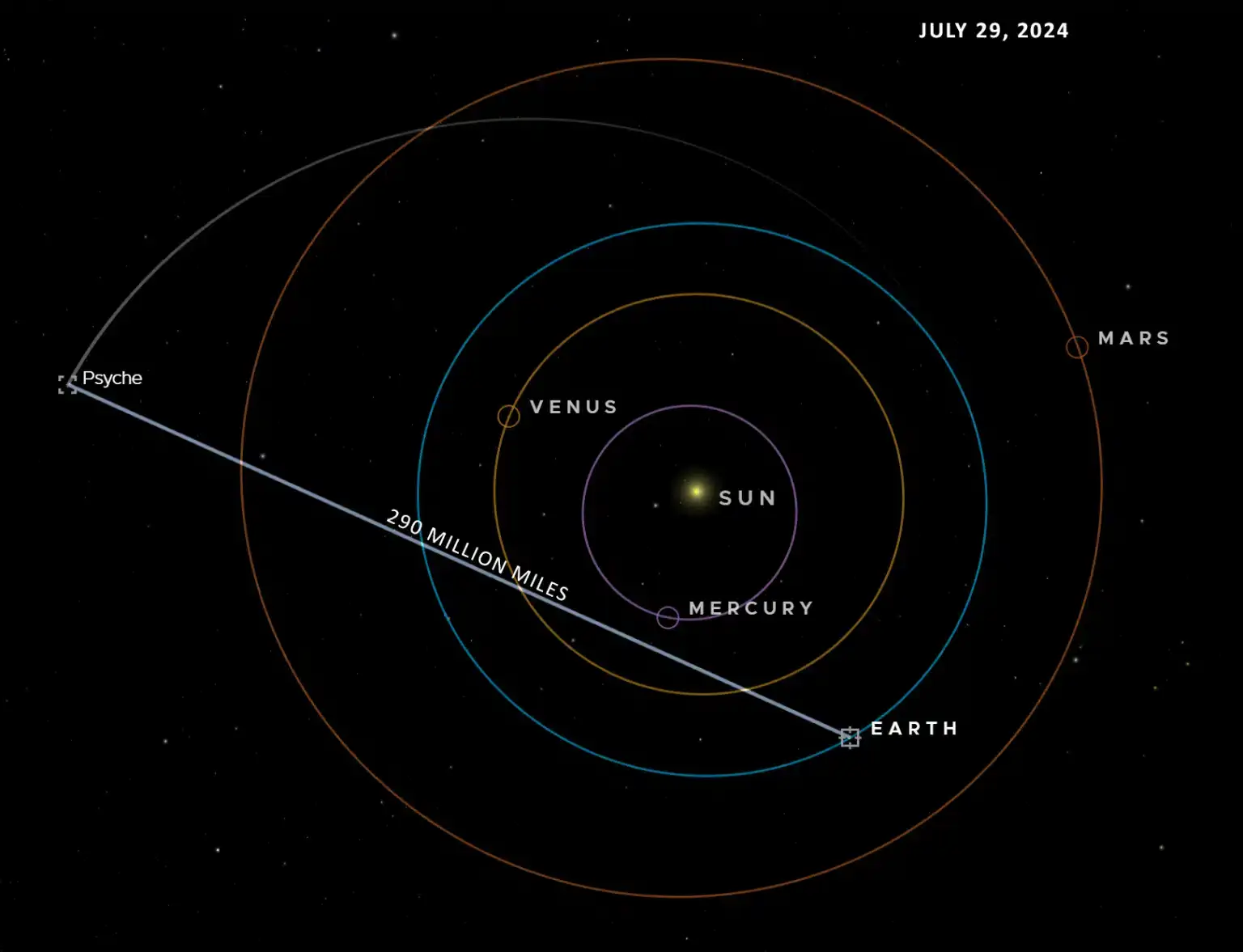
Record-Breaking Performance in Deep Space
The DSOC mission aims to prove that laser communication can effectively transfer data across the vastness of space at high speeds. When Psyche was about 33 million miles (53 million kilometers) away — roughly Mars' closest approach to Earth — it transmitted data at a top speed of 267 megabits per second, comparable to Earth-based broadband internet.
As the spacecraft journeyed farther, data rates decreased as expected. Even at a distance of 240 million miles (390 million kilometers), the system sustained an impressive 6.25 megabits per second downlink, peaking at 8.3 megabits per second. These rates surpass what conventional radio frequency communications could achieve over such expansive distances.
Data transmissions included a variety of large files: digital copies of Arizona State University’s “Psyche Inspired” artwork, photos of team members’ pets, and a 45-second ultra-high-definition video mimicking classic TV test patterns. This marks the first time such ultra-HD video has been sent from space via laser from 240 million miles away. As project technologist Abi Biswas noted, “We aimed to demonstrate that data-rate decline followed the inverse square of distance. This goal was met as massive amounts of test data were successfully sent to and from Psyche using laser communication.” The mission has already downlinked over 11 terabits of data in this initial phase.
The Future Impact of Laser Communications
The DSOC project supports NASA’s vision for human exploration of Mars and other distant targets. Faster data transfer means more intricate scientific investigations and the ability to send real-time high-resolution video and images vital for crewed missions. Reliable, high-speed laser communications could enable astronauts and Earth mission control to maintain near-instant contact, no matter the distance.
Unlike radio frequency systems that are limited by bandwidth and power demands, laser communication leverages near-infrared light—a much higher frequency—allowing denser data encoding and dramatically faster transmission. This innovation could overhaul how NASA communicates with spacecraft exploring the far reaches of the solar system.
Successfully transmitting HD data across massive distances signifies a key step toward supporting ambitious missions like manned Mars exploration. Laser technology could shorten communication delays and enhance mission efficiency, unlocking new possibilities for deep-space missions.
Upcoming Stages of the DSOC Demonstration
With the first phase complete, NASA plans ongoing testing and refinement. After a brief pause, the next phase will resume in November 2024 to assess the system’s ongoing reliability. Ken Andrews, JPL’s flight operations lead, explained: “We will reactivate the flight laser transceiver for a short functionality check. Following that, full-capability operations will begin during our post-conjunction phase later in the year.”
This stage will evaluate the system's performance over longer durations and greater distances as Psyche continues towards a metal-rich asteroid in the main asteroid belt between Mars and Jupiter. This extended mission will provide vital insights into deep-space laser communication under challenging conditions.
The DSOC initiative is overseen by NASA’s Space Technology Mission Directorate (STMD), in partnership with organizations like MIT Lincoln Laboratory, L3 Harris, Fibertek, and Caltech Optical Observatories. This demonstration builds upon years of NASA’s development efforts in optical communication technologies.
- Categories:
- Astronomy ,
- News ,
- Nasa









0 comments
Sign in to Comment