
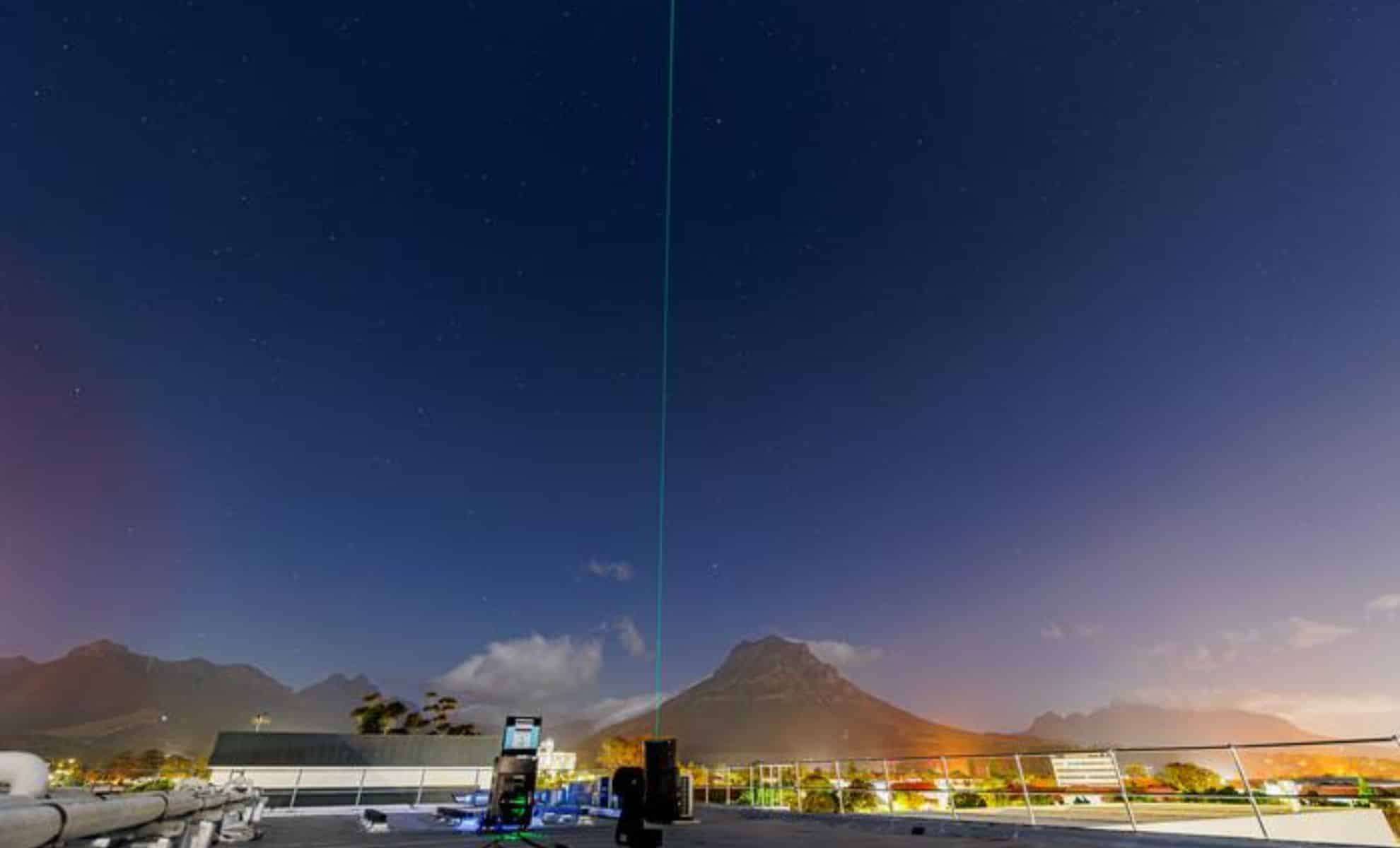
In a groundbreaking advancement toward worldwide quantum internet connectivity, scientists have demonstrated live quantum key distribution (QKD) between a microsatellite and several mobile ground stations. This milestone was accomplished using Jinan-1, the planet’s first quantum microsatellite, developed through a partnership led by the University of Science and Technology of China (USTC), alongside the Jinan Institute of Quantum Technology, the Shanghai Institute of Technical Physics, the Chinese Academy of Sciences, and Stellenbosch University in South Africa. The research was published recently in Nature.
Quantum communication offers unbreakable encryption, revolutionizing cybersecurity, military intelligence, and financial privacy. This latest achievement confirms that compact, cost-effective quantum satellites can be quickly deployed, opening the door to networks of quantum microsatellites that could enable secure communications on a global scale.
Advancing the Frontier of Quantum Encryption
Quantum key distribution (QKD) leverages quantum mechanics to enable two parties to share encryption keys with foolproof security. Unlike classical cryptography, any interception attempts alter the quantum states, revealing eavesdropping.

Previously constrained to fiber-optic cables limited by distance and signal degradation, QKD is now poised for much broader use through satellite-based free-space optical communication, facilitating secure data transmission across thousands of kilometers.
China has pioneered this technology, with its 2016 launch of the Micius quantum satellite. While Micius demonstrated QKD between orbit and fixed ground sites, Jinan-1 represents a leap forward by integrating quantum links with mobile, compact ground stations, making deployment more adaptable and scalable.
Jinan-1: A Compact Quantum Communication Innovator
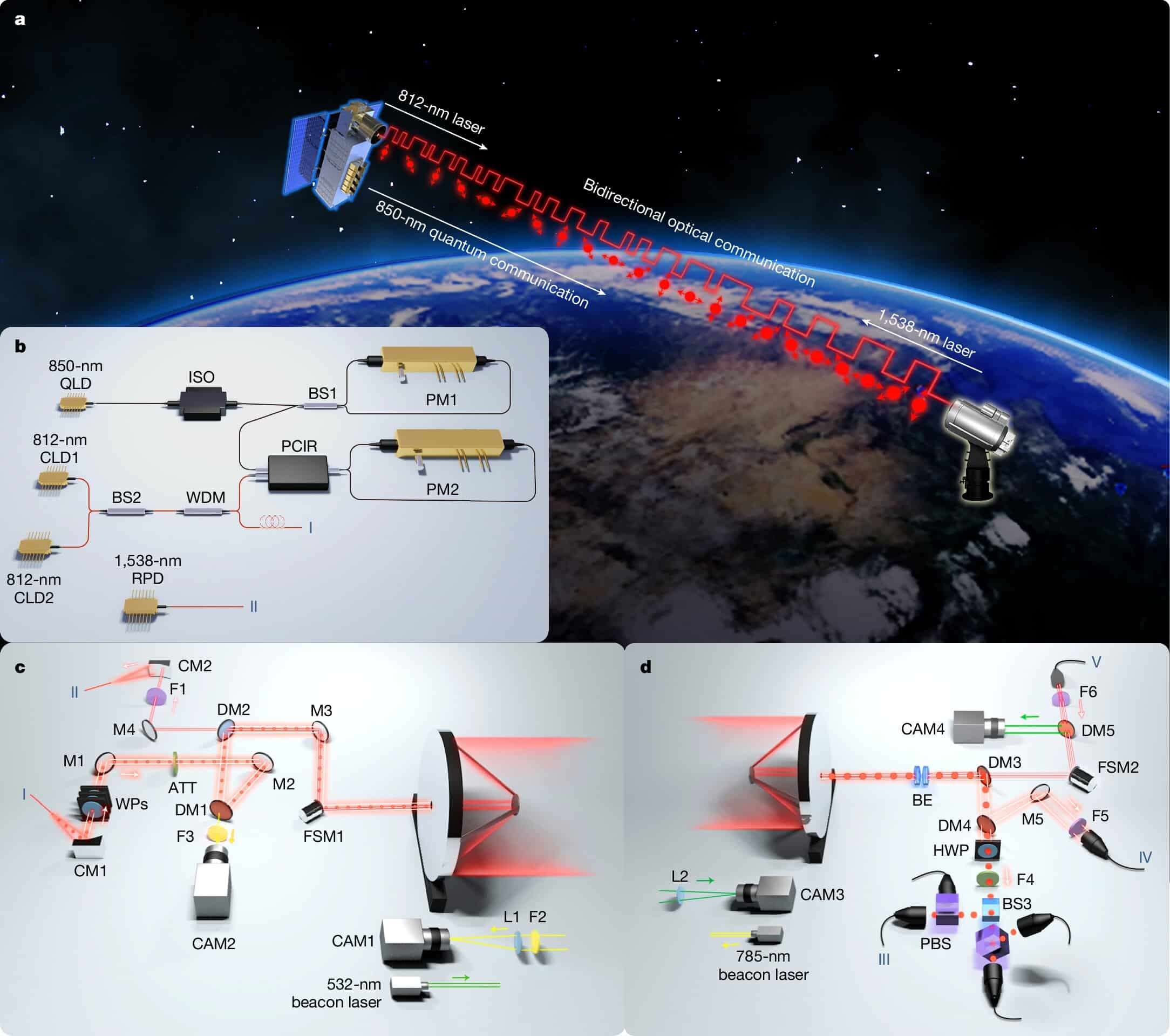
Jinan-1 was launched on July 27, 2022, aiming to offer a more affordable and lightweight substitute to older quantum satellites. It incorporates state-of-the-art components, such as:
- Miniaturized decoy-state QKD light sources to generate quantum states
- Laser-based real-time quantum key distillation and secure data transmission
- High-accuracy tracking and attitude control systems to sustain stable optical connections with ground terminals
The project also introduced compact optical ground stations weighing under 100 kg, tailored for portability and quick deployment across diverse locations. This mobility is crucial for establishing a scalable quantum satellite infrastructure capable of delivering secure connectivity globally.
Cross-Continental Secure Key Transmission Between Beijing and South Africa
Test operations for Jinan-1 included establishing optical contact with various ground stations throughout China—such as Jinan, Hefei, Nanshan, Wuhan, Beijing, and Shanghai—and Stellenbosch, South Africa. The satellite emitted about 250 million quantum photons per second, enabling up to 1 megabit of secure keys per single satellite pass.
A landmark result was the safe key exchange between Beijing and Stellenbosch, cities nearly 12,900 km apart. Using Jinan-1 as a trusted intermediary, researchers successfully showcased secure quantum communication spanning continents, validating the feasibility of a global quantum secure network.
- Categories:
- News









0 comments
Sign in to Comment