
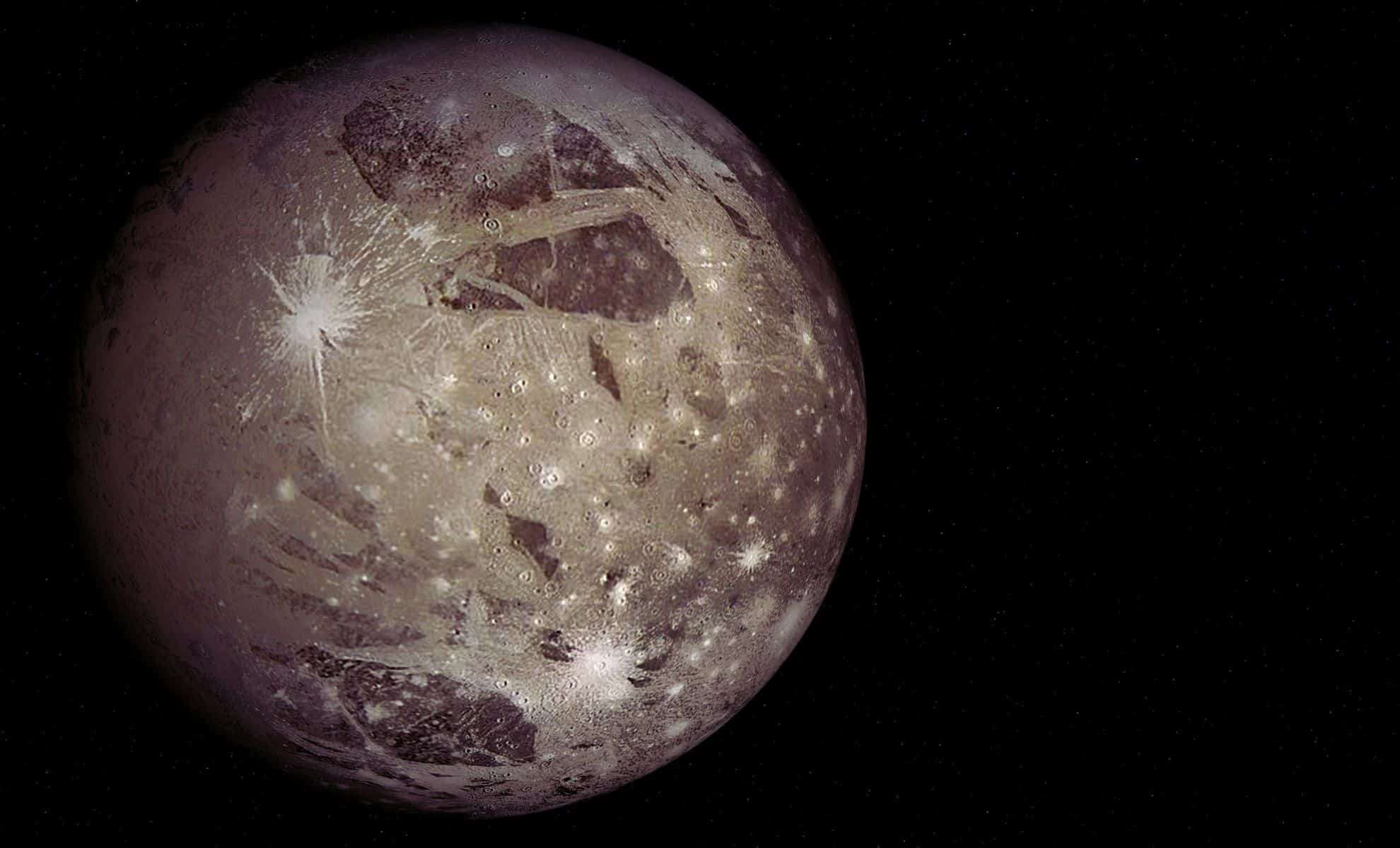
Dark matter constitutes roughly 27% of the universe, yet its nature continues to puzzle scientists worldwide. Despite decades of searching, researchers have not directly detected dark matter particles due to their weak interactions with ordinary matter. A recent study published on arxiv proposes a novel method: using Ganymede, the largest moon orbiting Jupiter, as a natural detector for these mysterious particles. This inventive strategy could shed light on dark matter by leveraging Ganymede's unique physical properties to reveal clues hidden in space.
Challenges Faced in Conventional Dark Matter Investigations
Traditional approaches aiming to uncover dark matter have often concentrated on elusive particles such as axions, WIMPs, and sterile neutrinos, which interact extremely weakly with standard matter. Experiments with cutting-edge detectors and accelerators have so far provided limited insight. In the new research, William DeRocco, a postdoctoral researcher at the University of Maryland, advocates exploring the possibility that dark matter consists of macroscopic objects. This so-called macroscopic dark matter (mDM) hypothesis suggests that instead of tiny particles, dark matter may consist of large, dense objects that are too sparse to be detected by particle-based search methods.
“While most efforts target particles with very weak interactions, the macroscopic dark matter framework proposes that dark matter could be composed of massive objects with extremely low abundance, thus evading current detection techniques,” the study explains.

Why Ganymede Serves as a Promising Dark Matter Detector
The research highlights the potential of massive planetary bodies to trap and signal dark matter impacts. Ganymede, being larger than the planet Mercury and geologically stable over billions of years, provides an exceptional setting for detecting macroscopic dark matter. Its distinct internal layers may preserve evidence of interactions that smaller bodies cannot reveal, offering a window into these rare events.
DeRocco points out, “There remains a vast unexplored parameter space for dark matter candidates between 10¹² and 10²² grams, spanning densities from those similar to atoms to nuclear density. Due to their immense mass and extremely low frequency—such as one object weighing 10¹⁴ grams passing through Earth every 100,000 years—these objects are practically undetectable by traditional means. Ganymede’s enormous size and longevity make it a compelling natural laboratory for capturing such phenomena.”
Distinctive Signs of Dark Matter Collisions on Ganymede
Over billions of years, Ganymede’s surface has amassed numerous impact scars. However, impacts caused by macroscopic dark matter may leave uniquely identifiable traces. According to DeRocco, these massive dark matter particles could penetrate far beneath the surface, disturbing internal layers and bringing up material that ordinary impacts cannot reach. This could produce identifiable markers that differentiate dark matter events from common meteorite strikes.
“Because Ganymede has compositionally diverse subsurface layers, collisions with dark matter could release deep-seated materials unavailable to typical impacts, presenting a critical signature for distinguishing these events,” DeRocco explains. Such evidence might appear as relatively small craters—under 10 kilometers wide—with unusually high melt volumes and atypical chemical signatures, defying standard explanations and signaling dark matter interactions.
Future Space Missions: A New Horizon in Dark Matter Exploration
Upcoming missions like the Jupiter Icy Moons Explorer (JUICE) and Europa Clipper are poised to investigate Jupiter’s moons with advanced high-resolution spectral imaging tools. These instruments might detect the subtle surface and subsurface anomalies caused by dark matter impacts, offering a groundbreaking method to seek out dark matter beyond Earth. Success in this endeavor could help narrow down viable dark matter theories and inspire fresh investigative directions.
Even if direct evidence from Ganymede remains elusive, the data gathered by these missions could still significantly enhance understanding. Jupiter itself is another promising site for dark matter research, and these spacecraft might revolutionize our comprehension of the universe's hidden mass regardless of what they uncover.
- Categories:
- News




0 comments
Sign in to Comment