
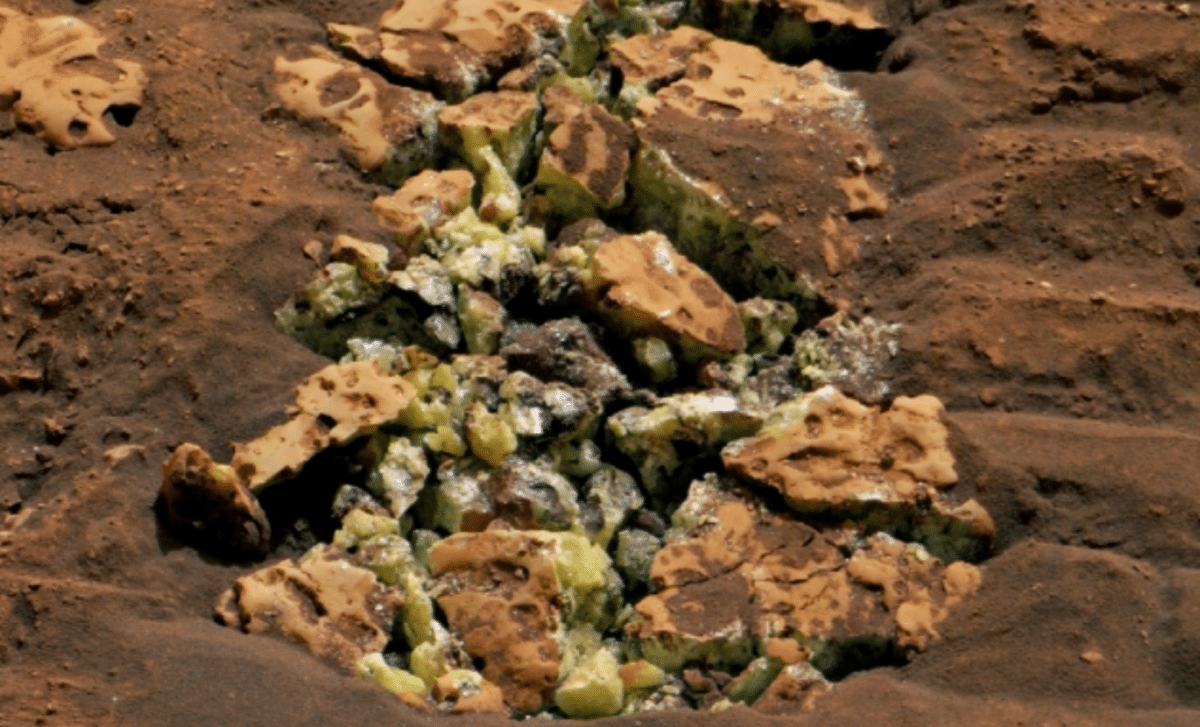
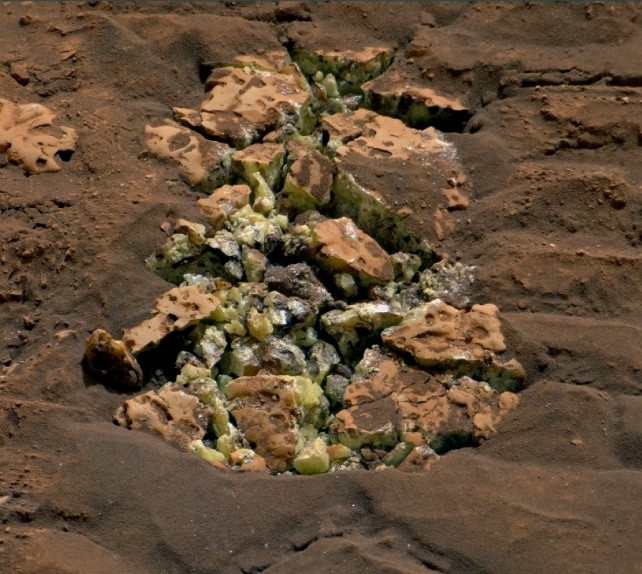
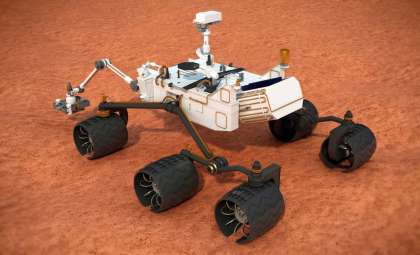
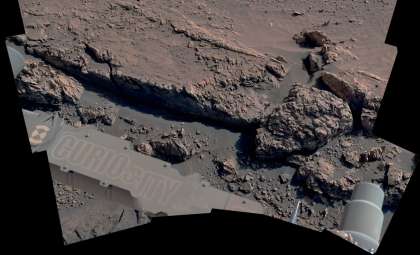
In a groundbreaking finding, NASA’s Curiosity rover has exposed an astonishing aspect of Martian geology. While investigating the surface in May 2024, the rover uncovered vibrant yellow crystals within a seemingly ordinary rock—identifying the presence of pure sulfur for the first time on Mars. This significant discovery occurred in the scientifically rich Gediz Vallis Channel, offering valuable insights into Mars’ geological past and its habitability potential.
The Importance of Elemental Sulfur on Mars
Although sulfur-containing compounds like sulfates are commonly detected on the Red Planet, finding sulfur in its uncombined, elemental state is exceptionally uncommon. Sulfates emerge from sulfur mixing with minerals in ancient water that later evaporated, forming solid deposits. Elemental sulfur, however, forms only under very specific circumstances not previously observed in the area Curiosity has been studying. This unprecedented detection has energized researchers, suggesting unique geological or chemical processes might have occurred here.
“Finding a field of stones made of pure sulfur is like finding an oasis in the desert,” said Curiosity’s project scientist, Ashwin Vasavada, at NASA’s Jet Propulsion Laboratory in Southern California. “It shouldn’t be there, so now we have to explain it. Discovering strange and unexpected things is what makes planetary exploration so exciting.”
Add Cosmo Herald as a Preferred Source

For those studying planetary geology, this find presents both an intriguing puzzle and a pathway to deepen knowledge. Unlocking the origins of this elemental sulfur could illuminate ancient Martian water activity and other environmental factors shaping the planet’s surface, a mystery that ongoing exploration aims to solve.
Insights Drawn from the Gediz Vallis Channel
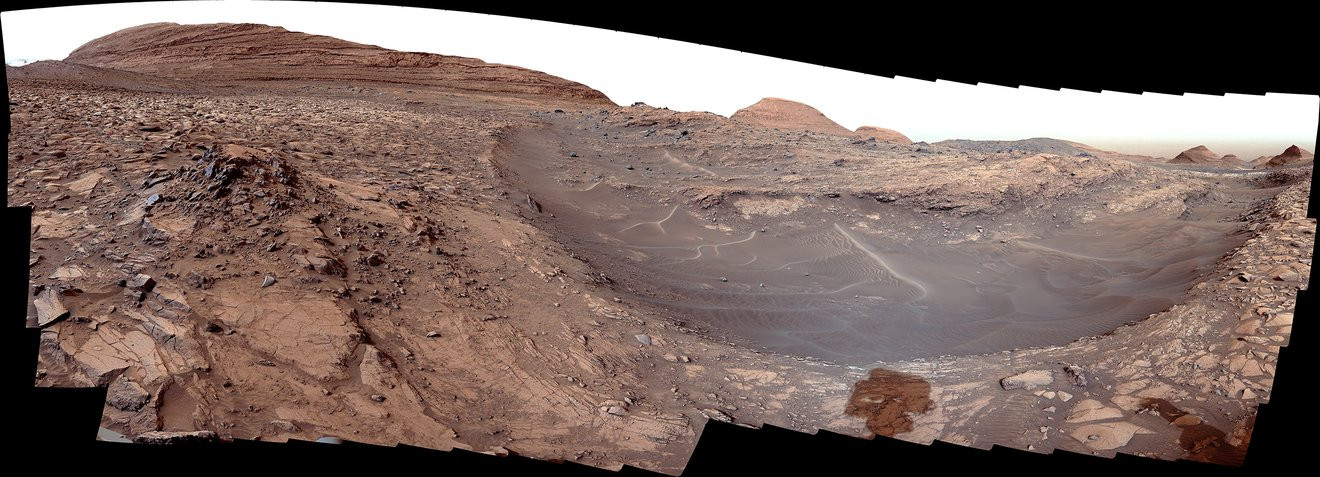
The Gediz Vallis Channel, an ancient dried riverbed carved by massive floods long ago, continues to captivate researchers. As Curiosity maneuvers through this terrain, it uncovers more evidence that Mars once experienced dynamic environmental conditions—including flowing water that shaped its surface dramatically.
“This was not a quiet period on Mars,” said Becky Williams, a scientist with the Planetary Science Institute in Tucson, Arizona, and the deputy principal investigator of Curiosity’s Mast Camera. “There was an exciting amount of activity here. We’re looking at multiple flows down the channel, including energetic floods and boulder-rich flows.”
The channel’s geology bears clear signs of historical water movement, and scientists are piecing together a more intricate narrative of how water and the Martian environment interacted over billions of years. The existence of pure sulfur may point to a distinct interplay of atmospheric and geological factors, possibly involving water in an unknown form.
Future Missions and Investigations by Curiosity
As the Curiosity rover continues its extensive expedition, the team anticipates uncovering more unexpected findings. With years of data already collected, the rover’s past achievements include detailed rock analyses and assessments of Martian weather patterns. Discovering pure sulfur adds a new and exciting chapter in understanding the Red Planet’s evolution.
Curiosity will persist in exploring the Gediz Vallis Channel, conducting thorough testing and gathering samples to shed light on Mars’ geological history. Each new piece of evidence brings humanity closer to unraveling the profound question: could Mars have once supported life?
- Categories:
- News




0 comments
Sign in to Comment