
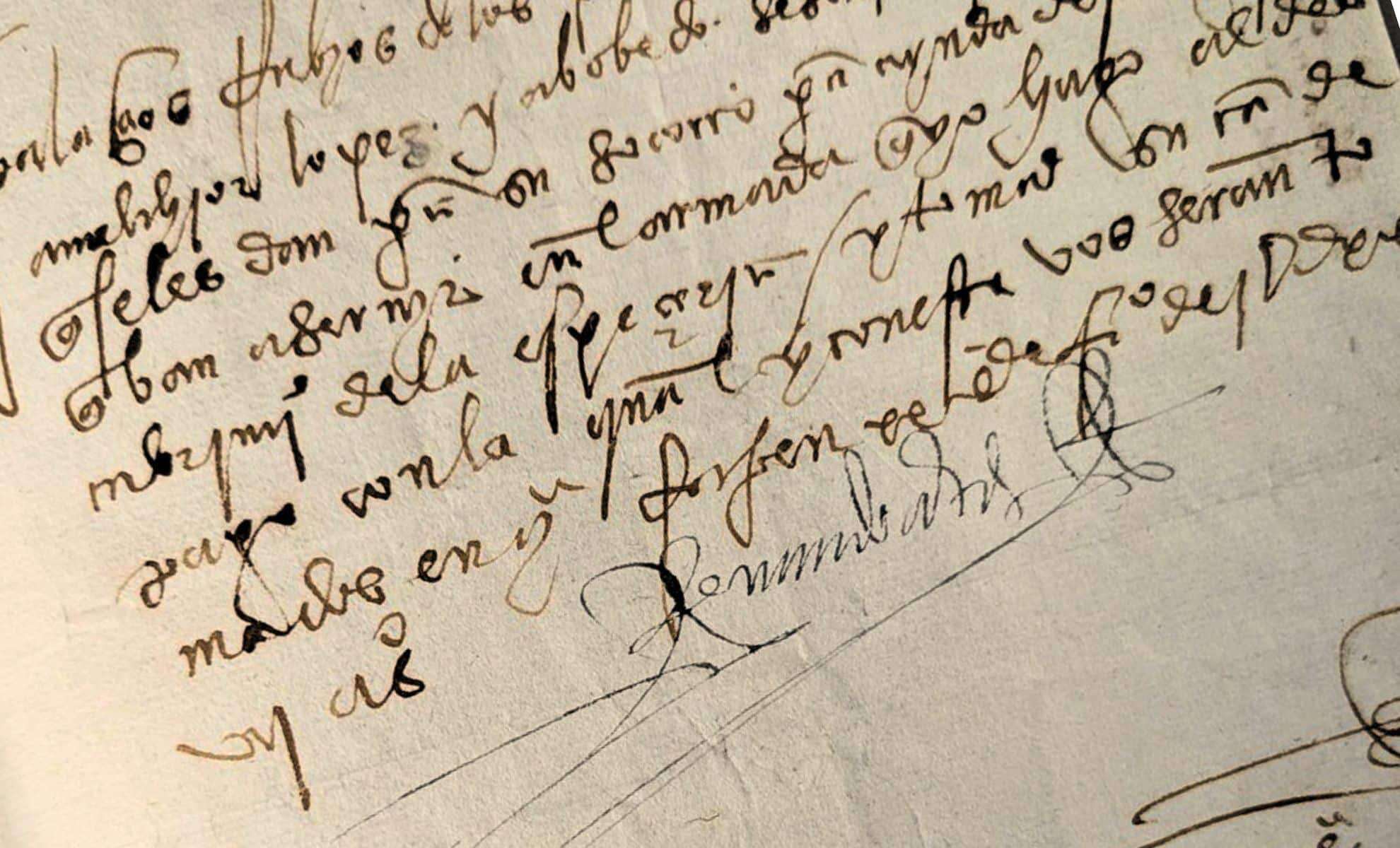
An ancient manuscript, nearly 500 years old and bearing the signature of Hernán Cortés, the Spanish conqueror known for toppling the Aztec Empire, has been officially handed back to Mexico by the FBI. Authorities described this as a noteworthy effort in cultural restitution. The document, dated February 20, 1527, went missing from the Mexican Archivo General de la Nación sometime during the late 20th century.
Per the FBI’s announcement, the manuscript resurfaced in the U.S. after circulating privately for many years. This event marks the FBI’s second successful retrieval of a Cortés-signed document within a two-year span, highlighting an increasing global initiative to reclaim historical artifacts taken illicitly.
A Document from a Defining Moment in New Spain’s History
This single-page manuscript is more than a mere artifact; it reflects a critical phase in Spain’s early colonial governance. Signed by Cortés only six years following the conquest of Tenochtitlán, it authorizes payment in “pesos of common gold for expenses” related to preparing an expedition—possibly linked to attempts to reach the Spice Islands or to explore new lands. FBI Special Agent Jessica Dittmer, from the Art Crime Team, noted the document “provides vivid insight into the planning and logistics involved in exploring unknown regions at that time.”

This manuscript originally belonged to a broader set of Cortés’ authentic letters and administrative papers held at Mexico’s national archives. It disappeared along with 14 other pages sometime between 1985 and 1993, a fact uncovered only during a microfilm review. Archivists later confirmed its identity through a wax numbering system briefly applied in the mid-1980s.
The document’s timing is especially significant. Signed in February 1527, days before one of Cortés’ officers was named co-governor of the newly acquired region, it coincides with the establishment of key royal and religious institutions that shaped Mexico until its War of Independence began in 1810.
FBI’s Pursuit to Recover the Lost Manuscript
The retrieval began after Mexican officials requested assistance in 2024, providing detailed archive documentation, including information on torn edges and specific page numbers. Leveraging this information, the FBI carried out a comprehensive investigation using open-source intelligence and traditional methods instead of undercover operations.
The manuscript was eventually located with a private collector in the continental United States. Since the item changed hands several times without any owner knowingly dealing in stolen property, no charges were filed. Cooperation from all involved enabled the FBI to formally return the document during a ceremony held on August 13, 2025.
Detective Rigel Zeledon of the NYPD, who collaborated with Agent Dittmer, highlighted the critical role of multi-agency teamwork. “Achievements like this rely on the Southern District of New York and our global partners,” he stated. This case reaffirms the importance of international partnerships in cultural heritage protection, a principle supported by the United Nations Educational, Scientific and Cultural Organization (UNESCO) in its policies against cultural property theft.
Ongoing Efforts and Future Repatriations
This is not an isolated success. In 2023, a 1527 letter authorizing payment for rose sugar was discovered in a Massachusetts auction catalog by Mexican authorities. The piece, listed with RR Auction, was withdrawn days before bidding ended. According to The New York Times, the auction house fully cooperated with federal agents. The letter was returned to Mexico in July of that year.
Both recovered manuscripts were verified using detailed archival annotations kept by the Archivo General de la Nación, which continues efforts to retrieve 13 other missing pages. The FBI’s Art Crime Team confirms an ongoing search for these items. The team also manages the National Stolen Art File, a public database tracking missing cultural treasures on the FBI’s site.
The illicit trade in rare artifacts and manuscripts remains widespread. A 2018 INTERPOL report highlights that crimes involving cultural property often go unreported and are hard to prosecute due to inadequate documentation and frequent cross-border trafficking.
- Categories:
- News













0 comments
Sign in to Comment