
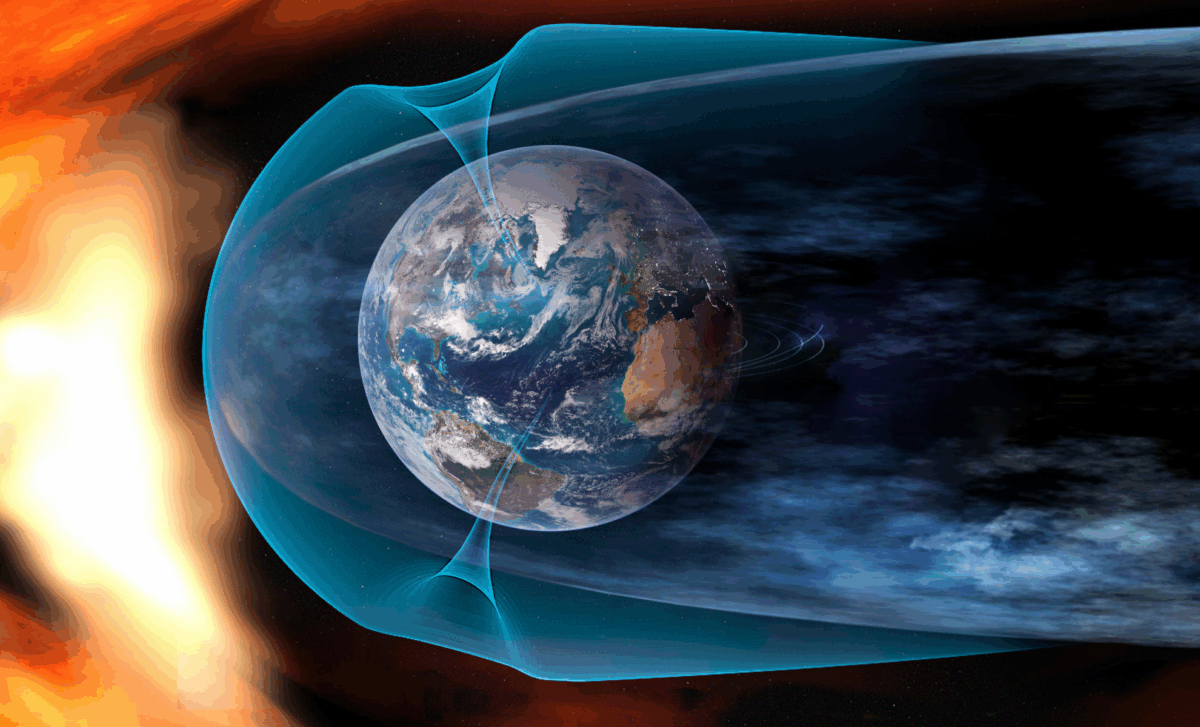
For the inaugural time, researchers have identified a magnetic switchback close to Earth, revealing a space weather phenomenon previously only seen near our Sun. This landmark observation could transform our understanding of the planet’s magnetic environment and its response to solar activity, with potential impacts on satellite systems and terrestrial technology. Published in the Journal of Geophysical Research, these results mark a major step forward in space weather studies.
Understanding Magnetic Switchbacks and Their Impact
A magnetic switchback is characterized by an abrupt, zigzag shift in magnetic field direction. Detecting such a reversal near Earth has major implications for our comprehension of space weather dynamics. These magnetic twists arise from magnetic reconnection events, where magnetic field lines break and merge, releasing substantial energy. NASA's Magnetospheric Multiscale Mission (MMS) first observed this phenomenon within Earth's magnetosphere, closely monitoring the magnetic and particle shifts surrounding our planet’s protective magnetic bubble.
“This magnetic switchback was formed via interchange reconnection at the interface between open magnetosheath and closed magnetospheric field lines,” wrote McDougall.
Add Cosmo Herald as a Preferred Source

This quote highlights the intricate process behind the switchback’s formation, emphasizing the crucial role of magnetic reconnection at the boundary where Earth’s magnetic field meets the solar wind.
This discovery holds significant importance. It not only enhances our knowledge of Earth's magnetic shield, but also offers important clues about how solar winds interact with the magnetosphere. Since the magnetosphere protects our planet from hazardous radiation, insights here help improve forecasts of solar flares and space weather disturbances, which can disrupt communication networks, satellites, and electrical grids.
Why Monitoring Magnetic Switchbacks Matters
As society increasingly depends on satellite technologies, grasping the nature of space weather phenomena like magnetic switchbacks has become vital. These sudden reversals can influence the flow of charged particles through Earth's upper atmosphere, affecting everything from global communication systems to satellite positioning and astronaut safety.
The detection of a magnetic switchback this close to Earth represents a turning point in space weather prediction. Unlike past research focused solely on the Sun’s vicinity, this finding provides a nearby platform to study solar-terrestrial interactions. The Journal of Geophysical Research emphasizes this unique opportunity to examine these energetic processes without exposing instruments directly to the Sun’s harsh conditions.
Magnetic reconnection—the process powering these switchbacks—also accelerates energetic particles that can create auroras and geomagnetic storms by interacting with Earth’s atmosphere. Such events can disturb technology here on the ground. Better understanding of switchback mechanics helps scientists improve predictions of when these space weather events might occur and how they will affect us.
The Mechanisms Behind Magnetic Reconnection
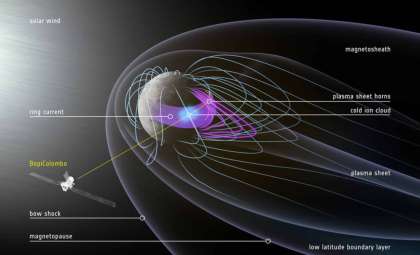
Magnetic reconnection happens when opposing magnetic field lines break apart and reconnect, unleashing large amounts of energy. In the case detected near Earth, this process arose at the boundary between the open magnetosheath, where solar wind flows past Earth’s magnetic field, and the closed field lines within the magnetosphere. This mechanism is crucial for grasping both solar and space environmental physics.
The MMS mission, composed of four synchronized spacecraft, captures detailed 3D data on these reconnection events. By observing these interactions in real time, scientists can pinpoint what triggers disturbances in Earth’s magnetic system, such as incoming solar wind or energetic particles. MMS’s rapid data collection sheds new light on how swiftly space weather changes can occur and influence Earth’s magnetosphere.
- Categories:
- News









0 comments
Sign in to Comment