
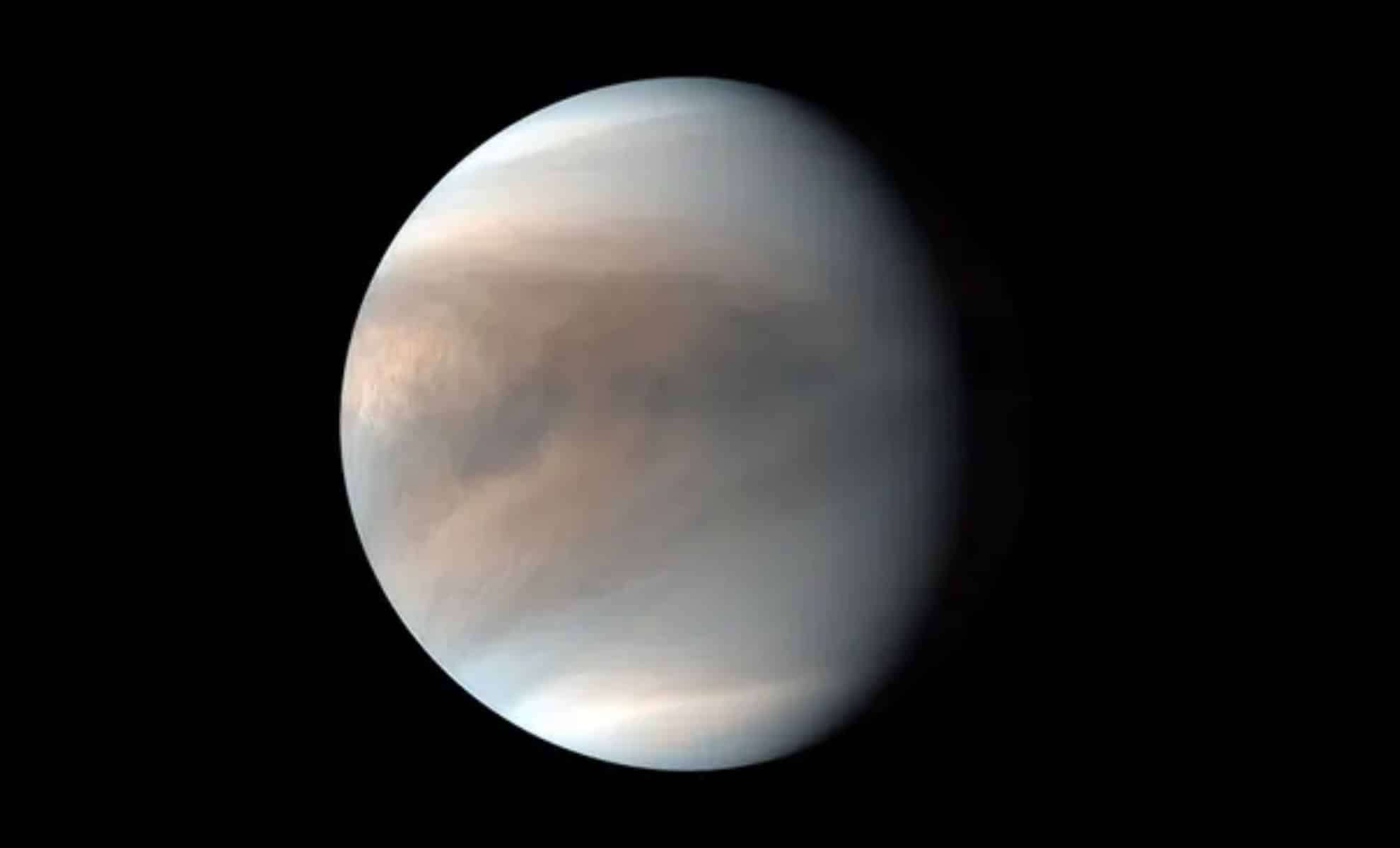
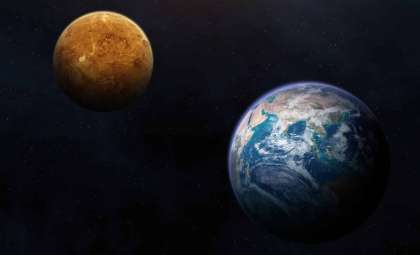
In a surprising development, Japan’s weather satellites Himawari-8 and Himawari-9, primarily tasked with monitoring Earth’s climate, have captured invaluable data revealing previously unseen traits of Venus’s atmosphere. These Earth-observing satellites have produced one of the most extensive multiband infrared datasets of Venus to date, offering fresh perspectives on the planet’s atmospheric dynamics. Spearheaded by Gaku Nishiyama, a postdoctoral scientist at the German Aerospace Center (DLR) in Berlin, this discovery has significant implications for our understanding of Venus.
Documented in a recent Earth, Planets and Space article, the team revealed how the Himawari satellites, launched in 2014 and 2016 respectively, unintentionally gathered data on Venus’s thermal tides and Rossby waves—key phenomena influencing its atmospheric behavior. This breakthrough enriches planetary science by supplementing data from dedicated Venus missions with Earth-orbiting satellite observations.
How Two Weather Satellites Accidentally Uncovered Venus Secrets
The journey began unexpectedly when the Himawari datasets, intended for Earth observation, revealed more than just terrestrial weather patterns. Nishiyama recounts the inception: “This started by chance,” explained Gaku Nishiyama, a postdoctoral researcher at the German Aerospace Center (known by its German acronym, DLR) in Berlin in an interview with Space.com. “One of my best friends, who has a Ph.D. in astronomy and is a certified weather forecaster in Japan, found lunar images in Himawari-8/9 datasets and asked me to look.”

Originally, the research aimed to assess temperature shifts on the Moon’s surface using Himawari’s capabilities. In the process, other celestial objects such as Mercury, Mars, and Venus were revealed within the data. Nishiyama remarked, “While working on the Moon, we also detected Mercury, Venus, Mars, and Jupiter in the datasets and became intrigued by the recorded phenomena.”
Unlocking Venus’s Atmosphere Through Earth-Based Instruments
Although it’s unconventional to utilize Earth weather satellites for planetary science, Himawari-8 and -9 have afforded scientists a unique window into Venus’s atmospheric layers. A pivotal focus has been on thermal tides, vast gravity waves triggered by solar radiation heating Venus’s cloud tops. These waves play a critical role in transferring heat and momentum vertically. As Nishiyama explains, “Thermal tides are global-scale gravity waves excited by solar heating in the cloud layers of Venus.” Analysis of the Himawari data has shed light on the changing nature of these waves through time, deepening our grasp of Venus’s atmospheric processes.
Expanding Understanding of Rossby Waves on Venus
Beyond thermal tides, the Himawari satellites enabled detailed observations of Rossby waves, which also influence Earth’s weather systems. These waves arise due to the variation in the Coriolis effect across latitudes and contribute to the atmospheric stability of Venus over long periods. Tracking their development is crucial, especially since past missions like Akatsuki revealed fluctuating wind speeds and cloud brightness on Venus. Nishiyama emphasized, “Both types of waves are crucial for transporting heat and momentum through Venus’ atmosphere.” These findings help unravel the complex dynamics shaping the planet’s weather.
Enhancing Venus Mission Data Using Earth Satellite Observations
One of the major benefits of the Himawari data is its ability to refine measurements from Venus-dedicated spacecraft. Nishiyama’s group compared their findings with data from Japan’s Akatsuki orbiter, identifying discrepancies in calibration. He notes, “Our comparison between Himawari and LIR sheds light on how to recalibrate the LIR data, leading to a more accurate understanding of Venus’ atmosphere.” This recalibration addresses inaccuracies in Akatsuki’s Longwave Infrared Camera (LIR) temperature readings, improving the reliability of atmospheric models by combining Himawari’s extensive infrared observations.
Earth Satellites as Long-Term Tools for Planetary Exploration
While planetary missions are limited by their finite operational spans, Earth’s weather satellites offer prolonged monitoring of other planets, filling observational gaps. Nishiyama pointed out, “Earth-observing satellites [like Himawari] are generally calibrated so accurately that they can provide reference data for instrument calibrations in future planetary missions.” Continuous data streams from satellites like Himawari will be essential for ongoing Venus research, especially when no specialized spacecraft are present.
In this new paradigm, Earth-based satellites are emerging as crucial complements to dedicated planetary missions, enhancing our long-term understanding of distant worlds such as Venus.
- Categories:
- News





0 comments
Sign in to Comment