
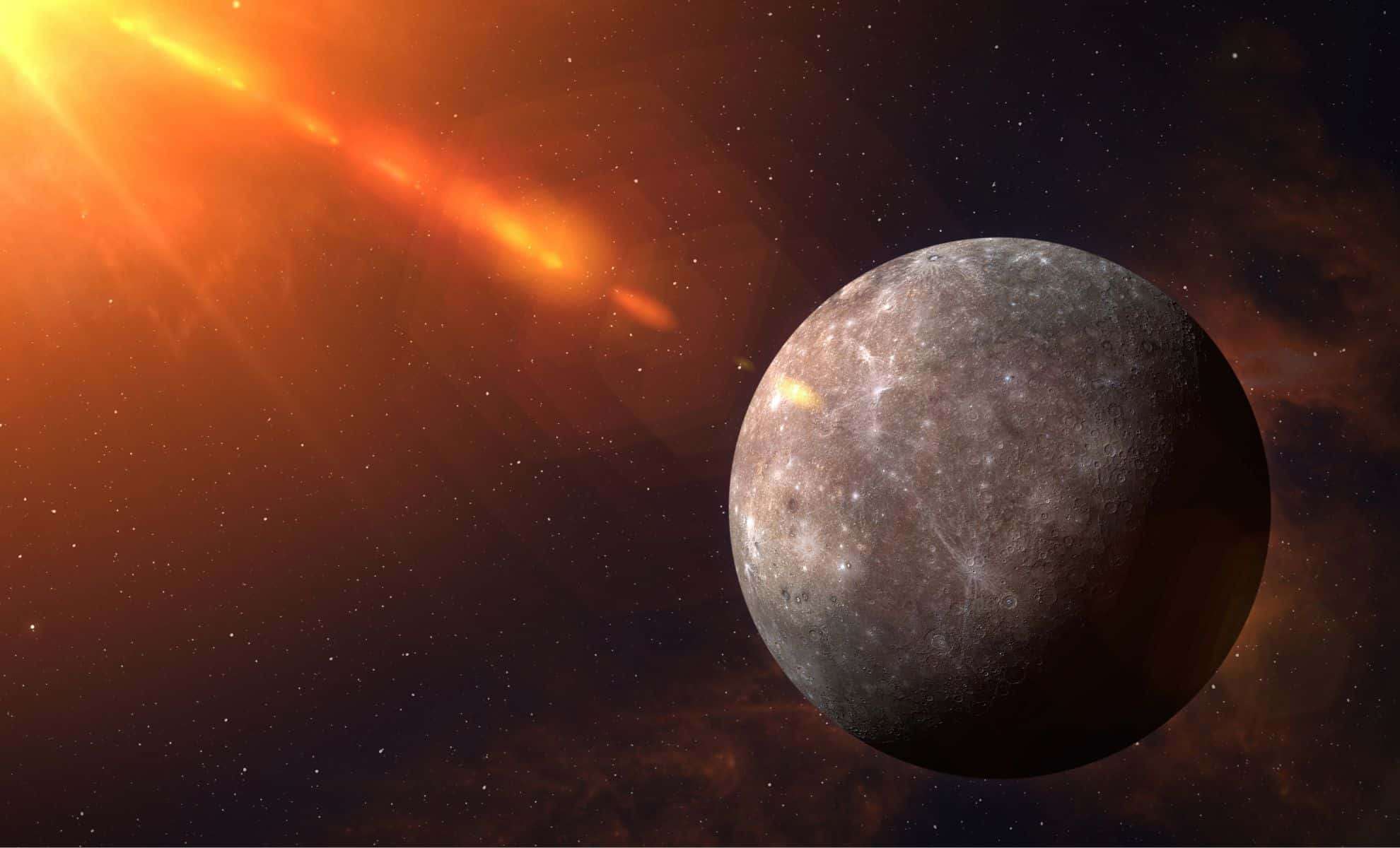
In a landmark achievement for planetary science, researchers have identified lithium in Mercury’s exosphere for the first time—using an innovative method based on electromagnetic wave detection rather than direct particle capture. Reported in Nature Communications, this study, spearheaded by Daniel Schmid and colleagues at the Austrian Academy of Sciences, analyzed four years of magnetic field data from the MESSENGER spacecraft to uncover faint ion cyclotron wave patterns indicating lithium’s transient presence around Mercury.
Tracing Lithium Via Its Unique Electromagnetic Signature
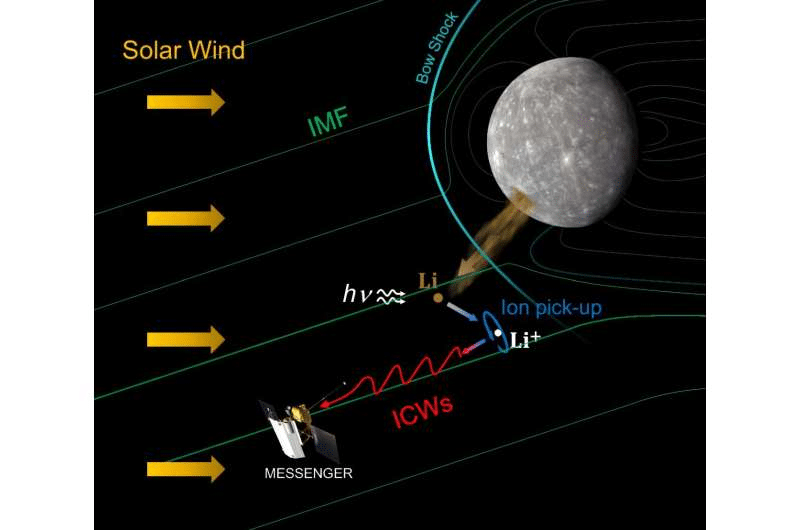
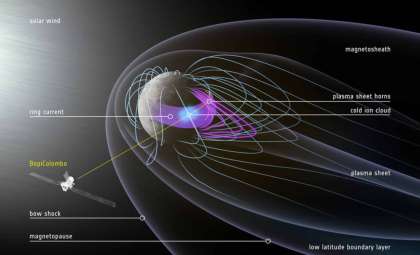
Mercury’s exosphere is an ultra-thin envelope of particles shed from its surface, posing challenges in detecting trace elements with conventional methods. Until now, lithium had only been hypothesized to exist there without direct detection. The team applied a technique that identifies “pick-up ion cyclotron waves” (ICWs), specific magnetic oscillations created when newly ionized atoms interact with the solar wind’s magnetic field.
“Analyzing the MESSENGER magnetic data, we found distinctive ICW patterns consistent with lithium ions,” Schmid told Phys.org. This technique leverages the fact that ions vibrate at wave frequencies tied to their unique mass-to-charge ratios, creating a distinct magnetic signature for each element. “These waves allow us to pinpoint lithium’s presence despite its fleeting nature,” explained Schmid. Over a period of four years, the researchers identified twelve separate occurrences, each lasting only minutes, where ICWs associated with lithium appeared.

Meteoroid Impacts as a Catalyst for Lithium Emission
The detected lithium signals were irregular and brief, prompting the team to exclude slower phenomena such as solar radiation or steady solar wind interaction as causes. Instead, they concluded that fast-moving meteoroid impacts provide the necessary energy. When tiny meteoroids collide with Mercury at velocities close to 110 km/s, the explosive impacts vaporize both the incoming particles and surface materials, generating hot plumes that release lithium atoms into the exosphere.
“Our findings indicate that Mercury’s surface composition is continuously influenced by meteoritic bombardment, which both deposits and liberates volatile elements like lithium,” noted Schmid. These impacts do more than supply fresh material—they trigger the release of volatile components trapped in the crust, contributing to Mercury’s dynamic atmospheric chemistry. “Lithium detection linked to these impact events confirms this ongoing cycle,” he concluded.
Revamping Understandings of Mercury’s Volatile Composition
This breakthrough challenges previous beliefs about Mercury’s formative environment. The planet’s high average density and disproportionately large iron core had led to theories of it having endured intense heating and massive impacts that stripped away many volatiles early on. However, earlier MESSENGER findings of sodium, potassium, and hydrogen hinted at a more volatile-rich history. Now, identifying lithium—and tying it to external delivery and surface emission—provides fresh insight into Mercury’s complex geochemical evolution.
“Past in situ instruments and Earth-based observations failed to directly capture lithium, despite hints from related volatile elements,” Schmid emphasized. This highlights the value of novel detection approaches in planetary exploration. Reanalyzing archived magnetic field data can reveal unexpected traces of chemical diversity on Mercury’s harsh and battered surface.
- Categories:
- News







0 comments
Sign in to Comment