
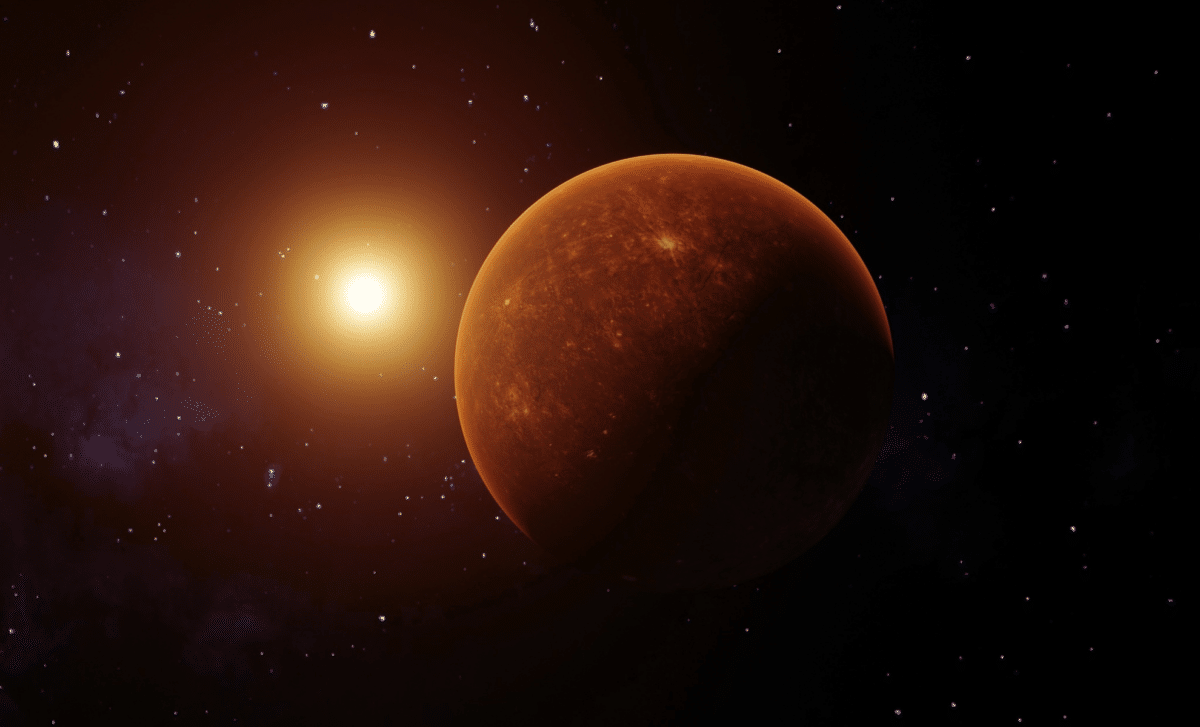
In a landmark study featured in Science, astronomers have for the first time directly quantified the mass of a rogue planet, a solitary celestial body drifting through space without orbiting a star, providing valuable information about these enigmatic objects.
Measuring the Mass of a Lone Planet for the First Time
Researchers have successfully calculated the mass of a rogue planet, an isolated planetary object roaming the galaxy independently. These elusive planets, believed to be numerous within the Milky Way, have been difficult to study due to their lack of a host star, which renders traditional observational techniques ineffective since they depend on detecting orbital motions.
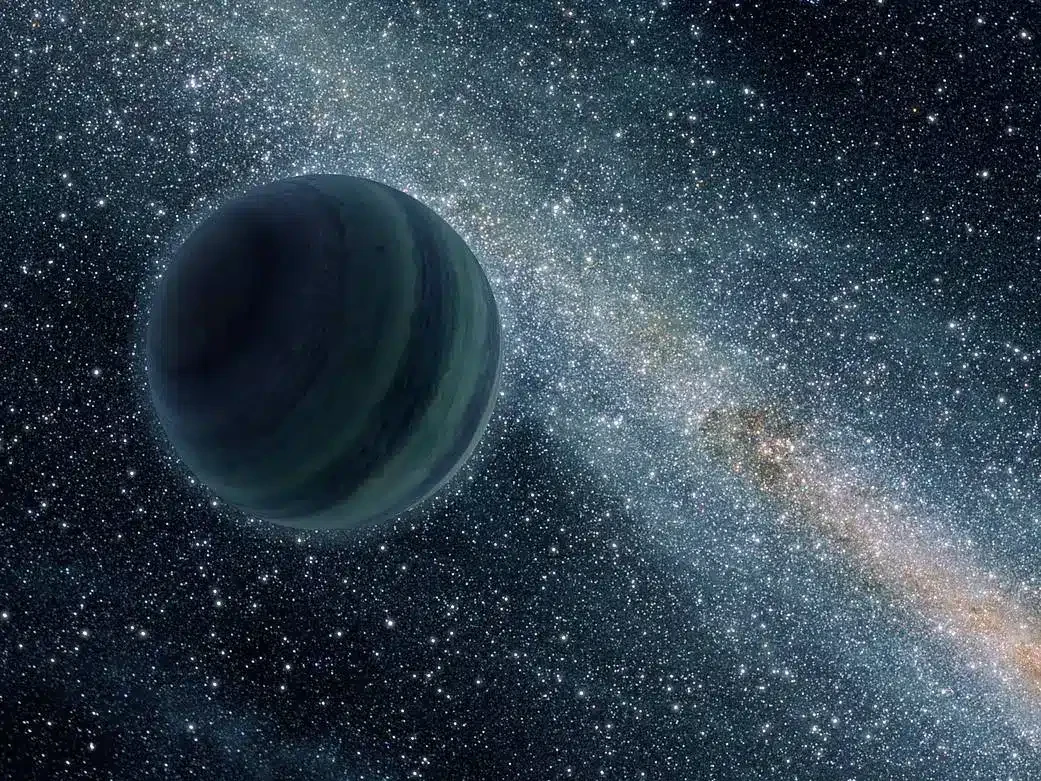
This significant achievement, detailed in a new Science publication, was made possible through observing a gravitational microlensing event from two distinct points: Earth and the defunct European Space Agency’s Gaia spacecraft. When the rogue planet precisely aligned with a background star, its gravitational field bent and amplified the star’s light, allowing scientists to calculate the planet’s mass with remarkable precision.

Under the leadership of Subo Dong from Peking University, the research team combined observations from terrestrial telescopes and Gaia to circumvent previous challenges that hindered direct mass measurements of free-floating planets. Previously, these planets were identified only as brief, unexplained brightening events without concrete context or definitive measurements. This groundbreaking result opens up new avenues for investigating planetary formation and the dynamics within our galaxy.
Gravitational Microlensing and Gaia Provide a Unique Advantage
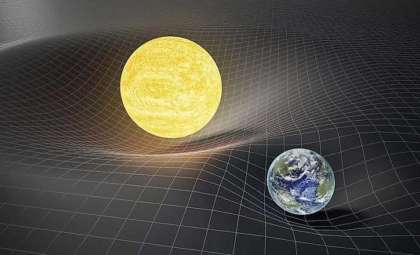
The method employed, known as gravitational microlensing, depends on a rare cosmic alignment. When a rogue planet passes between Earth and a distant star, its gravity curves and enhances the star’s light. Observing this phenomenon from two separate locations enabled researchers to precisely quantify the gravitational effect to deduce the planet’s mass.
“What’s really great about this work, and really noteworthy, is that it’s the first time we’ve got a mass for these objects,” says Gavin Coleman, a postdoctoral researcher at Queen Mary University of London, who authored a related commentary in Science but was not directly involved in the research. “This was purely because the authors had both ground-based observations and Gaia, looking at observations from two different places.”
This measurement precision is unprecedented for studying rogue planets. It represents a significant methodological milestone for detecting and understanding these nomadic worlds. Since such planets lack a central star, traditional detection techniques like Doppler shifts or transits are ineffective. Instead, microlensing offers a transient yet powerful insight into their physical properties if captured at the right moment and vantage point.
Insights into Formation from Mass Determination
The team found the planet’s mass is about that of Saturn, providing a key piece of information for theories about its origin and solitary existence. Some rogue planets may have been expelled from their original systems through gravitational disruptions, while others might have formed independently via processes similar to star formation, collapsing from clouds of gas and dust.
“Knowing [its mass] is the starting point,” Dong explains. “We can start to understand, okay, what could be the origin, the history of this planet?” This milestone is crucial not only for observational astronomy but also for advancing studies in planetary science and galactic evolution.
With the capability to measure masses, astronomers can now better chart the hidden population of rogue planets, shedding light on planetary migrations, system instabilities, and violent cosmic events that shape planetary systems.
Exploring the Vast Population of Free-Floating Planets
This measurement is a gateway to investigating large numbers of free-roaming worlds. Astronomers have hypothesized that rogue planets could outnumber stars within our galaxy, yet this claim could not be directly tested before. Now, mass measurements offer the means to catalog and study these objects systematically.
“The door is open to study this new emerging population of planets,” Dong notes. This discovery signals a transformative phase in exoplanet research, where the definition of a planetary system expands beyond the existence of a central star.
These solitary wanderers may reveal secrets about the origins of planetary formation or the mechanisms that detach planets from their systems. Upcoming missions like the Roman Space Telescope and Euclid will build on Gaia’s legacy, ushering in a new era of in-depth surveys and statistical studies of rogue planets.
- Categories:
- Space






0 comments
Sign in to Comment