
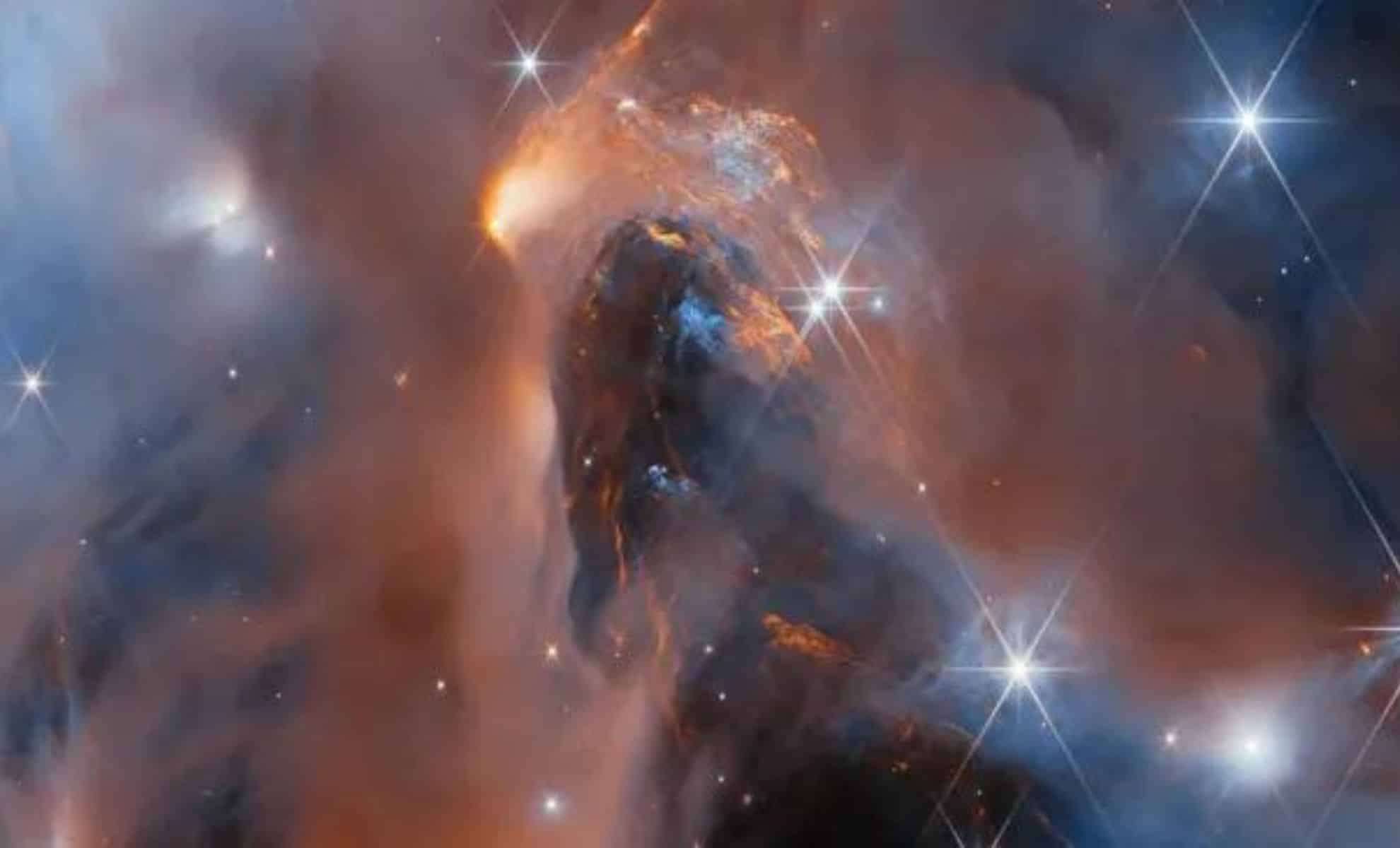
Utilizing the James Webb Space Telescope, astronomers have identified six solitary planets wandering within a distant star-birthing region inside the Perseus Molecular Cloud, roughly 960 light-years from our planet.
Each of these intriguing bodies, weighing between five and ten times Jupiter’s mass, stand out because they do not orbit any star. Instead, they seem to have originated through a star-like formation process. This discovery sheds light on the diverse mechanisms behind the birth of stars and planets across the cosmos.
Isolated Planets: Star-like Origins Beyond Traditional Orbits
The group of six rogue planets was found in a nebula called NGC 1333, a dynamic stellar nursery where stars emerge from clumps of gas and dust. Unlike typical planets, which develop within the disks encircling young stars, these lone planets likely formed directly from collapsing clouds of interstellar material, mirroring star formation. Remarkably, one of these objects is encircled by a disk of gas and dust, hinting that it might spawn “mini-moons” or small planetary bodies.

The infrared capabilities of the Webb telescope allowed it to penetrate the dense dust in NGC 1333, unveiling views of the nebula’s depths previously hidden from the Hubble Space Telescope due to dust obscuration. Webb’s observations revealed not only these free-floating planets but also young stars and brown dwarfs—objects more massive than planets but too light to sustain stellar fusion.
Rethinking Planet and Star Formation Models
The identification of these rogue planets prompts a reevaluation of conventional theories surrounding how planets and stars form. Rather than forming solely from the leftover material orbiting young stars, some planetary-mass objects might arise directly from collapsing gas clouds, akin to stars forming in isolation.
Ray Jayawardhana, senior author of the study and astrophysicist at Johns Hopkins University, noted that these findings affirm the existence of at least two distinct formation mechanisms for planetary-mass entities. This challenges traditional boundaries separating planets and stars, especially for objects that develop free from stellar orbits.
Adding to the intrigue, the smallest of the discovered rogue planets hosts a disk around it, indicating active processes that could lead to forming secondary satellites or planetary companions, suggesting even small planets might generate miniature systems.
Towards Deeper Exploration of Rogue Worlds
Accepted for publication in The Astronomical Journal, this research marks a crucial advance in dissecting the variety of planetary and stellar configurations. The team also found a brown dwarf accompanied by a planetary-mass companion within the same nebula, underlining the rich diversity of celestial systems emerging there.
Future studies with the Webb Telescope aim to scrutinize these rogue planets in more detail, particularly their atmospheric properties, enabling better comparisons to brown dwarfs and stars. These insights will refine theoretical models of formation and classification for such enigmatic objects.
Looking forward, the anticipated 2027 deployment of NASA’s Nancy Grace Roman Space Telescope promises to greatly expand rogue planet discovery efforts. This next-generation observatory could potentially locate hundreds of similar wandering worlds, enriching scientists’ knowledge about their origins and significance in cosmic evolution.
The uncovering of these lone planetary-mass bodies in NGC 1333 enriches our inventory of free-floating cosmic objects and challenges established ideas on the genesis of planetary and stellar entities. With sophisticated instruments like the JWST, astronomers continue to push the frontier of cosmic understanding, revealing the complex and captivating ways the universe assembles its myriad celestial inhabitants.
- Categories:
- Astronomy ,
- News ,
- Space ,
- Nasa





0 comments
Sign in to Comment