
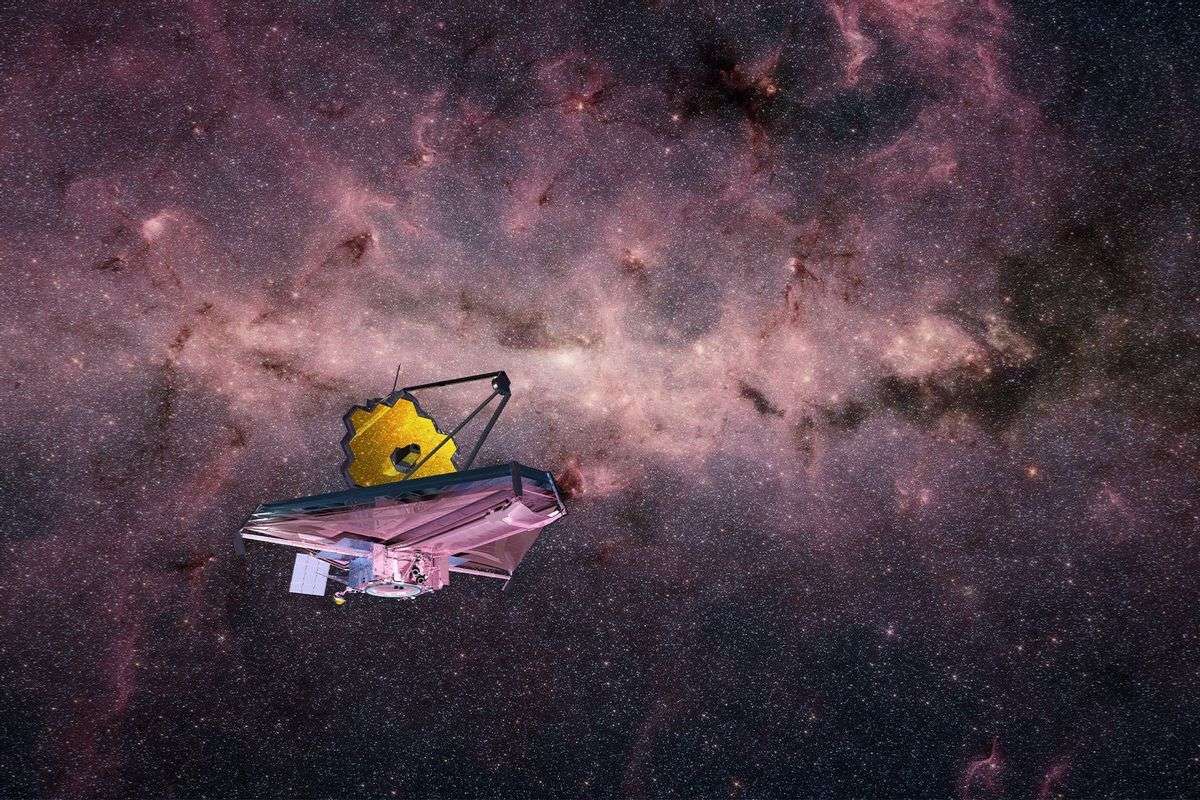
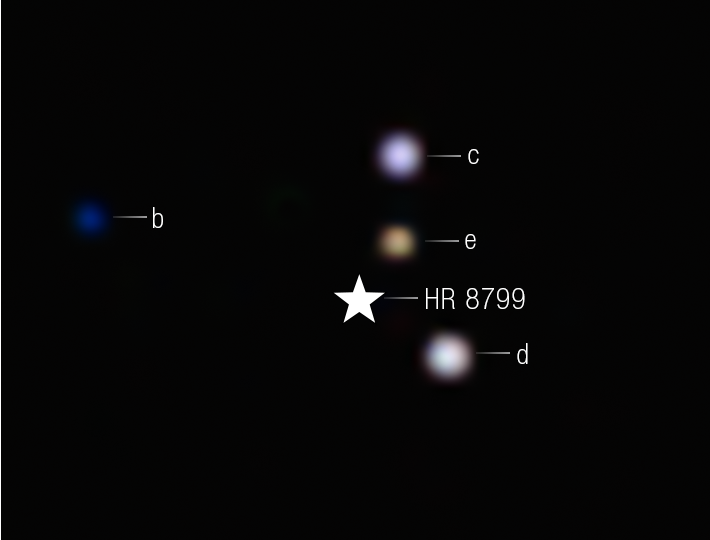
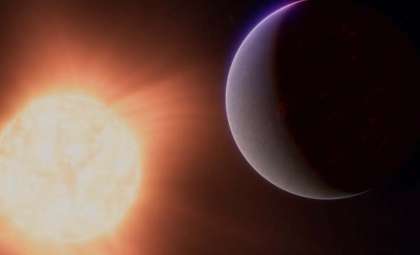
The James Webb Space Telescope (JWST) has marked a significant milestone by directly identifying carbon dioxide (CO2) within the atmospheres of distant exoplanets for the first time ever. This breakthrough, announced by NASA on March 17, 2025, stems from detailed observations of the HR 8799 planetary system, roughly 130 light years from Earth.
Innovative Technique Unveiled
The breakthrough is largely attributed to the innovative direct imaging technique employed to detect CO2. Unlike the common practice where exoplanets are detected as they transit their host stars, causing a momentary dip in starlight, this approach captures photons directly emanated from the planets.
The conventional "transit method" enabled Webb to infer the presence of CO2 indirectly on gas giants like WASP-39 back in 2022. However, for the HR 8799 system, Webb’s coronagraph instruments effectively masked the stars’ intense glare, allowing scientists to isolate light signatures emitting straight from the orbiting planets.
This marks a major advance in studying exoplanets. Lead researcher William Balmer, an astrophysicist at Johns Hopkins University, likened the experience to “blocking the sun with your thumb to better view fireflies near a bright lighthouse.”

Furthermore, Webb’s ability to capture the planets’ own light has unveiled new chemical insights, notably the distinct presence of CO2 within their atmospheres.
The Role of Moons in the Search for Life
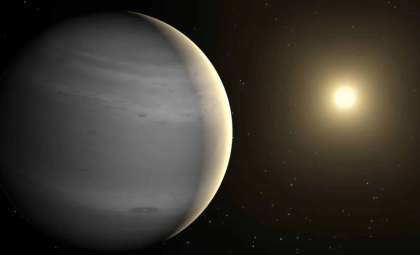
Though the gas giants in HR 8799 likely possess harsh conditions unsuitable for life as we know it, detecting CO2 significantly enriches our understanding of how such planets form.
The research, published in The Astrophysical Journal, indicates these exoplanets may have originated through a “bottom-up” assembly process, where icy materials conglomerate to build a solid core, similar to the formation of Jupiter and Saturn.
Scientists are now focusing on the moons orbiting these giants as potentially more habitable environments. Just as Jupiter’s moon Europa is believed to conceal vast oceans beneath its icy crust and other moons may similarly harbor life-friendly conditions, moons around exoplanets like those in HR 8799 might also be promising sites.
Current explorations targeting Europa and similar moons aim to deepen our understanding of life’s potential beyond Earth—hinting that extraterrestrial life may thrive under very different circumstances than on our own planet.
Future Directions in Exoplanet Research
This discovery heralds a new era for exoplanet studies, but represents only the beginning of what’s possible. Scientists are keen to apply these techniques to smaller, Earth-like worlds, which hold greater promise for harboring life.
The insights gained from HR 8799 will guide upcoming missions, including the 2027 launch of NASA’s Nancy Grace Roman Space Telescope, which will feature a coronagraph designed to analyze Earth-sized planets in unprecedented detail.







0 comments
Sign in to Comment