
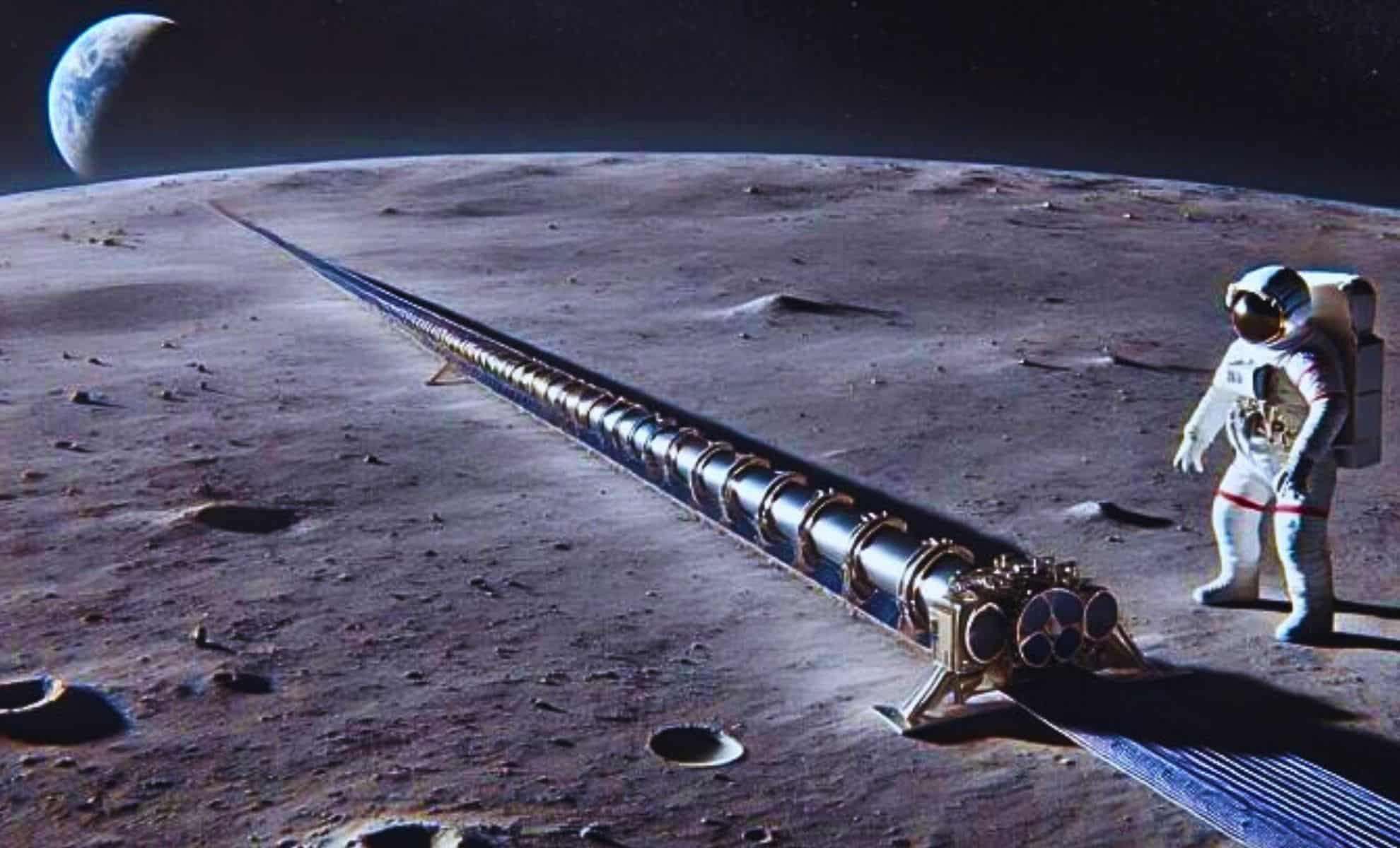
The idea of a mass driver on the Moon, once purely science fiction, is rapidly advancing toward practical application. This breakthrough could reshape how humanity accesses space, enabling the direct launch of resources into orbit without the prohibitive energy costs imposed by Earth's gravity.
Understanding the Mass Driver Concept
A mass driver, also known as a Lunar Mass Accelerator, is a cutting-edge technology designed to exploit the Moon's lower gravity—approximately one-sixth that of Earth’s—to send lunar material into space. Utilizing lunar soil (regolith) as launch payload, this mechanism has the potential to transport essential materials for building spacecraft, space stations, and future off-world habitats.
Leading the charge in this research, Pekka Janhunen from the Finnish Meteorological Institute presents a compelling method to use the Moon's gravity for efficient and cost-effective launches. Unlike Earth, where escaping gravity demands vast amounts of fuel, the Moon’s environment lends itself to significantly easier space access.

Challenges Transformed Into Launch Benefits
The Moon features an uneven gravitational landscape, well-mapped by NASA’s GRAIL mission. These gravitational irregularities, often considered navigation obstacles, might instead serve as ideal locations for mass driver placement. Launching from these zones could propel materials into stable orbits or even on trajectories leading deeper into the solar system.
Reaching orbital speeds around 1.7 km/s on the Moon is much more attainable compared to Earth’s 11.2 km/s requirement. Once in orbit, reusable spacecraft tugs can capture and transport payloads, significantly cutting expenses and energy use for missions targeting Mars, asteroid mining, or other distant destinations.
Core Features of a Lunar Mass Driver
The mass driver's design is tailored to the Moon’s environment with the following key attributes:
- Propulsion: Electromagnetic systems, typically employing linear motors, rapidly accelerate payloads along a track, avoiding reliance on traditional chemical rockets.
- Required Speed: Payloads must achieve roughly 1.7 km/s to maintain lunar orbit, which is substantially less than Earth's escape velocity.
- Material Use: Lunar regolith can be processed into dense, launch-ready units, which would then be sent to orbital facilities for constructing vehicles and habitats.
- Power Supply: Solar energy would primarily power the system, supplemented by battery reserves to ensure continuous operation during the lunar night.
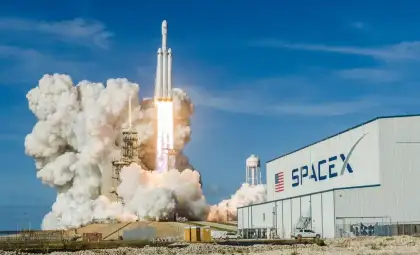
Launch Comparisons: Moon Versus Earth
Utilizing these lunar conditions positions the mass driver as a transformative tool for space exploration and construction beyond Earth.
Obstacles on the Path Ahead
Despite its promise, developing a lunar mass driver presents substantial engineering hurdles. The Moon's extreme temperature variations, ranging from -173°C to 127°C, and abrasive dust pose significant challenges that require innovative solutions. Delivering the components to the lunar surface will necessitate multiple costly launches from Earth.
Equally critical is fostering collaboration among international space agencies such as NASA, the ESA, and China’s space program, along with key private players like SpaceX. Without coordinated efforts, financial support, and shared technological expertise, the project risks remaining an elusive goal.
- Categories:
- Space





0 comments
Sign in to Comment