
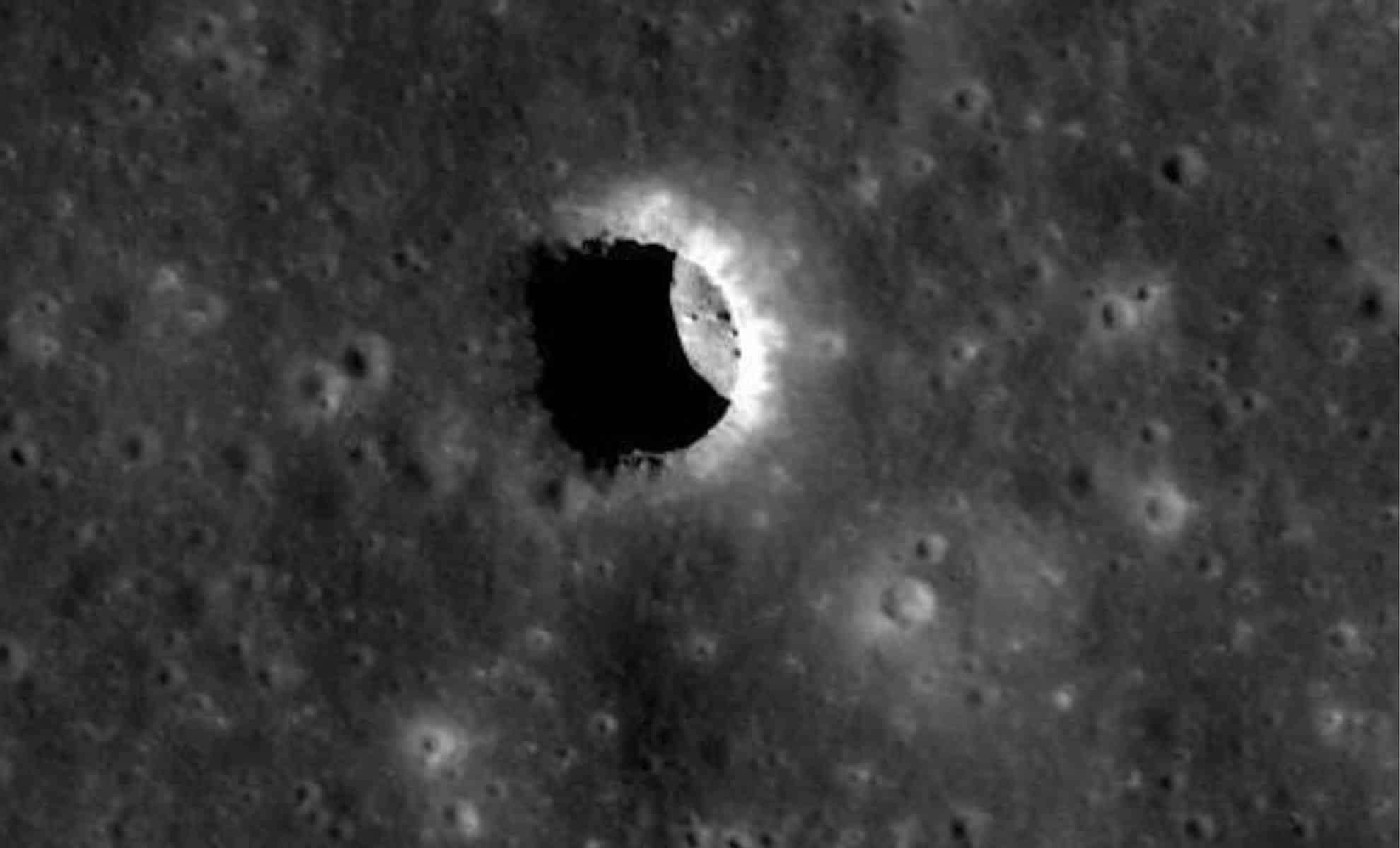
Scientists have recently identified concealed caverns beneath the Moon’s surface, presenting new prospects for establishing secure shelters for upcoming lunar missions.
This remarkable feat was accomplished through a fresh examination of data gathered by NASA’s Lunar Reconnaissance Orbiter (LRO), which could transform our approach to exploring and settling the Moon.
Unveiling Subsurface Cavities on the Moon
A multinational research team spearheaded by experts from the University of Trento in Italy has confirmed the presence of a lava tube beneath the Mare Tranquillitatis area. Their findings, documented in Nature Astronomy, provide the first concrete evidence of accessible underground lava tubes on the Moon. Professor Lorenzo Bruzzone from the University of Trento remarked, “Discovering intact lava tubes opens promising new possibilities for both lunar exploration and long-term colonization.”

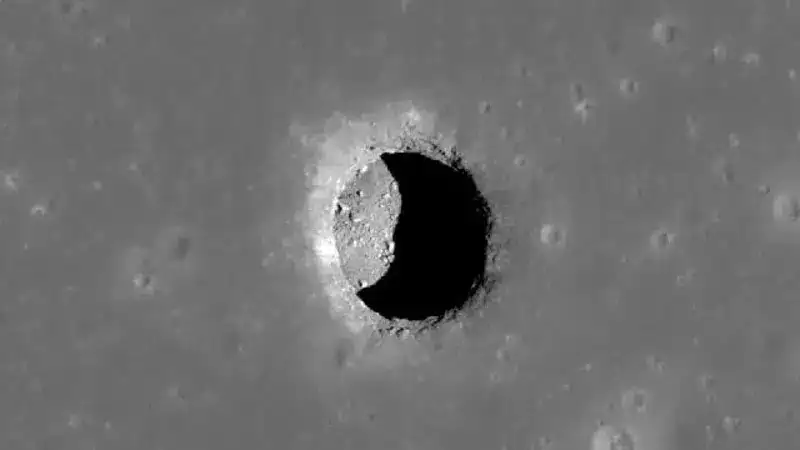
By analyzing radar signals captured by the Miniature Radio-Frequency (Mini-RF) device aboard the LRO, the researchers identified reflections consistent with an underground cavern system. This analysis revealed that the surface pit in Mare Tranquillitatis connects to a larger subterranean network.
This breakthrough offers valuable insight into the Moon’s geological past and suggests natural shelters that could safeguard astronauts from the harsh lunar environment. These lava-formed tunnels, created by ancient volcanic activity, might be ideal natural refuges for future missions.
Prospects for Moon Colonization
The discovery of these caverns could pave the way for the establishment of permanent lunar habitats. Given the Moon’s extreme surface temperatures—from soaring highs of 127°C (261°F) to freezing lows of -173°C (-279°F)—as well as constant exposure to cosmic and solar radiation, the surface environment remains perilous for sustained human presence. Subsurface tunnels might provide crucial protection, creating stable and safer conditions for astronauts.
Helen Sharman, the UK’s first astronaut, expressed optimism about the find, stating, “This cave represents a potentially perfect location for a lunar settlement. These lava tubes could enable humans to inhabit the Moon within the next two to three decades.” Nonetheless, accessing these caverns poses challenges due to their depths and configurations, demanding advanced technologies like rappelling gear, jet packs, or elevator systems. Overcoming these obstacles will be essential to utilizing these lunar caves as liveable spaces.
Scientific and Exploratory Opportunities
The detection of underground lunar caverns offers exciting avenues for scientific inquiry and technological advancement. Methods including ground-penetrating radar, imaging tools, and robotic explorers are slated to further investigate and map these hidden spaces. Unveiling their structure and composition will enrich our understanding of the lunar surface’s volcanic history, formed billions of years ago during ancient lava flows.
Leonardo Carrer, a University of Trento scientist, drew comparisons between these moon tunnels and volcanic caves found on Earth, such as those in Lanzarote, Spain. He expressed enthusiasm about the unique opportunity to study these formations firsthand and their significance for future missions. Francesco Sauro, the European Space Agency’s Topical Team Planetary Caves Coordinator, noted that decoding lunar caves will also improve exploration strategies for Martian caves, which might harbor preserved traces of past life beneath Mars’s hostile surface. “Understanding these lunar structures provides a blueprint for probing similar sites on Mars and beyond,” Sauro commented.
Implications for Broader Space Exploration
Research into these lunar caves not only supports potential human settlement on the Moon but also preserves a geological archive shielded from surface erosion. The rock formations within these tunnels could yield unprecedented insights into lunar and solar system evolution.
Moreover, this discovery bears significant ramifications for the advancement of space exploration technologies. Techniques honed for investigating the Moon’s subsurface could be adapted to explore other worlds, improving our grasp of planetary geology and the search for life in the cosmos.
Ultimately, the identification of subterranean tunnels on the Moon by NASA’s Lunar Reconnaissance Orbiter marks a pivotal step in lunar research. These caverns could act as protective shelters against extreme temperatures and radiation, facilitating sustainable human presence. Ongoing studies promise to unlock further secrets of the Moon’s history and its suitability for future exploration and habitation.
- Categories:
- Astronomy ,
- News ,
- Space ,
- Nasa








0 comments
Sign in to Comment