
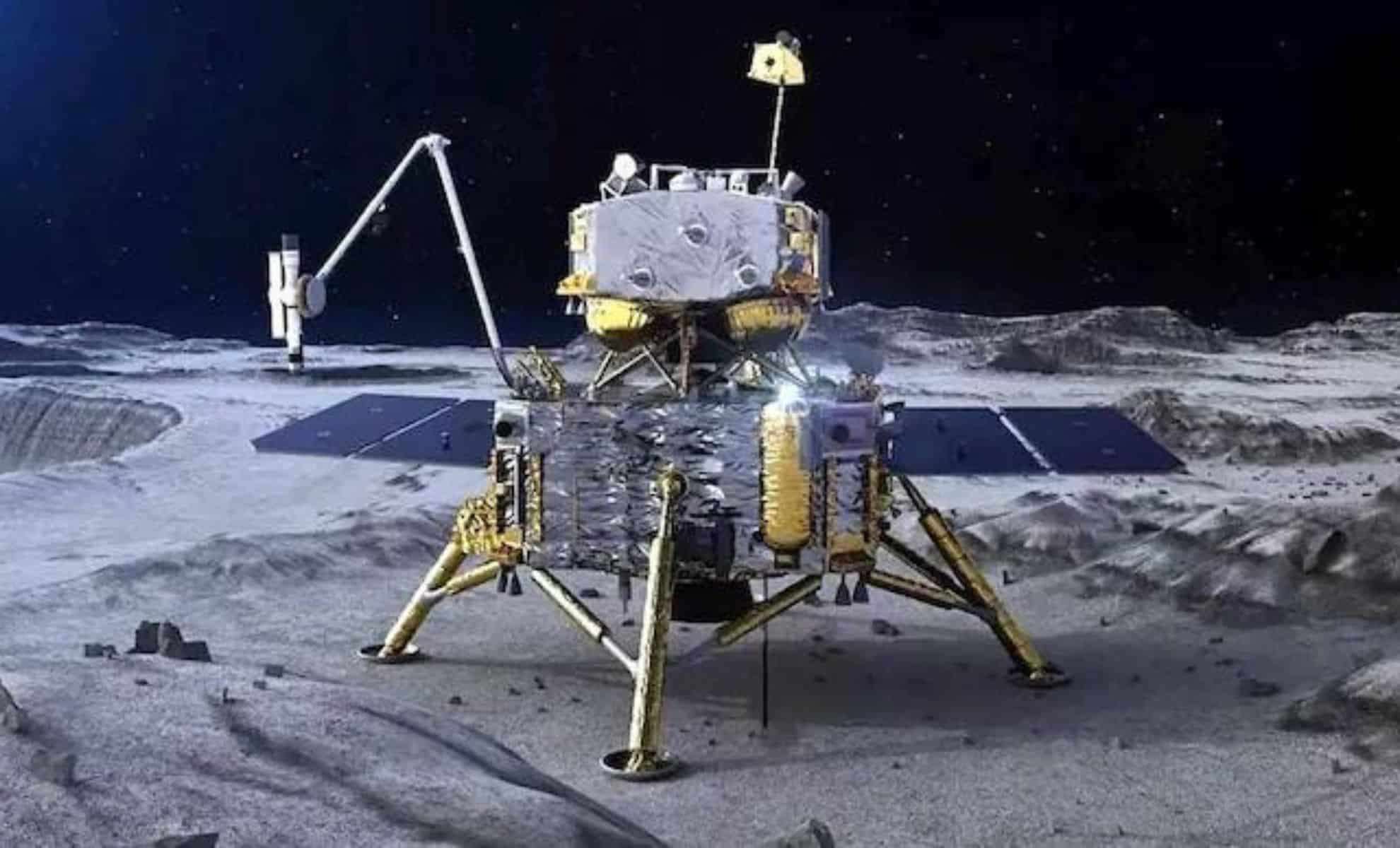
China’s Chang’e-6 spacecraft has departed from the moon’s far side, signaling a major milestone in space exploration and highlighting China’s expanding role in lunar research.
This mission aims to retrieve the very first samples from this scarcely studied lunar region, advancing our understanding of the moon’s makeup and origins.
Breaking New Ground in Moon Exploration
Early Tuesday, Beijing time, the Chang’e-6 probe lifted off from the far side of the moon, loaded with about 2 kilograms (4.4 pounds) of moon rock and soil. The samples were gathered using a sophisticated robotic arm and drilling equipment during a two-day collection phase.

Its touchdown zone was the South Pole-Aitken Basin, the moon’s oldest and one of the largest known craters in the solar system, created roughly 4 billion years ago. This location intrigues scientists because of its distinctive geology and the promise it holds to deepen knowledge about the moon’s formation and geological evolution.
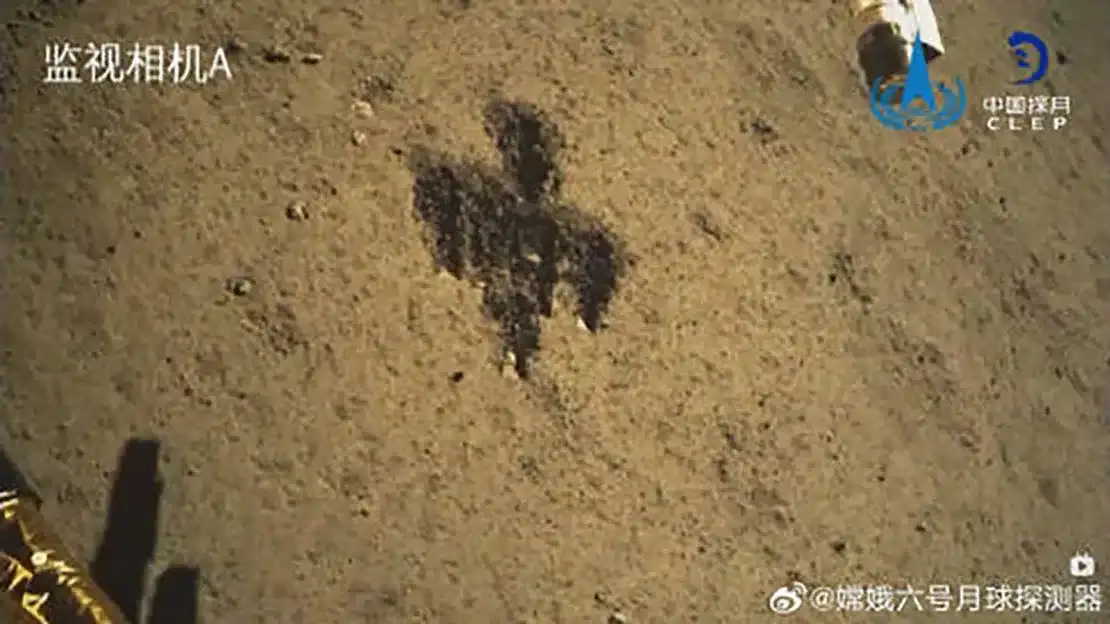
Beyond sample collection, the mission captured a notable photograph carrying both scientific and cultural meaning. The Chinese National Space Administration (CNSA) unveiled an image showing a drill mark shaped like the Chinese character “zhong,” meaning "middle" and the first character in the Chinese word for China.
This photo has gone viral on China’s social media platform Weibo, celebrating national pride and the mission’s achievement. Additionally, the lander prominently displayed China’s flag on the lunar surface, symbolizing the country’s rising space capabilities.
Cutting-Edge Technology Overcoming Lunar Hurdles
The Chang’e-6 mission demonstrated several engineering innovations. It endured harsh temperature fluctuations on the lunar far side and maintained communication via the Queqiao-2 relay satellite, since this moon hemisphere lacks direct Earth connectivity. Launched in March into lunar orbit, Queqiao-2 was crucial to the mission’s communication link. The probe also showcased the Chinese flag on the moon's surface, reinforcing China’s increasing mastery of space technology.
Collected samples are secured inside a metallic vacuum container to preserve their pristine condition throughout the return journey, expected to last about three weeks. The capsule is slated to touch down in Inner Mongolia, China, approximately on June 25.
Long-Term Vision and Upcoming Lunar Missions
Chang’e-6 fits into China’s broader objective of enhancing lunar exploration and establishing a human foothold on the moon by 2030. This mission builds on the 2020 Chang’e-5 success, which returned samples from the moon’s near side. Targeting the far side offers a more complete picture of lunar geology and accessible resources.
Ultimately, China aims to create a research station at the moon’s south pole—a region thought to harbor water ice—potentially supporting sustained human activity and further scientific discovery.
International Competition and Lunar Ambitions
China’s recent accomplishments arrive during a surge of global renewed interest in lunar exploration. Nations including India, Japan, Russia, and the U.S. are actively pursuing moon missions, aiming to tap into lunar resources and prepare for deep-space ventures. For example, NASA’s Artemis-3 mission plans a crewed lunar landing by 2026 to initiate a lasting human presence.
Beyond science, the Chang’e-6 project is a strategic milestone in today’s space race. Successfully returning samples from the moon’s far side solidifies China’s rising leadership in space exploration and advanced technology.
Scientific Contributions and International Partnerships
The geologic samples from Chang’e-6 are anticipated to offer valuable knowledge about the moon and broader solar system history. Officials revealed that China will conduct initial analyses before sharing materials with international partners, fostering wider scientific collaboration.
University of Manchester lunar geologist Professor John Pernet-Fisher emphasized the significance of obtaining specimens from an unexplored lunar region, as it could answer critical questions about planetary evolution.
As Chang’e-6 proceeds toward Earth, its journey symbolizes China’s rapid progress in space technology and strategic lunar ambitions. The sample return will represent a landmark success, enriching lunar science and affirming China’s status as a prominent spacefaring nation.
- Categories:
- Astronomy ,
- News ,
- Space ,
- Aircraft











0 comments
Sign in to Comment