
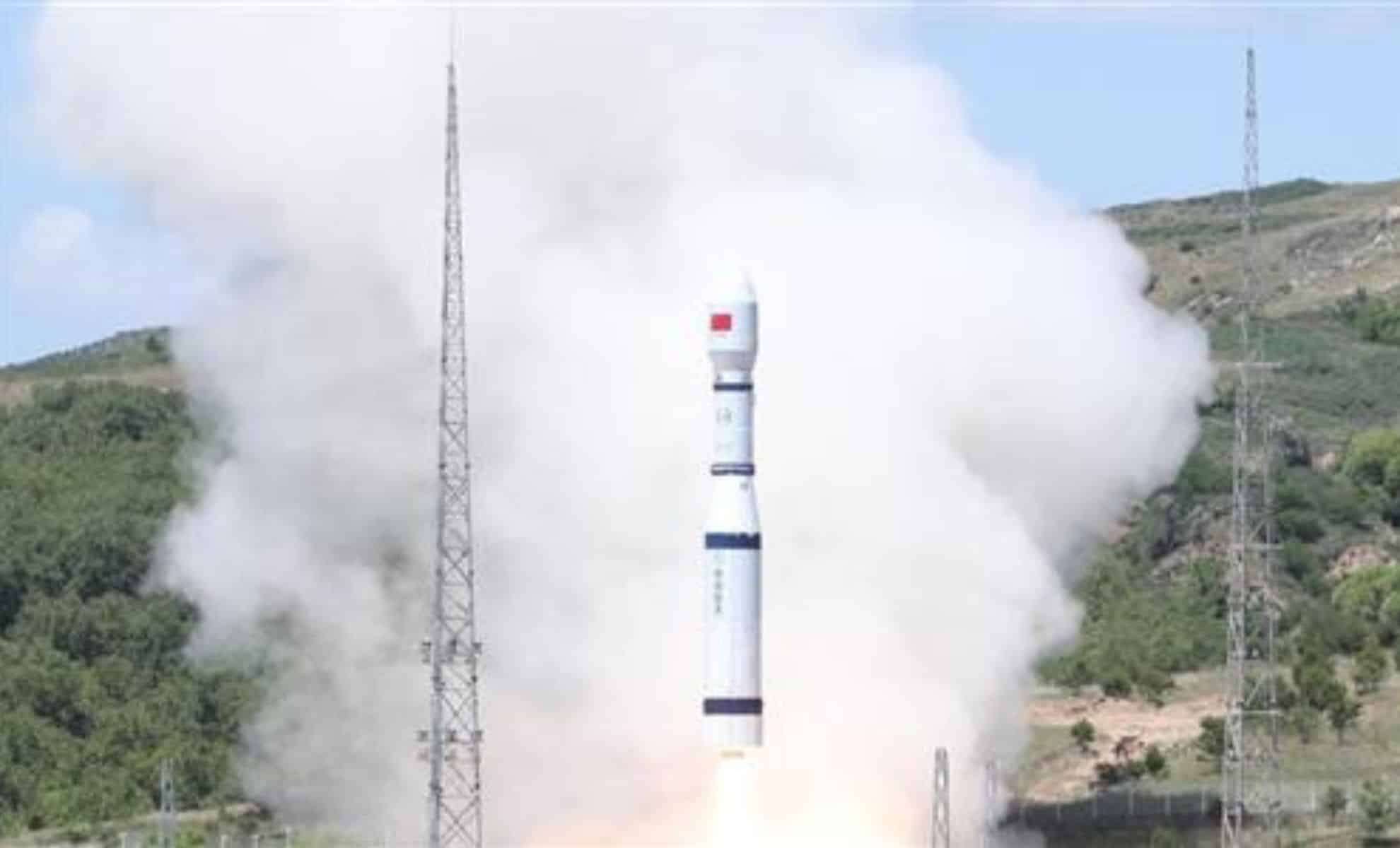
China has completed a successful trial of an advanced propulsion system aimed at powering its upcoming lunar exploration efforts, marking a key achievement in its space ambitions.
Conducted on June 14, 2024, this critical ground evaluation represents an important step toward China’s objective to build a lunar research station by 2030.
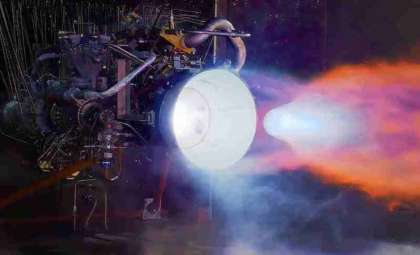
The engine setup features a trio of YF-100K thrusters intended for the Long March-10 rocket’s first stage, which is designed to deliver payloads exceeding 27 tonnes into Earth-to-moon transfer orbit.

Historic Test Sets Stage for Long March-10 Development
This examination was the most extensive engine test ever performed for a Chinese rocket in development. The engines produced a ground thrust measuring 382 tonnes, surpassing prior tests by roughly 1.6 times and showcasing significant advancement.
The Long March-10 stands at 92.5 meters tall and weighs about 2,189 tonnes at launch, with a thrust capacity of 2,678 tonnes. This enables it to carry heavier lunar payloads than its predecessor, the Long March-5, which currently transports over 8 tonnes, as seen in the Chang’e-6 mission. The design underscores China’s ambition to advance its launch power for broader space ventures.
The China Aerospace Science and Technology Corporation (CASC) reported that the propulsion test confirmed seamless interaction between the sub-level boost system and the engine, as well as validating fueling procedures, multi-engine thrust distribution, and environmental performance.
A CASC official remarked, “This trial propels the Long March 10 series rocket swiftly into comprehensive large-scale ground testing.” The accomplishment highlights a major engineering feat and lays the groundwork for subsequent testing and mission preparation.
Strategic Role and Upcoming Evaluations
The Long March-10 is integral to China’s manned lunar landing ambitions, designed to ferry crewed spacecraft and landers to the moon. Its dimensions include a 92.5-meter length, a 2,189-tonne launch mass, and a payload capacity of at least 27 tonnes to the Earth-moon transfer orbit.
These capabilities represent a leap forward compared to earlier Chinese rockets, allowing for more substantial cargo delivery to support a sustained human presence on the moon.
Powered by three robust YF-100K engines, the rocket’s first stage is engineered to endure extreme launch forces and provide the thrust needed to escape Earth’s gravity. These engines are renowned for their reliability and performance, driving the Long March-10’s enhanced payload potential.
Plans are underway for a second ground test of the first-stage propulsion system, which will evaluate its performance under various conditions. Successfully completing these trials is vital for progressing the manned lunar mission, with initial flight operations anticipated by 2027.
Greater Impact on China’s Space Exploration Goals
Beyond being a technical breakthrough, this engine test highlights a strategic leap in China’s space exploration. The high-thrust powerplant and Long March-10 rocket form part of a larger initiative to establish a human footprint on the moon, aligning with China’s vision for lunar science and resource development.
China is simultaneously advancing other spacecraft and lunar modules dedicated to supporting its crewed moon landings. Progress on the powerful propulsion system exemplifies the nation’s deepening expertise and commitment to space leadership. These efforts enhance China’s influence in global space research and contribute to broader technological advancement.
The Long March-10 is also set to play a versatile role in various missions, including crew and cargo delivery to orbiting stations. Its capability to operate without boosters and still transport a minimum of 14 tonnes to low Earth orbit shows its strategic flexibility within China’s overall space program.
- Categories:
- Astronomy ,
- News ,
- Space ,
- Aircraft






0 comments
Sign in to Comment