

During the summer of 1962, French geologist Michel Siffre embarked on a daring journey, descending 130 meters into the Scarasson cave nestled in the French Alps. Leaving behind all natural light, clocks, and calendars, he emerged only after 63 days had passed. What began as a routine study of glacial formations evolved into an intense self-experiment that dramatically reshaped science’s grasp of human circadian rhythms and spurred extensive research in fields like neurology, space medicine, and sleep science.
Isolated Deep Underground: Losing Track of Time
At just 23 years old, Siffre initially intended to conduct a short geological survey. However, his curiosity soon centered on a profound question: How does the human body and mind function when cut off from all external time cues? His minimalist experimental setup within the icy cave excluded any access to natural light, clocks, or scheduled interactions — communication with the surface was limited to a phone he used only to report his daily waking, sleeping, and eating patterns.
The cave’s environment was harsh and unforgiving: humidity hovered at 98%, temperatures stayed just above freezing, and oppressive silence engulfed him. His only source of illumination was a dim torch that provided a fragile connection to the outside world. Despite these extreme conditions, Siffre uncovered remarkable insights.

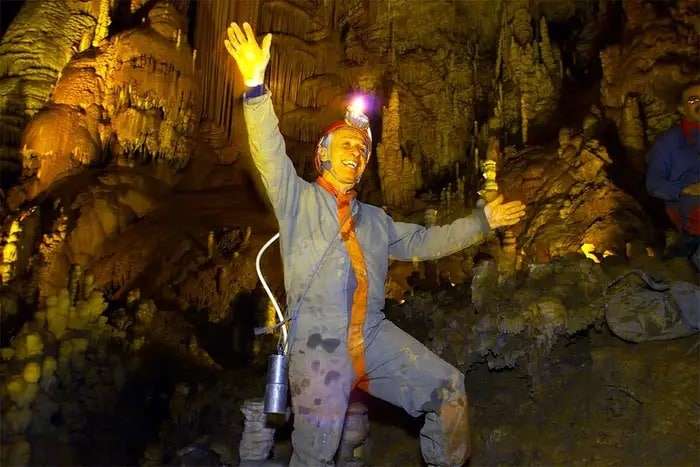
Within just days, his internal sense of time began to dissipate. His biological rhythms stretched beyond the typical 24-hour cycle — initially extending to 24.5 hours and even reaching 36 hours of wakefulness in subsequent trials. In conversations with Scientific American, Siffre recounted how what felt like one day awake was sometimes closer to two.
“I lost all notion of time,” Siffre recalled later. “I could tell if it was morning or evening, but that was it. I thought I’d been down there for 35 days. It had been 63.”
A Breakthrough for Chronobiology
Siffre’s experience provided some of the earliest concrete proof that humans have an innate “internal clock” capable of continuing without environmental timing cues. This discovery came at a time when circadian rhythms were primarily studied in insects and animal models inside laboratories.
Following the release of Siffre’s findings, the scientific community intensified their research into these biological cycles. His pioneering work laid the foundation for the field of chronobiology, which now guides advancements in understanding jet lag, sleep disorders, and even optimizing the timing of cancer therapies.
His meticulous records and biometric data became essential references for subsequent controlled studies by institutions like the Max Planck Institute for Biological Cybernetics and Harvard Medical School. These investigations confirmed that the suprachiasmatic nucleus — a tiny structure within the hypothalamus — governs our body’s internal timing in the absence of daylight cues.
Applications Beyond Earth: Insights for Astronauts and Isolation
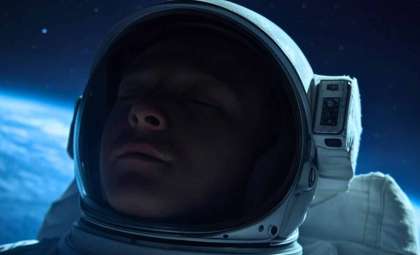
Siffre’s groundbreaking work caught the attention of space agencies. By 1972, he repeated his experiment in a cave in Texas, partnering with NASA as the agency geared up for extended space expeditions. Prior Apollo missions had documented astronauts experiencing confusion and disorientation related to disrupted time perception, raising alarms about mental endurance in confined, dark habitats.
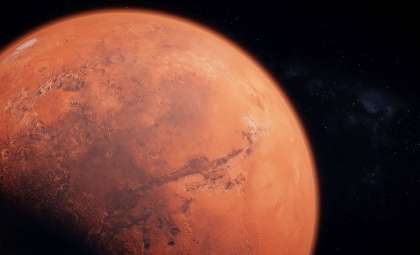
Data from Siffre’s experiments helped both NASA and later the European Space Agency grasp how the brain and body cope with sensory deprivation and time isolation — challenges central to long-term space travel, including missions to Mars. Indeed, a 2022 ESA internal report cited his work as among the earliest foundations for analog astronaut research.
His findings also attracted military interest, particularly for submarine crews. In environments where natural rhythm cues vanish, sustaining mental sharpness, regulating sleep, and maintaining team cohesion become paramount. Siffre’s experiment offered vital, data-backed insights into how human time perception can drift in such settings and how to counteract those shifts.
The Mental Challenges of Extended Isolation
Siffre emerged physically unscathed, yet the psychological effects were profound. He experienced episodes of memory lapses, intense anxiety, and a numbing dulling of emotional responses. At times, he found himself unable to recall the start of sentences by the time he finished speaking.
Today, these symptoms are recognized in studies of sensory deprivation and mirror experiences faced by people enduring extended isolation, such as Antarctic expeditioners, prison inmates, and even those subjected to lockdown-induced digital isolation during recent pandemics. A 2020 article in Nature Reviews Neuroscience underscores the connection between circadian disruption and increased risks of cognitive impairment, depression, and metabolic illness.
Now in his eighties, Siffre still resides in Nice, surrounded by fossils, mountaineering equipment, and memorabilia from a lifetime of exploration and scientific inquiry. Among his treasured keepsakes is a tube of electrode paste once used by Apollo astronauts — a subtle testament to the unique legacy linking him to space pioneers, achieved not above the earth but far beneath its surface.
- Categories:
- Science



0 comments
Sign in to Comment