
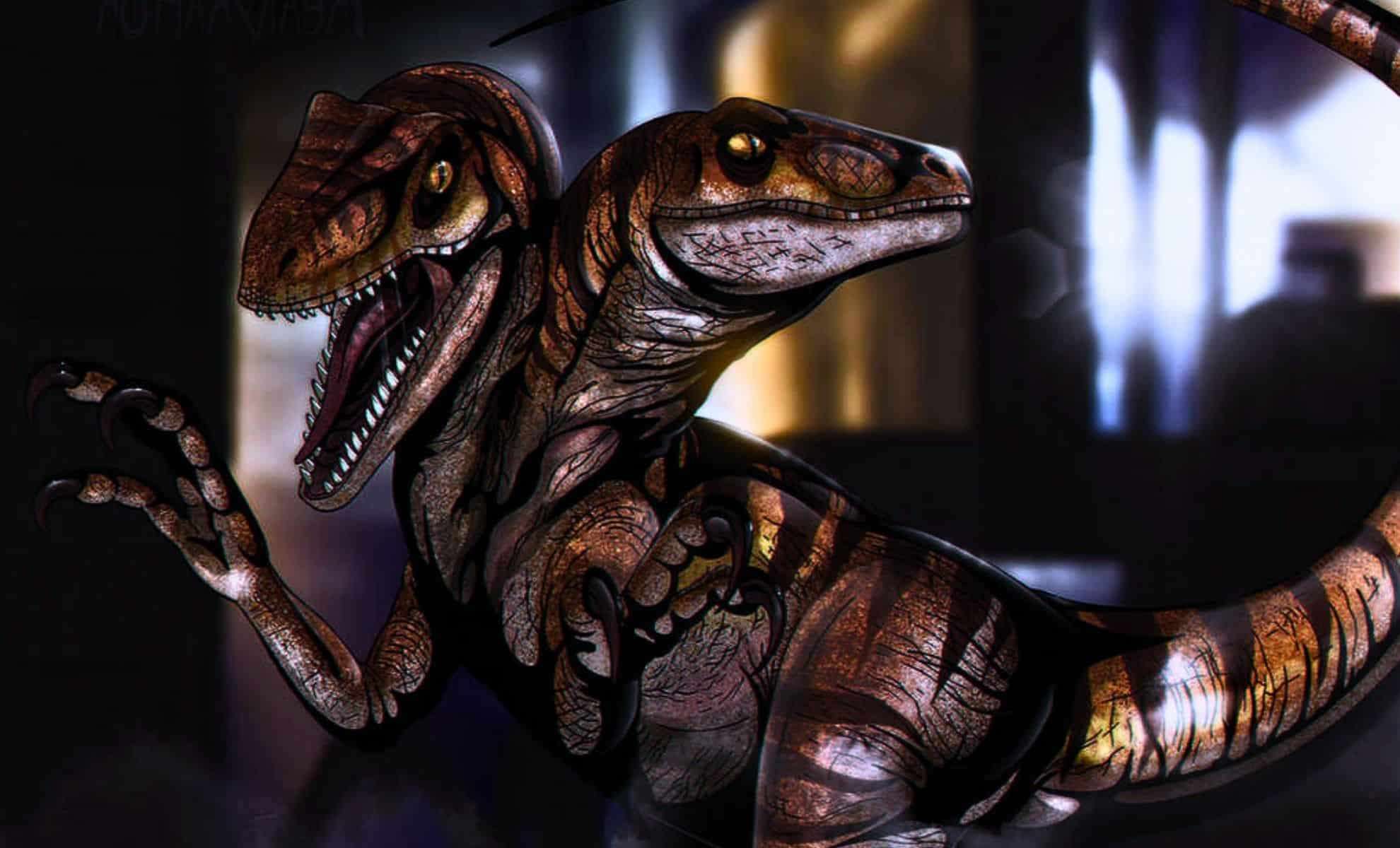
Unearthed two decades ago in northeastern China, a fossil has recently drawn fresh scientific interest following confirmation that it represents the oldest documented instance of polycephaly, a rare birth defect where an organism develops more than one head. First described in 2006 in the Biology Letters by the Royal Society, this find reveals a remarkable prehistoric anomaly providing valuable insights into the evolutionary biology of vertebrates.
At first, the fossil resembles a young, slender-necked reptile no longer than 3 inches. However, a closer examination reveals its spine diverges into two necks, each supporting a distinct skull. This species, Hyphalosaurus lingyuanensis, belonged to the choristoderes, an extinct lineage of semi-aquatic reptiles inhabiting freshwater lakes during the Early Cretaceous period, approximately 120 million years ago.
Two Distinct Skulls Preserved Over 120 Million Years
Found within the Yixian Formation, a fossil-rich site, this juvenile Hyphalosaurus was remarkable not only for its delicate preservation but also for exhibiting a spinal bifurcation resulting in two separate necks and skulls — an extraordinarily uncommon trait among extinct and living animals alike.

The original Biology Letters paper, authored by paleontologist Éric Buffetaut and his team, explains that the fossil lies intact on a single stone slab, with slight sediment layers partially covering the remains. No indication of forgery or artifact manipulation exists, confirming the malformation as authentic and natural.
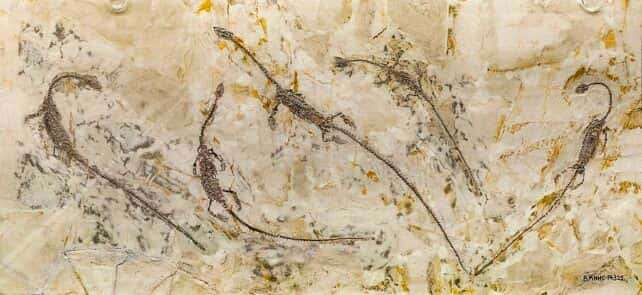
Although modern reptiles occasionally display similar conditions—such as two-headed turtles and snakes—such anomalies rarely survive beyond infancy. This fossil likely represents an individual that perished shortly after hatching, or perhaps was stillborn, as suggested by its diminutive size and underdeveloped bones.
Introducing Hyphalosaurus, an Aquatic Reptile Often Mistaken for a Dinosaur
Though commonly mistaken for dinosaurs, Hyphalosaurus was quite distinct. This lesser-known genus flourished in the lakes of what is now China during the Cretaceous era. Its slim frame, long neck, and paddle-shaped limbs were adapted for aquatic life, drawing comparisons to modern newts or small marine reptiles.
While many Yixian Formation fossils highlight feathered dinosaurs and early birds, this specimen gained attention primarily because of its genetic irregularity. It demonstrates that developmental irregularities still seen in present-day creatures also happened deep in Earth’s history.
Experts emphasize how rare it is to find such a clearly preserved developmental abnormality in extinct species. The likelihood of fossilizing a malformed newborn or embryo is minuscule, making this specimen an exceptional scientific find.
Insights Into Ancient Growth Disorders
This two-headed Hyphalosaurus specimen is much more than an oddity; it provides crucial data about how developmental biology has transformed across millions of years. The deformity—known as axial bifurcation—is believed to arise from an incomplete embryonic division, where a single embryo begins to split into two but fails to separate fully, resulting in two heads sharing one body.
Though rare today among vertebrates, polycephaly has been well recorded in reptiles. The significance of this fossil is that it pushes back the earliest known occurrence of this defect by over 100 million years.
Scientists conclude that the biological processes behind polycephaly have been present in vertebrate evolution for an extraordinary length of time. Consequently, this discovery serves as more than just a record of one deformed creature; it signifies a profound evolutionary persistence in how vertebrate forms can develop—and sometimes go awry.
- Categories:
- Science






0 comments
Sign in to Comment