
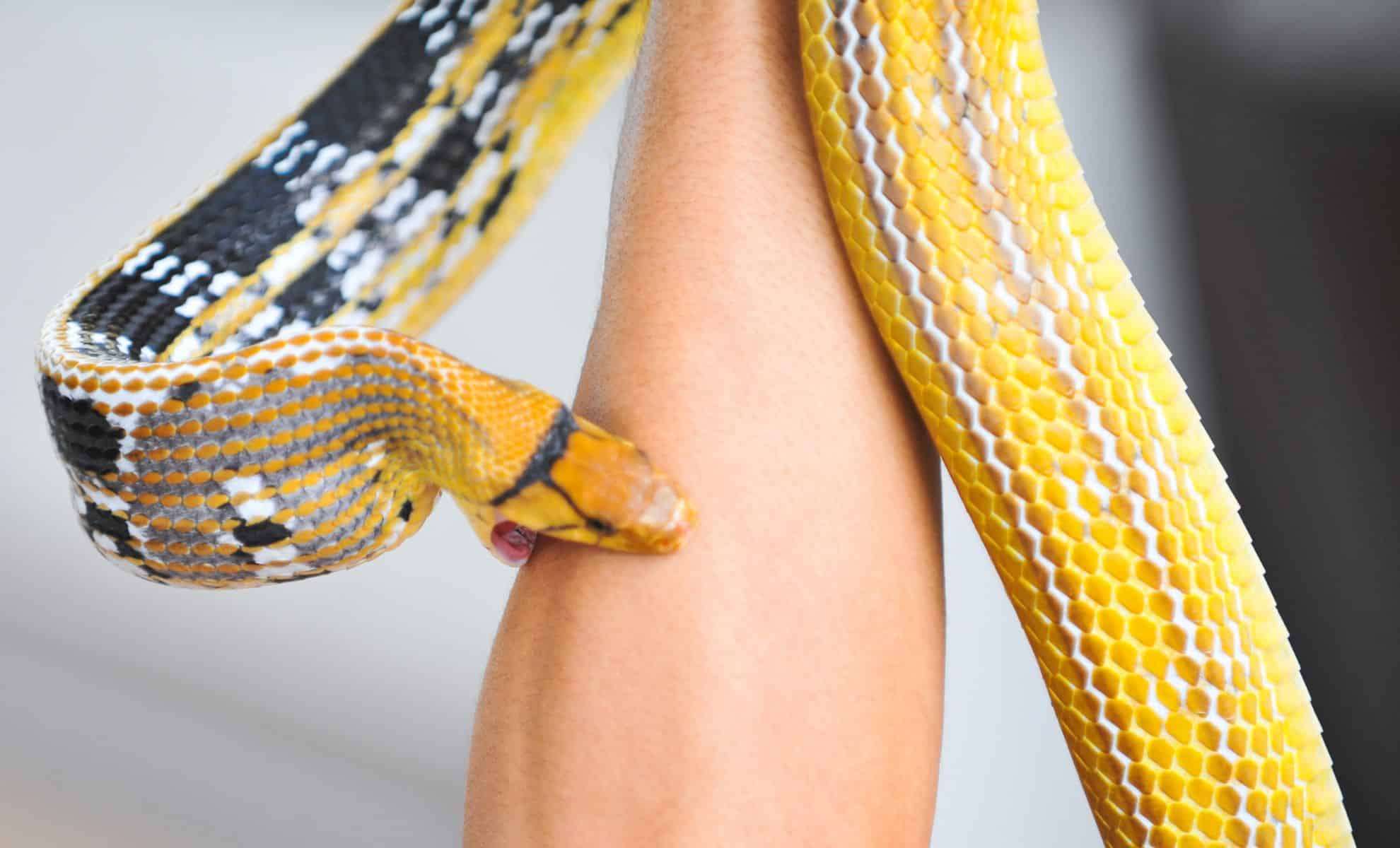
Tim Friede from Wisconsin has endured bites from some of the deadliest snakes on the planet more than 200 times. His extraordinary self-experimentation might pave the way for a revolutionary advance in medicine.
The Perilous Pursuit of Immunity
Growing up in Wisconsin, Tim Friede began his fascination with snakes by catching garter snakes. This passion eventually evolved into a focus on the most venomous snakes worldwide.
In 2001, Friede decided to push boundaries by intentionally exposing himself to snake venom through bites.

He initially faced bites from cobras—the most accessible venomous snakes to him. "Those first bites were intense," he recalls. "The pain was like a bee sting amplified a thousandfold, triggering overwhelming anxiety."
Risking It All for Immunity
Despite facing significant dangers, Friede persisted in receiving bites from numerous species, including black mambas, taipans, and kraits.
He even required intensive care after two cobra bites but was driven by a goal beyond mere survival.
His aim was to develop a natural immunity against snake venoms, which could ultimately contribute to formulating a universal antivenom. "They want to kill me," he states, "but I want to stay alive."
A Medical Breakthrough Emerges
Friede’s unconventional approach led to a pivotal discovery when researchers led by Jacob Glanville, CEO of biotech firm Centivax, analyzed his blood to identify antibodies capable of neutralizing venom from multiple snake species.
This study confirms that Friede’s immune system developed broad resistance across diverse venoms.
Glanville shares, "I was reaching out to vivariums for a clumsy snake researcher but found none—then I discovered Tim Friede."

Unlocking Antibodies to Combat Neurotoxins
Scientists focused on antibodies that target a conserved molecular region common to neurotoxins from various snake species.
This discovery enabled the creation of an antivenom capable of neutralizing venom from five species, including the black mamba.
Glanville explains, "We identified an ultra-broad antibody that binds precisely to the conserved site neurotoxins use to induce paralysis."
Formulating a Broad-Spectrum Antivenom
The research team enhanced their discovery by combining the antibodies with varespladib, a small molecule known for its efficacy against certain venoms.
This three-part formulation demonstrated protective effects against venom from 13 venomous snake species representing diverse genetic groups globally.
The result was full immunity against five species and partial defense against six others.
A Potential Worldwide Remedy
This innovative antivenom might revolutionize treatment for snakebite victims worldwide.
Annually, tens of thousands of deaths and hundreds of thousands of disabilities result from snake envenomation.
Access to effective antivenoms remains limited, especially in impoverished regions.
David Williams of the World Health Organization highlights that venom can cause paralysis, coagulopathy, and severe pain, emphasizing the urgent need for better therapeutics.
“This development answers crucial questions about designing universal antibodies,” he notes.
The new antivenom cocktail could significantly lessen the impact of snakebites, particularly in tropical areas.
Future Directions in Snakebite Treatments
The research team aims to refine this antivenom further, conducting animal trials and eventually human clinical testing.
The ultimate goal is a globally accessible, cost-effective antivenom to protect millions in snakebite-prone regions.
Reflecting on his role, Friede shares, "I couldn’t believe it at first. I feel I’m contributing to humanity and advancing scientific knowledge."
- Categories:
- News












0 comments
Sign in to Comment