

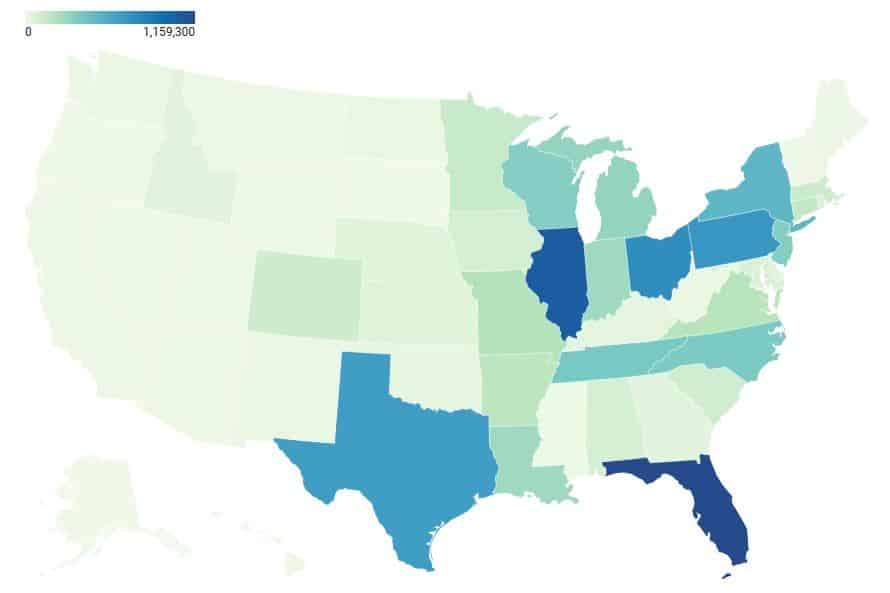
Florida is confronting a serious public health challenge hidden beneath its roadways: over 1.1 million lead service lines are tainting the state’s drinking water supply. This alarming number marks Florida as the most affected region in a widespread water contamination crisis, potentially jeopardizing 9 million households nationwide. As residents receive notifications, concerns about funding, timelines, and the risks to community health continue to escalate, leaving many anxious about the safety of their water.
The Perils of Lead in Water Systems
Once viewed as a reliable plumbing solution, lead pipes are now known to pose grave health risks. The Environmental Protection Agency (EPA) highlights that even minimal lead exposure can cause severe consequences, including neurological harm, developmental challenges in kids, and chronic illness risks. Despite these dangers, such pipes have remained hidden underground and largely unmonitored for decades.
To address these issues, the EPA’s Lead and Copper Rule Improvements (LCRI), implemented in October, require utilities to locate and remove all lead service lines within a decade. The rule also mandates enhanced water testing and stronger communication with affected communities to keep them informed about hazards, pipe locations, and replacement efforts.

Florida’s Vulnerability to Lead Contamination
Due to its aging water infrastructure, Florida faces heightened risks. Megan Glover, co-founder of 120Water, a company that focuses on water safety, suggests that the estimated 1.1 million lead lines may actually be lower than reality. “We simply don’t have a complete picture,” Glover explained. “Until now, there hasn’t been a comprehensive assessment.”
This lack of clarity complicates remediation efforts as utilities comb through historical records and dig to verify the presence of lead pipes. This painstaking process threatens to delay necessary actions, placing Florida’s residents at continued risk.
Under the Biden-Harris administration, the Investing in America Agenda supports the LCRI’s mission by prioritizing lead pipe replacements nationwide and targeting assistance to communities most impacted, including low-income and minority neighborhoods. The Justice40 Initiative ensures that 40% of federal investment benefits flow to these underserved populations, emphasizing environmental equity.
Broader Impact Across the United States
Florida may lead in numbers, but other states like Illinois (just over 1 million lead lines), New York, Ohio, and Pennsylvania are contending with similar challenges. Lower-income areas disproportionately suffer from lead contamination due to limited access to filtration and mitigation resources.
The federal government has committed $15 billion through the Bipartisan Infrastructure Law to replace lead pipes, with additional funding opportunities for state and local programs. However, only about $400 million has been directly assigned to projects so far, underscoring the need for far greater investment. The EPA points to Drinking Water State Revolving Funds (DWSRF) and competitive grants as supplemental funding avenues, though experts caution these alone won’t suffice.
Guidance for Affected Residents
As Floridians receive notifications about potential lead exposure, uncertainty about water safety persists. Since pipe replacements can take years, experts recommend immediate actions to protect health:
- Consult your water utility about testing options.
- Utilize an NSF 53-certified filtration system to reduce lead ingestion temporarily.
- Check if your property is included in the utility’s lead pipe replacement schedule via their website.
The EPA also promotes its Get the Lead Out Initiative, providing technical support and training to utilities to facilitate effective replacement strategies and funding applications.
A Call for Prompt Action
Despite federal efforts, the path to eliminating lead pipes presents significant hurdles. The EPA estimates that nationwide removal of lead service lines could annually prevent 900,000 low birthweight incidents and reduce 2,600 childhood ADHD cases. The anticipated public health and economic returns could be up to 13 times the investment.
As cities like Milwaukee, Detroit, and Denver speed up remediation projects, Florida faces intense pressure to enhance its response. The urgency is clear: protecting millions depends on swift, decisive action.













0 comments
Sign in to Comment