
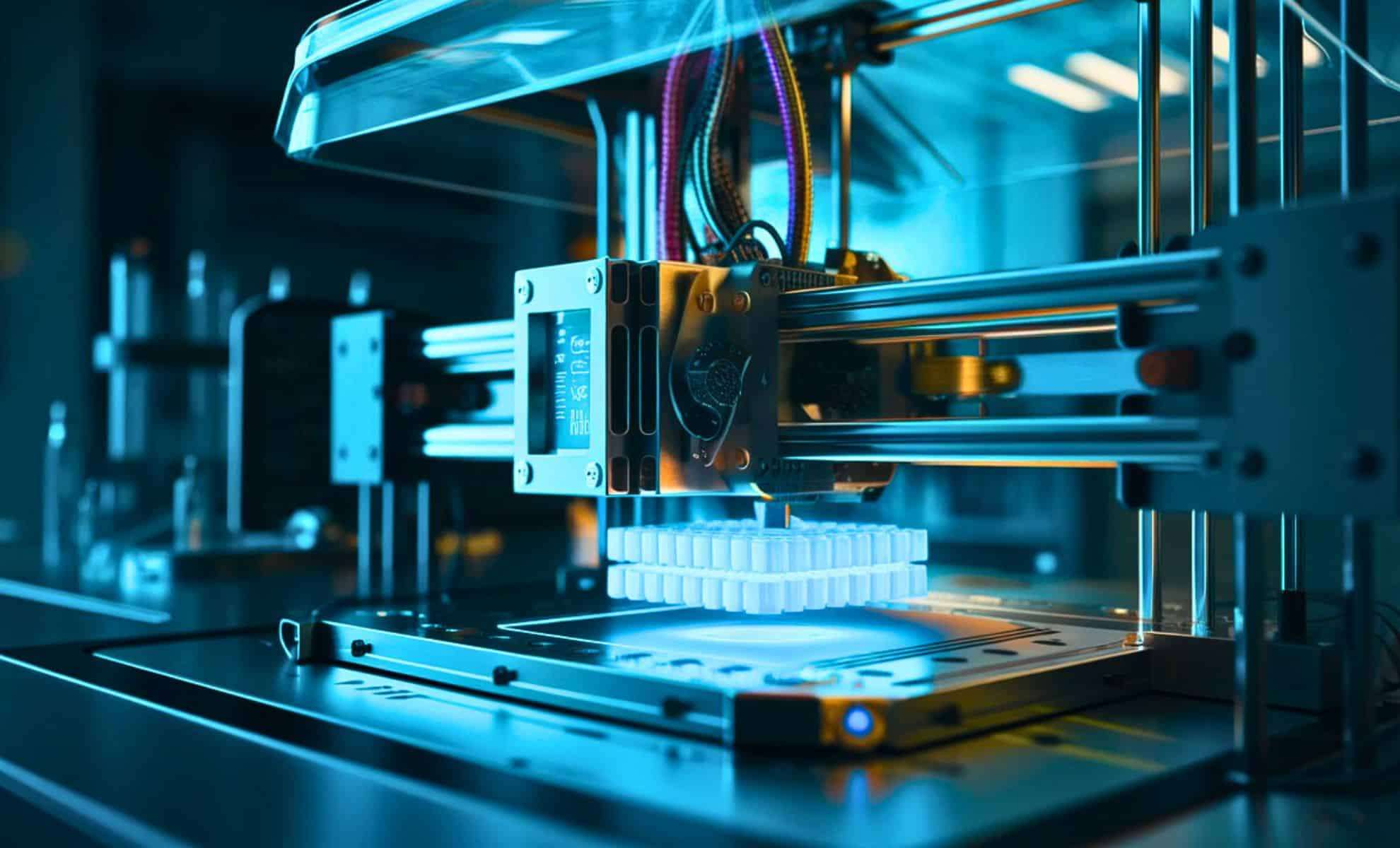
Scientists at the Institute of Science and Technology Austria (ISTA) have pioneered an advanced 3D printing process that fabricates efficient thermoelectric materials, slashing production costs and minimizing waste. Featured in Science, their research introduces a novel method for constructing solid-state refrigeration devices with the potential to revolutionize cooling applications ranging from electronic gadgets to medical devices.
Transforming thermoelectric cooling technology
Thermoelectric coolers operate by using electrical current to move heat between surfaces, enabling targeted cooling without requiring moving components or fluids. Their durability and silent operation make them ideal for electronics, healthcare tools, and wearable tech. Yet, current production based on ingot machining is costly and inefficient, producing significant material waste.
The research group led by Maria Ibáñez, director of the Werner Siemens Thermoelectric Laboratory, along with postdoctoral fellow Shengduo Xu, introduced a cutting-edge 3D printing technique to overcome these limitations. Xu explains, “Integrating 3D printing into the manufacturing of thermoelectric coolers streamlines production and cuts expenses dramatically.”

Direct 3D printing of efficient thermoelectric compounds
While thermoelectric effects are present in many substances, only doped semiconductors with metallic properties (“degenerate semiconductors”) demonstrate strong effects suitable for practical use. The ISTA team's achievement enables direct 3D printing of such high-performance thermoelectric compounds without complicated post-processing.
“Our process allows precise 3D fabrication of thermoelectric materials with customized shapes,” states Xu. “Resulting devices achieve a cooling effect of up to 50°C in ambient air, equaling traditional products but produced more affordably.”
Enhancing particle bonding for superior performance
In addition to the new 3D printing method, the team formulated a specialized ink that boosts particle adhesion during drying. This advancement improves electrical charge flow and overall device efficiency, differentiating it from prior 3D-printed thermoelectric attempts.
Ibáñez describes, “The ink chemistry is tailored to maintain structural integrity while enhancing particle connections.” Their final thermoelectric coolers demonstrate stability and performance on par with traditional ingot-based devices, all while reducing energy usage and material consumption.
Broader uses beyond cooling electronics
This technological leap extends past electronics cooling. Thermoelectric devices are promising for medical therapies involving cooling, including burn treatment and muscle recovery. Moreover, the innovative ink could be adapted for thermoelectric generators that convert heat into electricity, offering novel ways to reclaim industrial waste heat.
“Our work encompasses a comprehensive development cycle—from fine-tuning raw material properties to creating a reliable, high-efficiency device,” says Ibáñez.
With a cost-efficient, energy-saving, and scalable manufacturing strategy now achieved, this discovery stands to advance thermoelectric technology, paving the way for enhanced cooling solutions, energy recovery, and greener production in various industries.
- Categories:
- Science










0 comments
Sign in to Comment