

Scientists from India’s Physical Research Laboratory (PRL) have discovered that the Moon’s nighttime surface temperatures dropped significantly during the 2020 COVID-19 lockdowns. This temperature decline was associated with the sharp decrease in human activities on Earth, which altered the radiation emitted toward the Moon. The study highlights the surprising degree to which earthly processes can impact our nearest celestial neighbor.
Impact of Earth's Quietude on Lunar Temperature
A paper published in the Monthly Notices of the Royal Astronomical Society reports that the Moon’s nighttime surface temperature fell by about 8 to 10 Kelvin at several locations on its near side. This phenomenon coincided with global lockdowns when industries, flights, and transportation came to a near standstill. The resulting reduction in greenhouse gases and pollutants led to a decrease in the radiation and thermal energy the Earth’s atmosphere projected into space.
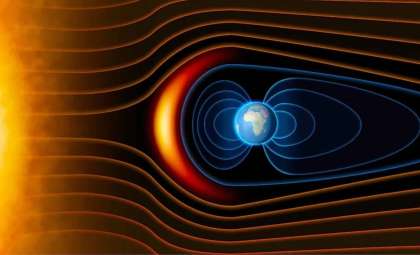
With no direct solar input during the lunar night, the Moon depends largely on radiation from Earth to maintain its surface warmth. The lowered energy emissions from our planet during lockdowns caused the observed dip in the lunar surface temperature, described by the researchers as an “anomalous decrease.” They noted, “The Moon has possibly experienced the effect of COVID-19 lockdown, visualized as an anomalous decrease in lunar nighttime surface temperatures during that period.”

Temperature measurements were gathered via NASA’s Lunar Reconnaissance Orbiter, collecting data from 2017 through 2023. Comparing periods before, during, and after the lockdowns revealed that as human activity resumed, lunar temperatures increased once again, confirming Earth’s radiation significantly influences lunar conditions.
Radiative Interaction Between Earth and Moon
This research underlines the close interplay between the Earth and the Moon. Typically, the Moon absorbs sunlight during its day and releases energy back into space at night. However, after sundown, the lunar surface relies on Earth’s emitted radiation to retain heat. The COVID-19 lockdowns created an unusual natural experiment, enabling scientists to observe the Moon’s sensitivity to changes in Earth’s atmospheric radiation.
K Durga Prasad and G Ambily, the PRL project leads, emphasized how lunar night temperatures are highly responsive to shifts in Earth’s radiation output. The sudden halt in human activities resulted in cleaner skies and diminished emissions, thereby reducing the radiation sent to the Moon. “The temperature drop in 2020 offers a unique opportunity to examine how reduced human activity on Earth may have affected the Moon,” stated Anil Bharadwaj, PRL’s director.
These results suggest the Moon could be a useful proxy for monitoring significant environmental changes on Earth. The study reveals new insights into the Earth-Moon radiative relationship, demonstrating how global events like the pandemic can trigger effects that extend beyond our planet.
Broader Consequences and Future Directions
Beyond highlighting the lockdowns’ impact, the researchers propose leveraging the Moon as a “steady platform” to study Earth’s radiation budget and climate dynamics. The pandemic years provided rare data demonstrating how shifts in human-driven emissions may influence other bodies in the solar system.
“In this work, we have utilized a rare and unique opportunity of COVID-19 to carry out our study, which may never occur again,” the team noted. They advocate for expanding lunar observations, potentially through dedicated Moon-based observatories, to better understand how changes in Earth’s atmosphere modulate conditions beyond our planet.
This research also opens the door to using lunar temperature variations to enhance climate change studies on Earth. Observing the Moon’s thermal responses during unusual global events could clarify how our planet’s atmospheric system operates and how human activity interplays with it. As the authors concluded, “It can also be further substantiated from Moon-based observatories in the future, as advocated by some researchers.”
The study powerfully illustrates the profound reach of human influence, extending past Earth’s atmosphere and affecting the Moon’s environment. Ongoing exploration of these cosmic impacts promises to deepen our understanding of humanity’s place within the wider universe.
- Categories:
- Astronomy ,
- News ,
- Science








0 comments
Sign in to Comment