
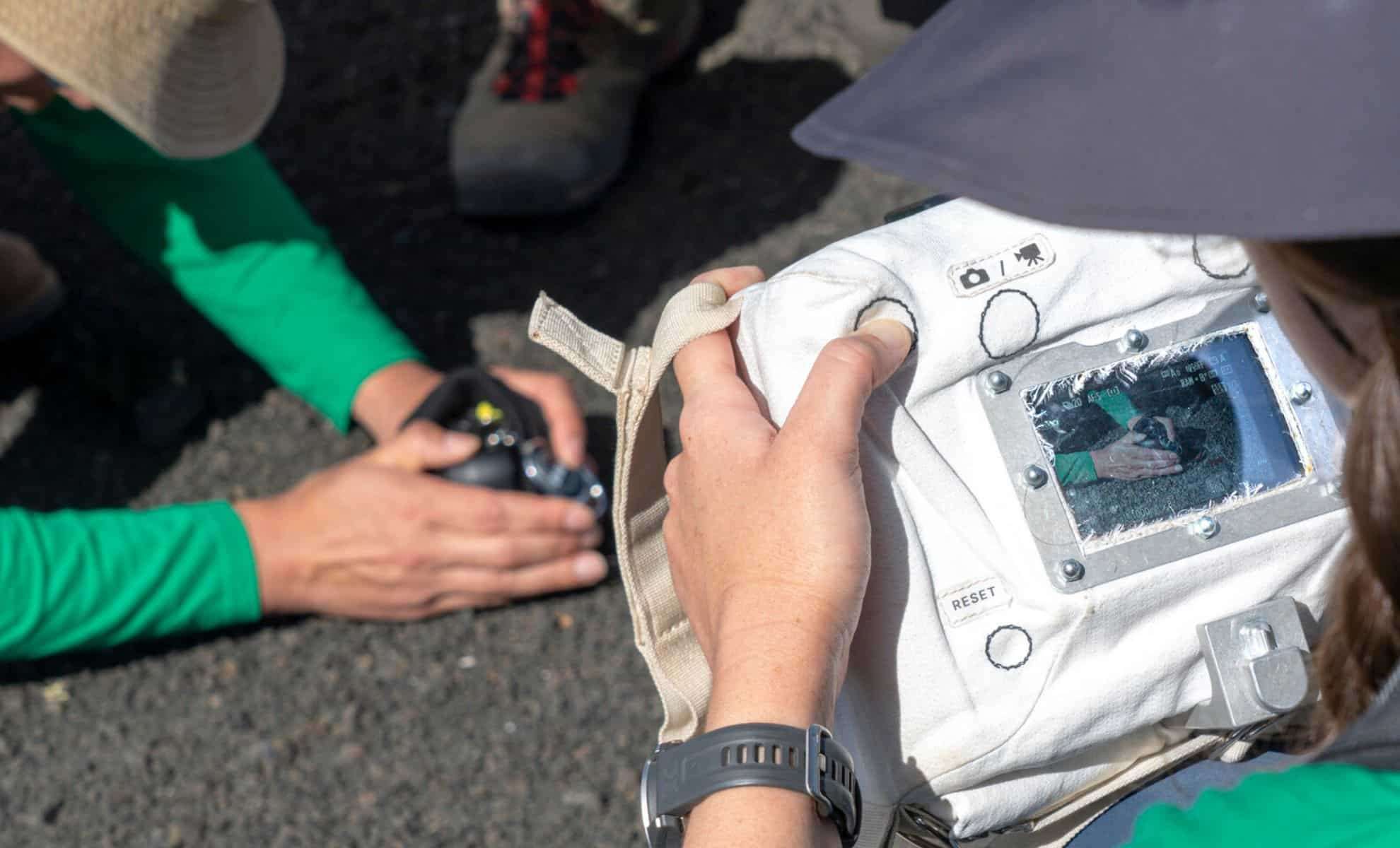
In support of NASA’s forthcoming Artemis missions, the European Space Agency (ESA) has advanced lunar imaging by trialing the Handheld Universal Lunar Camera (HULC) during their PANGAEA field geology exercises.
Designed specifically for the Moon’s challenging environment, this cutting-edge camera is set to assist astronauts by capturing detailed visuals of the lunar surface. The trials, conducted in Lanzarote, Spain, replicated the Moon’s harsh terrain, providing critical data on the camera’s operational effectiveness during actual missions.
Engineering a Camera for Extreme Lunar Conditions
The HULC camera is tailored to endure the Moon’s harsh climate, which features massive temperature swings and no atmosphere. Built on a customized Nikon platform, the camera incorporates a NASA-developed thermal insulation blanket to shield it from temperature extremes ranging from -200 to 120 degrees Celsius. This safeguard is especially vital for deployment near the lunar South Pole, the targeted landing site for the Artemis III mission, where many regions are perpetually shadowed.

Apart from thermal safeguards, the camera’s user interface has been retooled to be compatible with the thick gloves astronauts wear. This enhanced design allows for smooth operation during extravehicular activities. Jeremy Myers, NASA’s HULC project lead, emphasized that iterative astronaut input was essential in making the camera both reliable and user-friendly. He stated, “Feedback from trainees was key to optimizing the ergonomics and ensuring redundancy for mission success.”
Employing Realistic Lunar Analogues for Field Testing
The PANGAEA training provided an excellent environment to assess the HULC camera’s capabilities in lunar-like settings. Astronauts Rosemary Coogan (ESA), Arnaud Prost, and Norishige Kanai (JAXA) tested the device in volcanic caves and rugged areas resembling the Moon’s surface. Features such as the telephoto capabilities and flash functions were evaluated under low-light and contrasting illumination conditions similar to those near the lunar South Pole.
A highlight of the tests was the 200 mm telephoto lens, enabling astronauts to capture intricate details from a distance. This function is critical for remote geological scouting before approaching specific sites. Myers commented on the results, saying, “The level of detail captured was unprecedented, marking a significant advancement for lunar imaging.”
Managing Imaging Challenges in Shadowed Lunar Regions
The permanently shadowed craters at the Moon’s South Pole, the intended site for Artemis III, pose significant difficulties for photography due to the absence of sunlight. To tackle these issues, the HULC camera was engineered to perform optimally in dim environments. During the PANGAEA exercises, astronauts tested it inside dark volcanic caves in Lanzarote to emulate these shadowy conditions. The camera’s flash was also assessed, confirming its vital role in brightening areas unreachable by sunlight.
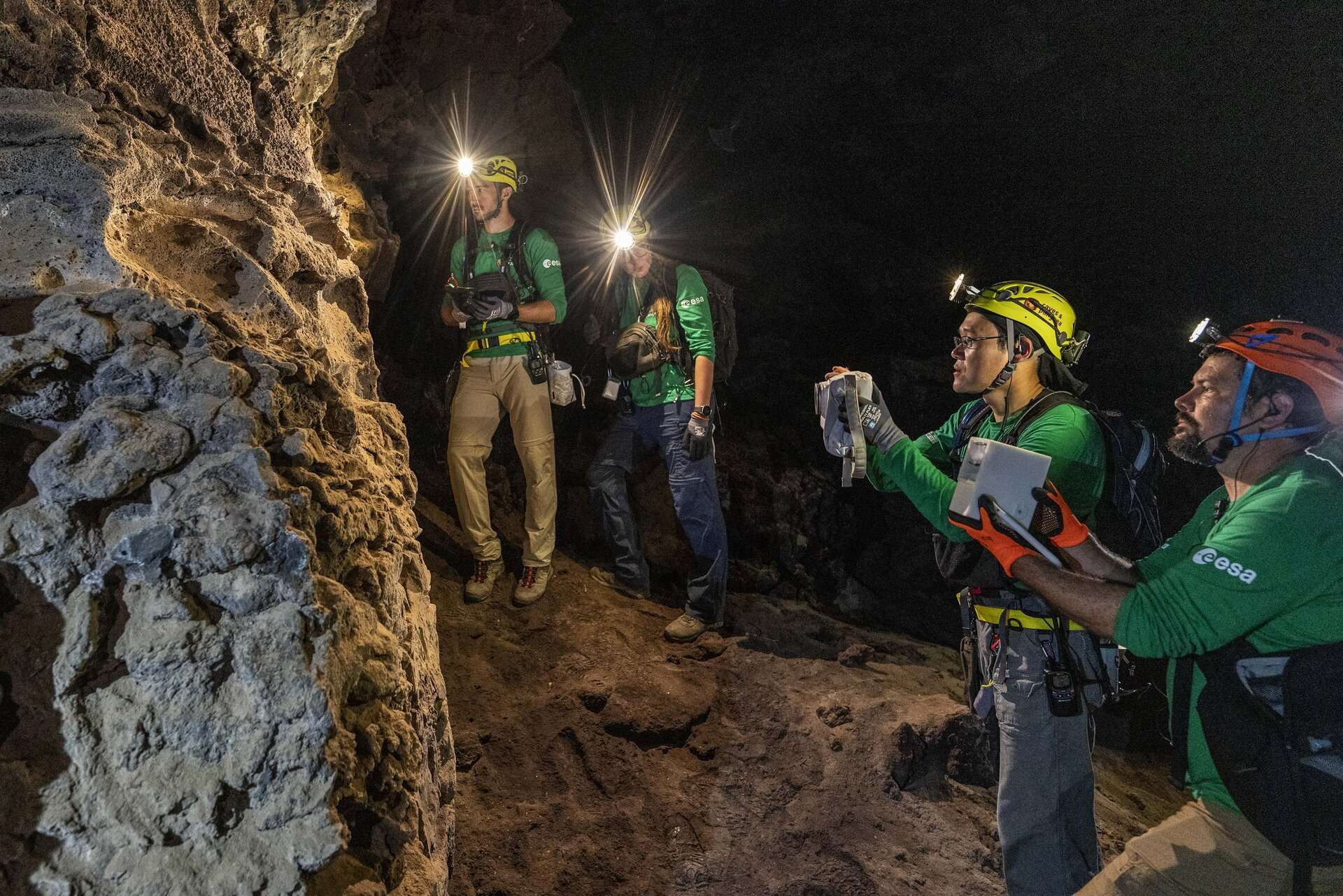
Results demonstrated effective coordination between the flash and telephoto lens. Myers noted, “For the first time, the flash was deployed inside a lava tube with astronaut Norishige Kanai, whose experience on the ISS brings valuable perspective to photographing in challenging environments.” Such tests are crucial to secure clear imagery for both scientific and navigational uses on the Moon.
Enhancing Operation with Space Suit Limitations
Since astronauts must operate equipment while clad in bulky space suits, the HULC camera’s controls were carefully redesigned for ease of use with gloved hands. Additionally, an eyepiece alternative to the rear display was trialed during the training, proving beneficial when glare or limited mobility restrict screen usage.
Astronaut feedback played a vital role in optimizing the camera’s layout. “Human factors are paramount in creating space tools,” Myers remarked, adding that this iterative process improved both functionality and comfort during extraterrestrial use.
Solving Data Transmission and Communication Constraints
Maintaining seamless communication between lunar explorers and Earth-based mission control remains a major challenge. The PANGAEA training simulated possible signal interruptions, leading astronauts to test the camera’s ability to prioritize and send selected images under restricted bandwidth conditions. This feature ensures crucial visuals are transferred efficiently when full data streams are unavailable.
Looking back on these practical assessments, Myers said, “While much can be anticipated in the lab, field tests like these provide essential insights to enhance camera performance.” Realistic scenarios are indispensable to prepare the HULC camera for lunar environment demands, where split-second decisions regarding image transmission can impact mission outcomes.
Preparing for Artemis III and Future Lunar Expeditions
As NASA and ESA gear up for Artemis III, the HULC camera is set to become an essential instrument for astronauts exploring the Moon. Its resilience to extreme temperatures, ability to capture vivid images in dim lighting, and adaptability to spacesuit constraints make it a key technology for upcoming missions.
Ongoing work includes further testing of training camera models in 2025, with insights from these exercises guiding final enhancements to ensure peak performance upon deployment on the lunar surface.
The overarching aim is to empower astronauts with state-of-the-art tools that enable comprehensive scientific exploration and documentation of the Moon, furthering NASA’s Artemis program ambitions. “Ultimately, our goal is to deliver a space-worthy camera that produces breathtaking lunar imagery for all humanity,” Myers stated, highlighting the collaborative spirit behind the HULC’s development.
- Categories:
- Astronomy ,
- News ,
- Science ,
- Nasa







0 comments
Sign in to Comment