

Scientists from the University of Science and Technology of China have pioneered an innovative approach to human vision by designing contact lenses that grant users the ability to see infrared light, a spectrum invisible to the naked eye. Unlike current technologies, these lenses function without reliance on external power sources, offering a seamless form of vision augmentation that could revolutionize our perception of the environment.
Traditionally, night vision has been a capability confined to certain animals like bats and felines, which can naturally detect infrared wavelengths. Now, this cutting-edge technology moves us closer to making infrared vision accessible to humans.
The Mechanism Behind the Innovation
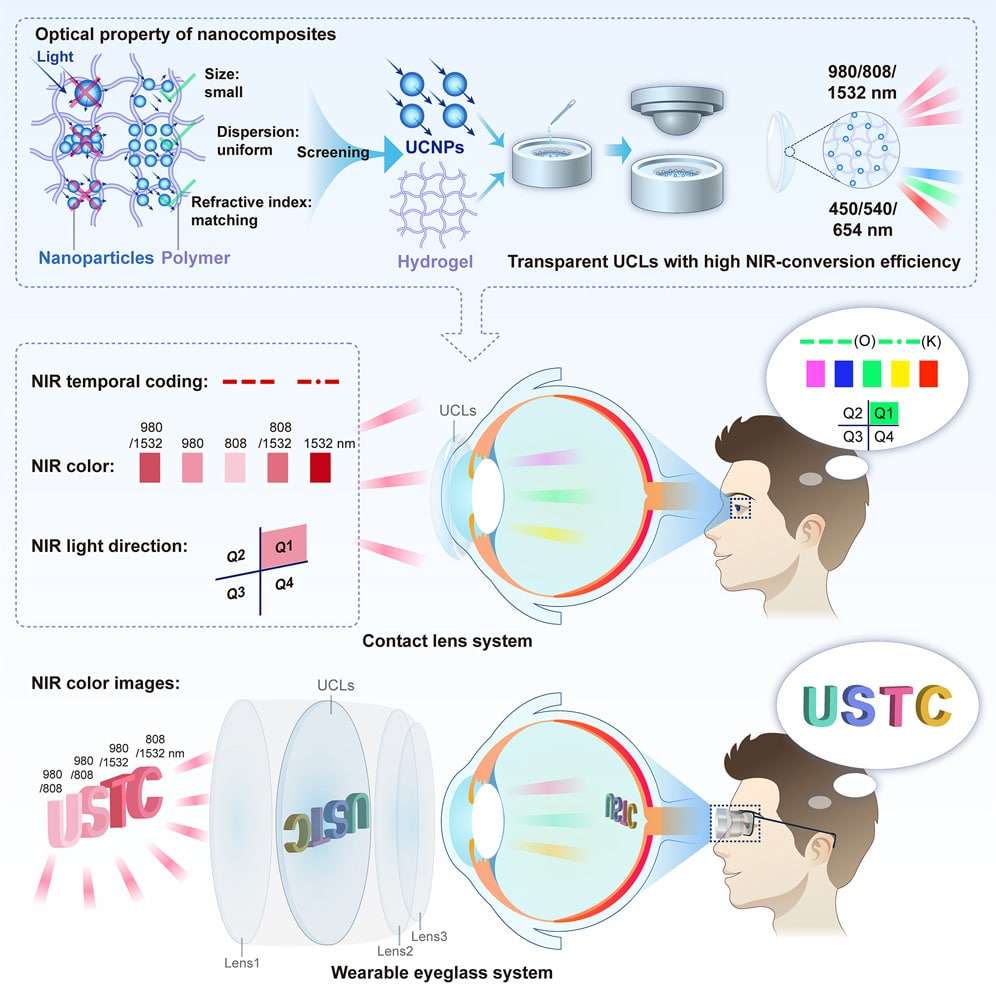
At the heart of this advancement are specialized upconversion nanoparticles capable of absorbing infrared radiation and transforming it into visible light. Embedded within the contact lenses, these nanoparticles allow wearers to interpret infrared signals alongside the natural visible spectrum. Unlike bulky night vision devices, these lenses remain clear and enable simultaneous perception of both light ranges.

Prof. Tian Xue, the neuroscientist overseeing the research, detailed the findings in the journal Cell. The lenses' lack of need for external power sources presents a significant advantage over conventional infrared goggles, offering greater convenience and ease of use.
Human and Animal Testing Results
Experiments conducted on both human participants and mice assessed the lenses’ performance in detecting infrared light. In mice, pupil constriction and visual cortex activity confirmed infrared perception. Human volunteers, meanwhile, could recognize infrared signals manifesting as blinking patterns similar to Morse code and accurately track the direction of the light source.
Despite encouraging outcomes, current limitations remain. The lenses do not yet offer high-definition infrared imagery and their ability to sense faint infrared light is an ongoing focus of development.
Expanding Human Visual Capabilities
The implications of this technology are vast, especially across various professional sectors. Military and intelligence applications could leverage these lenses for encrypted communications since infrared signals remain hidden to anyone not wearing the lenses. Additionally, fields like medicine and surgery might benefit from enhanced visualization tools.
Moreover, individuals with color vision deficiencies may find these lenses helpful as the conversion process makes it easier to differentiate certain colors usually indistinct to them.
Looking ahead, the research team aims to boost the lenses’ sensitivity to detect dimmer infrared light, including far-infrared wavelengths linked to thermal imaging. These enhancements could pave the way for new wearable gadgets that expand human sight beyond natural boundaries.
- Categories:
- Science













0 comments
Sign in to Comment