
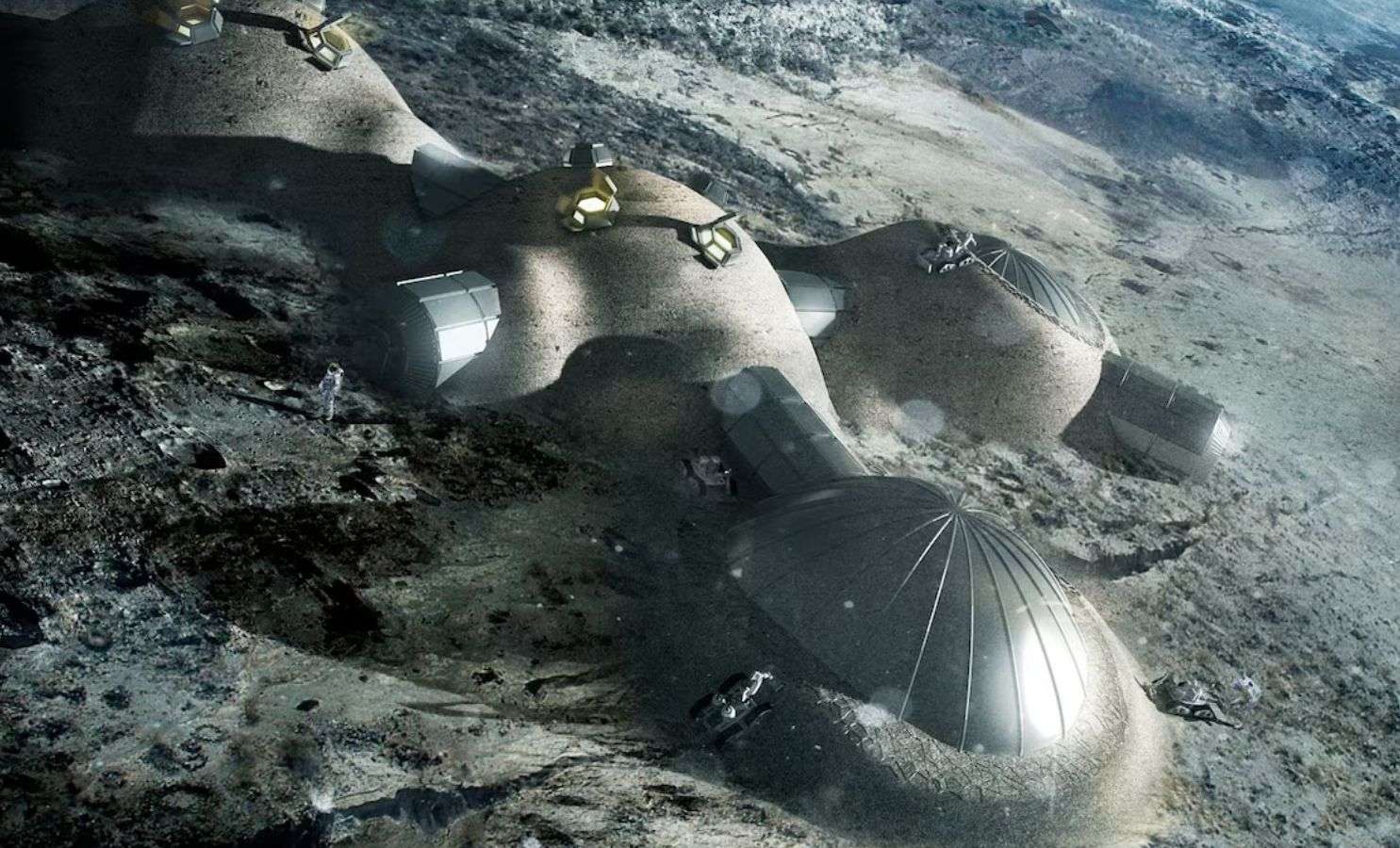
Efforts to build a permanent outpost on the Moon are advancing rapidly, driven by groundbreaking research into leveraging the Moon’s own materials for construction.
NASA and its global partners are actively developing efficient, affordable strategies to construct facilities in space. Central to this mission is the utilization of lunar resources and the study of how materials perform under microgravity conditions, enabling sustainable human presence beyond Earth.
Microwave Sintering: A Game-Changer for Lunar Building Methods
The Artemis program sets ambitious targets to return humans to the lunar surface and establish a base, facing the challenge of minimizing material transport from Earth. A promising solution lies in transforming the Moon’s own regolith into sturdy building components via microwave sintering. This process involves heating lunar soil with microwaves to bond particles without fully melting, thus saving energy.

Researchers at the Korea Institute of Civil Engineering and Building Technology (KICT) have focused on ilmenite, a plentiful lunar mineral, for its superior microwave absorption characteristics. Thanks to ilmenite’s dielectric properties, it effectively converts microwave energy into heat, facilitating the creation of robust bricks and structures on the Moon.
According to Dr. Young-Jae Kim from KICT, “This work lays essential groundwork for advancing microwave sintering technologies vital for future lunar construction missions.” Such innovation could drastically reduce logistical hurdles by cutting down the volume of materials needing shipment from Earth.

Examining Cement Formation in Space for Future Lunar Infrastructure
Through NASA’s Material Science on the Solidification of Concrete Hardening investigation, astronaut Matthew Dominick recently performed a critical test by mixing cement on the International Space Station (ISS). This study aims to understand how lunar soil simulants combine with liquids to form strong concrete under microgravity conditions, a key to constructing lunar habitats.
Dominick blended lunar soil simulant with a cement liquid inside specialized containers, then incubated them in the ISS’s Freezer/Refrigerator/Incubator Device to observe solidification in a weightless environment. These samples will return to Earth for detailed testing. Insights gained may reveal how microgravity influences the hardening process, guiding the development of solid building materials directly on the Moon. NASA noted, “This experiment could bring humans one step closer to building a home away from home hundreds of thousands of miles away.”
Utilizing Lunar Resources: Advancing Sustainable Space Habitation
A major aim of these investigations is to cut down the expense and complexity involved in lunar construction by relying on indigenous lunar supplies. Earth-to-Moon transport remains prohibitively costly and challenging. Technologies like microwave sintering and space-processed cement pave the way for self-reliant lunar habitats. Using materials such as ilmenite and regolith to fabricate construction components promises to substantially lower mission costs.
These breakthroughs symbolize important progress toward lasting space sustainability. Both microwave sintering and in-space cement production exemplify in-situ resource utilization (ISRU)—harnessing local materials to empower exploration. Mastering the manufacture of sturdy, energy-efficient building materials on site will be fundamental for permanent lunar settlements and future Martian colonies.












0 comments
Sign in to Comment