
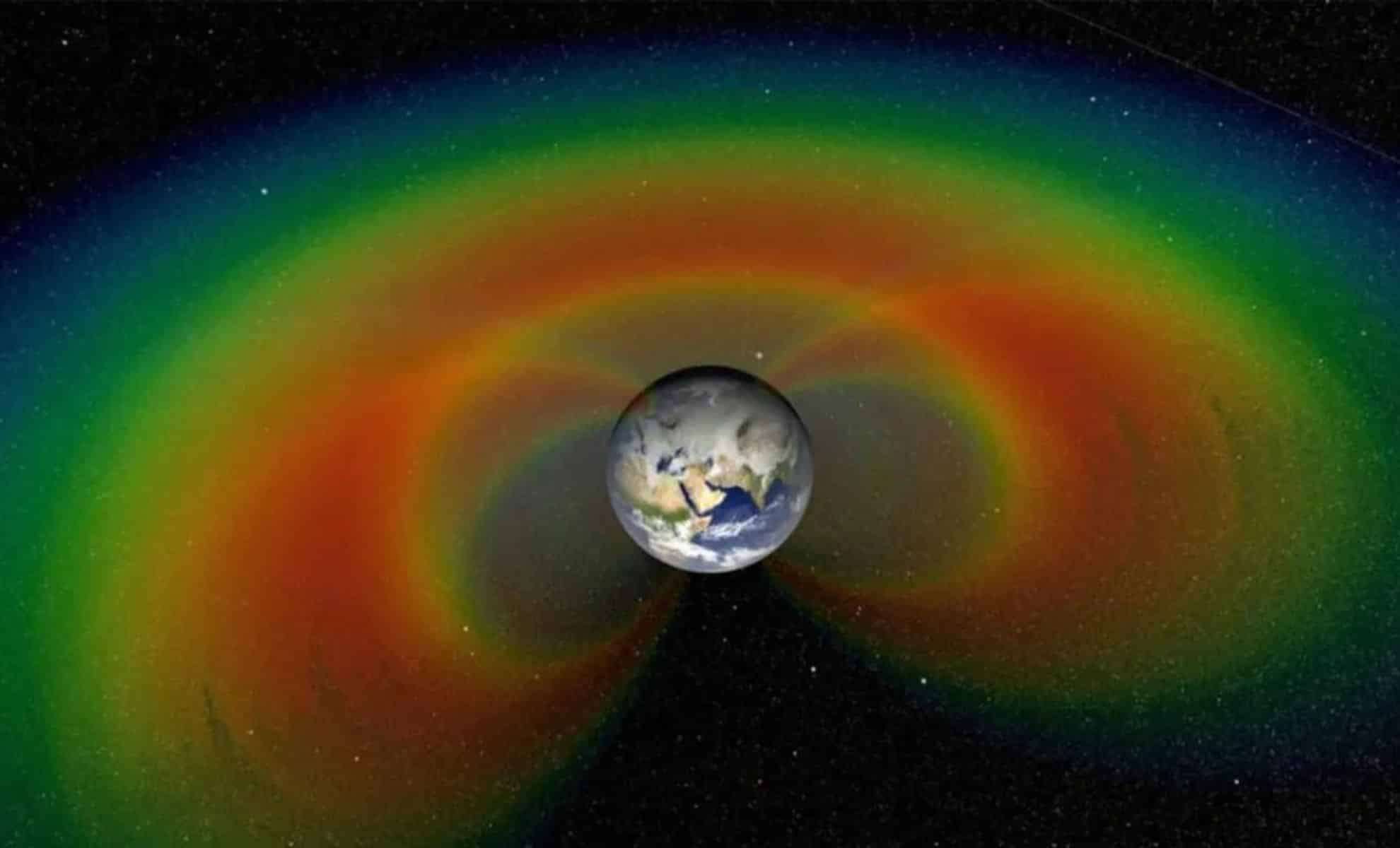
A revolutionary device has recently enabled scientists to delve deeper into the complex behavior of the Van Allen radiation belts, the energetic particle-filled zones encircling Earth.
These belts represent a serious hazard for spacecraft and human space missions, particularly during heightened solar activity. Following a significant geomagnetic storm in May 2024, fresh observations have provided researchers with valuable information, including the rare detection of a transient third radiation belt whose nature remains a subject of ongoing study.
Understanding the Van Allen Belts: Earth's Cosmic Shield
The Van Allen belts, first identified in 1958 by the Explorer 1 satellite, serve as a natural protective barrier against harmful cosmic radiation. They consist of two main layers: the inner belt, largely filled with energetic protons, and the outer belt, dominated by fast electrons known as killer electrons due to their damaging effects on spacecraft electronics and risks to astronauts conducting spacewalks. These particles are confined by Earth's magnetosphere, which acts as a protective magnetic shield trapping charged particles from solar and cosmic sources.

While these belts protect Earth, they pose significant challenges for space operations. The high-energy electrons can disrupt satellite instruments and threaten astronaut safety on missions beyond low Earth orbit (LEO). Gaining a detailed understanding of how these particles behave, increase during solar events, and eventually diminish is essential for safeguarding future space exploration endeavors.
Challenges in Monitoring the Radiation Belts
Capturing accurate measurements of the high-energy particles within the Van Allen belts—particularly the inner belt—has been a persistent difficulty. Earlier missions, including NASA’s Van Allen Probes (2012–2019), encountered interference from high-energy protons. Despite shielding in instruments such as the Relativistic Electron Proton Telescope (REPT) and the Magnetic Electron and Ion Spectrometer (MagEIS), proton contamination—especially pronounced over the South Atlantic Anomaly (SAA), where Earth's magnetic field is weaker—obscured clear detection of energetic electrons.
The dominance of MeV to GeV protons in the inner belt complicates isolating electron behavior, as protons can mimic electron signals, confounding measurements. Therefore, instruments that can differentiate between particle types with precision are crucial for unraveling belt dynamics. To meet these demands, researchers have engineered enhanced sensors designed to reduce proton interference and improve electron data accuracy.
The Advent of REPTile-2: Cutting-Edge Advancements
Addressing the shortcomings of previous instruments, a group led by Dr. Xinlin Li at the University of Colorado Boulder developed the Relativistic Electron Proton Telescope integrated little experiment (REPTile). This compact variant of the REPT reduced exposure to the intense proton radiation characteristic of the inner belt, especially within the SAA. Operating aboard the Colorado Student Space Weather Experiment (CSSWE) CubeSat from 2012 to 2014, REPTile’s orbital path allowed for cleaner electron measurements by minimizing time spent in proton-rich zones.
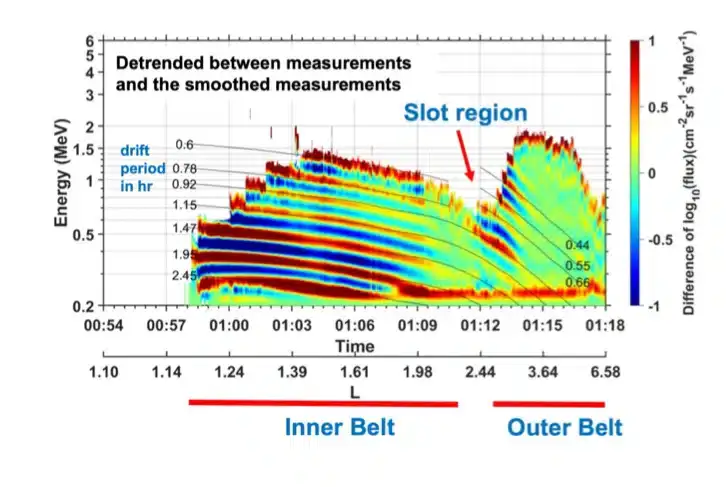
The success of the initial REPTile spurred creation of an upgraded instrument, REPTile-2, launched in April 2023 with the Colorado Inner Radiation Belt Experiment (CIRBE) mission. REPTile-2 integrates advanced technologies that address the difficulties in monitoring energetic electrons amidst intense radiation. Notably, guard rings and Pulse Height Analysis (PHA) enable more precise filtering of proton contamination and offer improved measurement resolution.
Guard rings function by excluding invalid detections from particles outside the instrument's viewing area, ensuring only targeted electrons are recorded. Meanwhile, Pulse Height Analysis assesses the charge deposited by incoming electrons, allowing for much finer energy discrimination. Compared to the original REPTile's three energy channels, REPTile-2 provides 60 distinct channels spanning electron energies from 0.25 to 6 MeV, delivering significantly enhanced detail.

Breakthrough Observation: Emergence of a Third Radiation Belt
Among REPTile-2's most remarkable discoveries is the observation of a temporary third radiation belt following the powerful geomagnetic storm of May 2024, the strongest seen in twenty years. While such transient belts have sometimes been identified after intense solar events—see NASA’s report on intense solar storms—REPTile-2’s high-resolution data unveils details previously beyond reach. This intermediate belt formed between the established inner and outer Van Allen belts and was predominantly composed of highly energetic electrons.
This finding challenges conventional models of Earth's radiation belt structure. Although prior observations hinted at these temporary belts, the precise data from REPTile-2 equips researchers with a powerful tool to investigate their properties and longevity. Early analyses indicate the third belt might persist for several months, introducing heightened risks for satellites and missions traversing these regions.
Advancing Research on Earth's Radiation Environment
The CIRBE mission’s results, powered by REPTile-2’s superior sensitivity, are revolutionizing our understanding of the magnetosphere and radiation belts. By supplying cleaner, high-resolution measurements, this instrument deepens insights into how geomagnetic storms reshape the belts’ intensity and structure. Such progress is crucial for refining space weather forecasting, which can affect satellite function and human spaceflight safety.
The precise data delivered by REPTile-2 is anticipated to influence the engineering of forthcoming spacecraft, enhancing their resilience against the hazardous radiation environment in orbit. As organizations like NASA gear up for ambitious projects, including crewed expeditions to the Moon and Mars, comprehending radiation belt dynamics becomes increasingly essential for protecting astronauts and critical spacecraft systems.
By revealing features such as the elusive third belt, REPTile-2 provides researchers with an unprecedented vantage point to explore Earth's magnetic environment. This instrument's data marks a major stride forward in space science, clarifying the complex interactions between our planet, the Sun, and the surrounding space.







0 comments
Sign in to Comment