
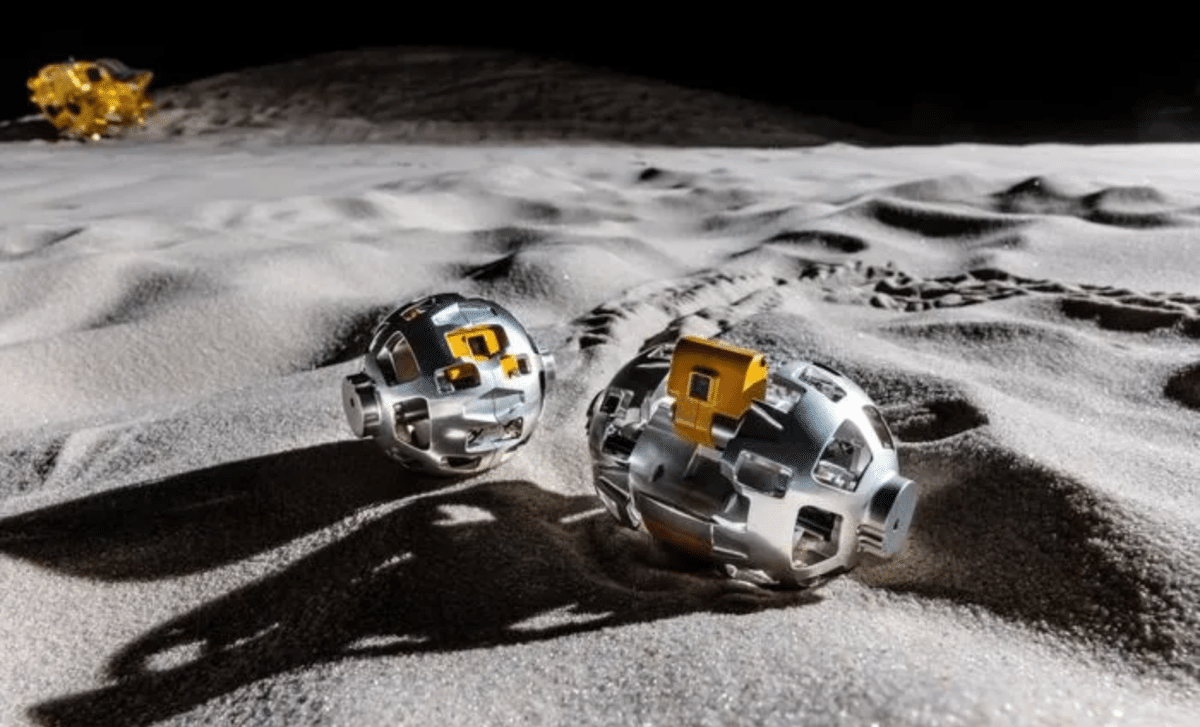
A compact, ball-shaped robotic rover has revolutionized lunar research. During Japan’s landmark maiden moon landing, this adaptable explorer navigated the lunar terrain, capturing images of the inverted SLIM lander and its environment, shedding new light on autonomous extraterrestrial missions.
Cutting-Edge Features of Japan’s Lunar Rover
The Smart Lander for Investigating Moon (SLIM) mission featured an innovative rover unlike any previous models. This palm-sized, spherical robot could transform its shape to traverse the moon’s rugged surface efficiently. Its flexible design enabled it to roll, crawl, and adapt to challenging terrain, reminiscent of the BB-8 droid from Star Wars. Researchers stressed that this agility was essential for accessing lunar zones unreachable by the larger fixed lander, providing novel views of the lunar landscape, as outlined in the June 10 issue of Science Robotics.
This rover’s compact and modular format signals a new direction in planetary robotics. Unlike conventional wheeled rovers, its shape-shifting ability offers adaptability for overcoming obstacles and delicate ground conditions autonomously. “The results highlight the potential of such platforms … as independent explorers, capable of accessing environments beyond the reach of a primary large spacecraft,” the researchers, led by Daichi Hirano of the Japan Aerospace Exploration Agency (JAXA), stated in their publication.

Achievements and Mission Highlights
During approximately 100 minutes on the lunar surface, the rover self-directed its investigation around the SLIM lander. It captured detailed images, surveyed the surroundings, and sent a select set of photos back to Earth via wireless transmission.
“The palm-sized rover accomplished autonomous lunar exploration by navigating around the SLIM lander, capturing images of both the SLIM lander and its environment and transmitting selected images through wireless communication on the lunar surface,” the team explained.
This expedition proved that small, autonomous robots can effectively supplement larger spacecraft, allowing researchers to collect comprehensive data while limiting exposure to risk. Insights gained offer valuable guidance for the development of future robotic space systems designed to function in harsh planetary conditions, supporting quicker and more durable data acquisition.
Impact on Future Space Missions
The success of this venture points to a major shift in how space exploration might unfold. Instead of large-scale rovers alone, upcoming missions may include networks of compact, intelligent robots assigned to specific tasks. “In the long term, this approach may enable more flexible, robust, and cost-effective planetary exploration missions,” the experts commented. Integrating autonomy, versatile mobility, and real-time communications, these systems could reach previously inaccessible locations, unlocking new scientific opportunities.
Experience gained from this lunar rover mission offers practical recommendations for the design and operation of distributed robotic explorers. Engineers and mission strategists can leverage these findings to enhance the performance and coordination of small robotic units, ensuring they augment larger spacecraft effectively while delivering rich scientific output. “The lessons learned from this mission provide practical guidance for the design and operation of next-generation distributed space robotic systems,” the researchers added.
- Categories:
- News







0 comments
Sign in to Comment