
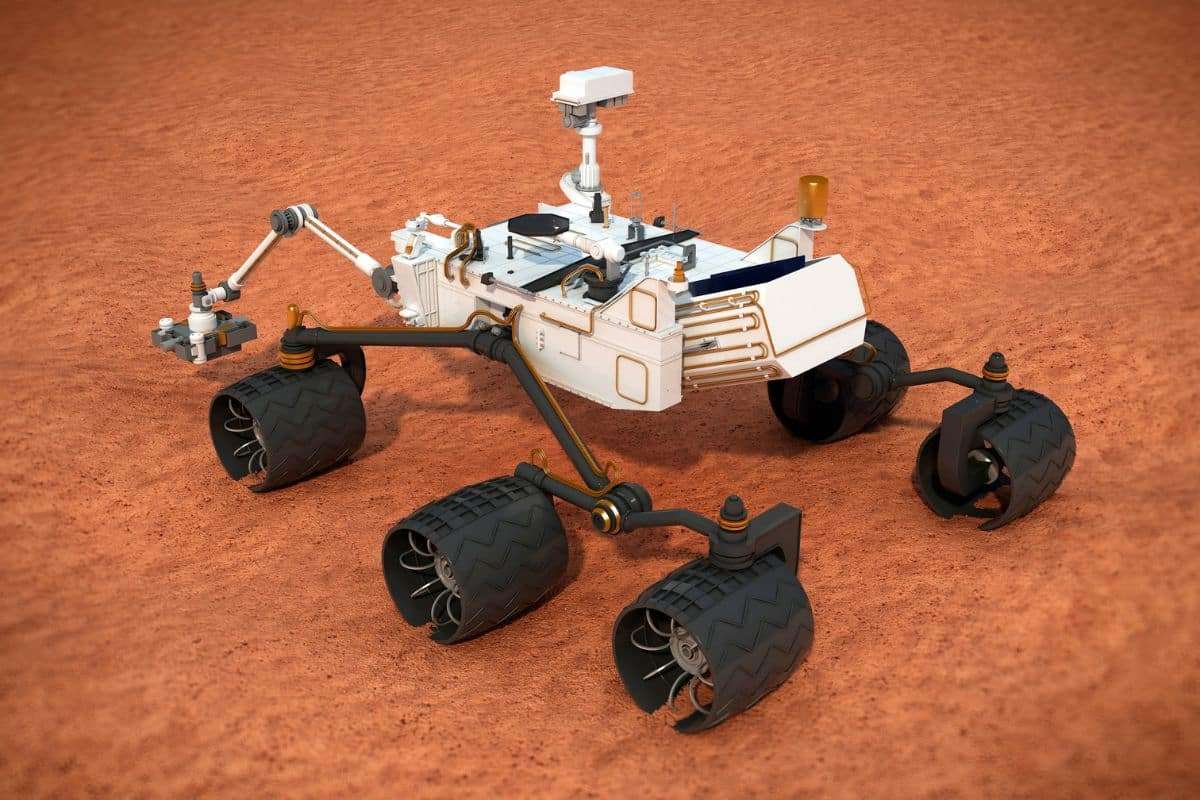
NASA is set to deploy three advanced AI-driven rovers to the lunar surface, marking a significant advancement in autonomous extraterrestrial exploration. These compact robotic units, part of the CADRE (Cooperative Autonomous Distributed Robotic Exploration) project, are engineered to function independently without direct human control.
Revolutionizing Lunar Exploration with Autonomous Robotics
The trio of rovers, crafted at NASA’s Jet Propulsion Laboratory (JPL), recently completed their testing phase and are now on their way for integration with the lunar lander. Their mission is included in NASA’s Commercial Lunar Payload Services (CLPS) program, which encourages commercial partnerships for lunar exploration efforts.
Upon arrival, these rovers will collaboratively survey the Moon’s surface utilizing onboard imaging systems and ground-penetrating radar to generate detailed maps. Distinct from conventional rovers that depend on Earth-based commands, the CADRE robots will independently assess their environment and adapt their maneuvers accordingly.

Moonbound Expedition
Scheduled to launch in 2026 aboard Intuitive Machines’ IM-3 mission, the rovers will be deployed from the Nova-C lander within the Reiner Gamma lunar area, known for its striking bright swirls and unusual magnetic features.
Each robot will descend to the lunar terrain via a tether mechanism before commencing their mission. Powered by solar energy, their operational period will span approximately 14 Earth days, corresponding to a full lunar daytime cycle.
Engineered for Space's Extreme Environment
Before shipping, the rovers underwent comprehensive evaluations at NASA’s Jet Propulsion Laboratory to verify their resilience to the intense conditions encountered during space travel.
Tests simulated the harsh vibrations of launch, cosmic radiation exposure, and extreme lunar temperature fluctuations to ensure all components are mission-ready.
Following successful assessments, the devices were securely transported to Intuitive Machines’ Houston facility where they will be integrated onto the lander, bringing them a step closer to their journey into space.
Significance of the CADRE Initiative
More than lunar exploration, the CADRE mission aims to demonstrate the effectiveness of autonomous robotic collaboration in space. These rovers are capable of independent cognition, communication, and problem-solving without awaiting Earth-based instructions—vital for missions hindered by communication delays.
The data gathered will enhance understanding of lunar geology and aid in locating resources critical for upcoming crewed expeditions.
Advancing Future Robotic Space Endeavors
NASA envisions CADRE as a foundational technology for future robotic missions. This approach could enable deployment of robotic swarms on planets like Mars, the icy satellites of Jupiter, and even near-Earth asteroids. Swarm robotics may offer broader coverage and conduct more sophisticated scientific tasks than single robotic explorers.
This initiative is supported by NASA’s Game Changing Development program and the Lunar Surface Innovation Initiative, which foster technology breakthroughs for upcoming lunar and deep space ventures. The project includes partnerships with NASA’s Glenn Research Center, Ames Research Center, and Clemson University, alongside essential hardware contributions from Motiv Space Systems.
- Categories:
- News








0 comments
Sign in to Comment