

Recent preprint research shared on arXiv suggests that extraterrestrial societies might harvest a star’s rotational energy instead of enveloping it with colossal energy collectors. This novel approach may represent a new kind of technosignature that has largely escaped detection.
Exploring Alternative Signs of Extraterrestrial Engineering
The quest to find intelligent life has traditionally centered on detecting massive artificial constructs. One widely known idea is the Dyson sphere, which imagines a network of collectors encasing a star to harness its emitted light.
Scientists have spent years searching for the infrared excess such megastructures would generate when converting stellar radiation into usable energy. Despite extensive efforts, no definitive example has been identified.

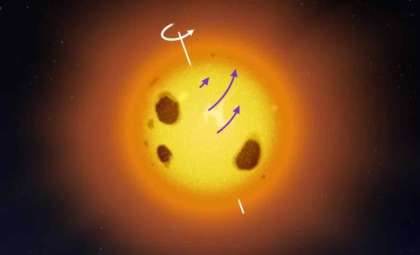
This new study introduces an alternative: perhaps advanced civilizations extract energy from a star’s spin, slowing its rotation to capture power. Termed Stellar J-Harvesting, this strategy hinges on siphoning angular momentum rather than the star’s full radiant output.
The concept originated from Sahin Torlakcik, a Turkish high school student who detailed this hypothesis in a recent paper on arXiv. His research examines how subtle megastructures might capitalize on stellar rotation while producing minimal waste heat, evading traditional detection techniques.
How Stellar J-Harvesting Might Work
As explained by Universe Today, stars possess substantial angular momentum due to their spin. The proposed method involves drawing a portion of this energy by interacting with the star’s magnetosphere and expelled plasma.
One speculative design includes huge conductive frameworks that engage with stellar magnetic fields. These could leverage phenomena like Alfvén waves to siphon angular momentum, gradually decelerating the star’s rotation.
Another envisioned structure is a massive orbital ring located near 1 astronomical unit—the average Earth-Sun separation. By harnessing Lorentz-force coupling with the star’s magnetic field, this ring might draw rotational energy directly.
Unlike Dyson swarms that block stellar light, these approaches avoid significant absorption of radiation and consequently emit far less thermal waste, making their presence far more challenging to spot using conventional infrared surveys.
Introducing a New Kind of Technosignature
This innovation encourages astronomers to broaden their search criteria. Instead of focusing on bright infrared emissions or dimmed starlight, the focus shifts toward stars that rotate unusually slowly relative to their peers.
Anomalously sluggish spins could signal angular momentum extraction by hypothetical technologies. Detecting stars with extended rotation periods compared to standard stars of similar age and type could serve as indirect evidence of such activity.
To explore this, Torlakcik analyzed data from the Kepler field, filtering out natural astrophysical causes in a sample of 6,725 FGK main-sequence stars.
The investigation highlighted two intriguing subjects: KIC 67606183 and KIC 9834255. Both are G-type stars akin to the Sun but exhibit prolonged rotation periods of about 61 to 65 days.
Normally, comparable stars spin more rapidly, often completing rotations in just 5 to 10 days. This stark difference positions these stars as compelling candidates for closer scrutiny.
Cautious Interpretation of Slow Rotators
The study does not assert that these stars host alien constructs. Their slow spins may well arise from natural astrophysical phenomena.
Factors like binary companions, varying elemental makeup, or evolutionary quirks could explain these observations. Astronomical anomalies often find conventional explanations with deeper investigation.
Nonetheless, the research highlights the broader difficulty in SETI efforts: humanity’s search methods depend heavily on existing assumptions. If extraterrestrial entities employ energy techniques beyond our current imagination, they might remain undetected.
Such civilizations might not build enormous luminous structures common in sci-fi lore but instead harness stars' rotational energy through subtle magnetic interactions or environmental manipulation.
- Categories:
- News










0 comments
Sign in to Comment