
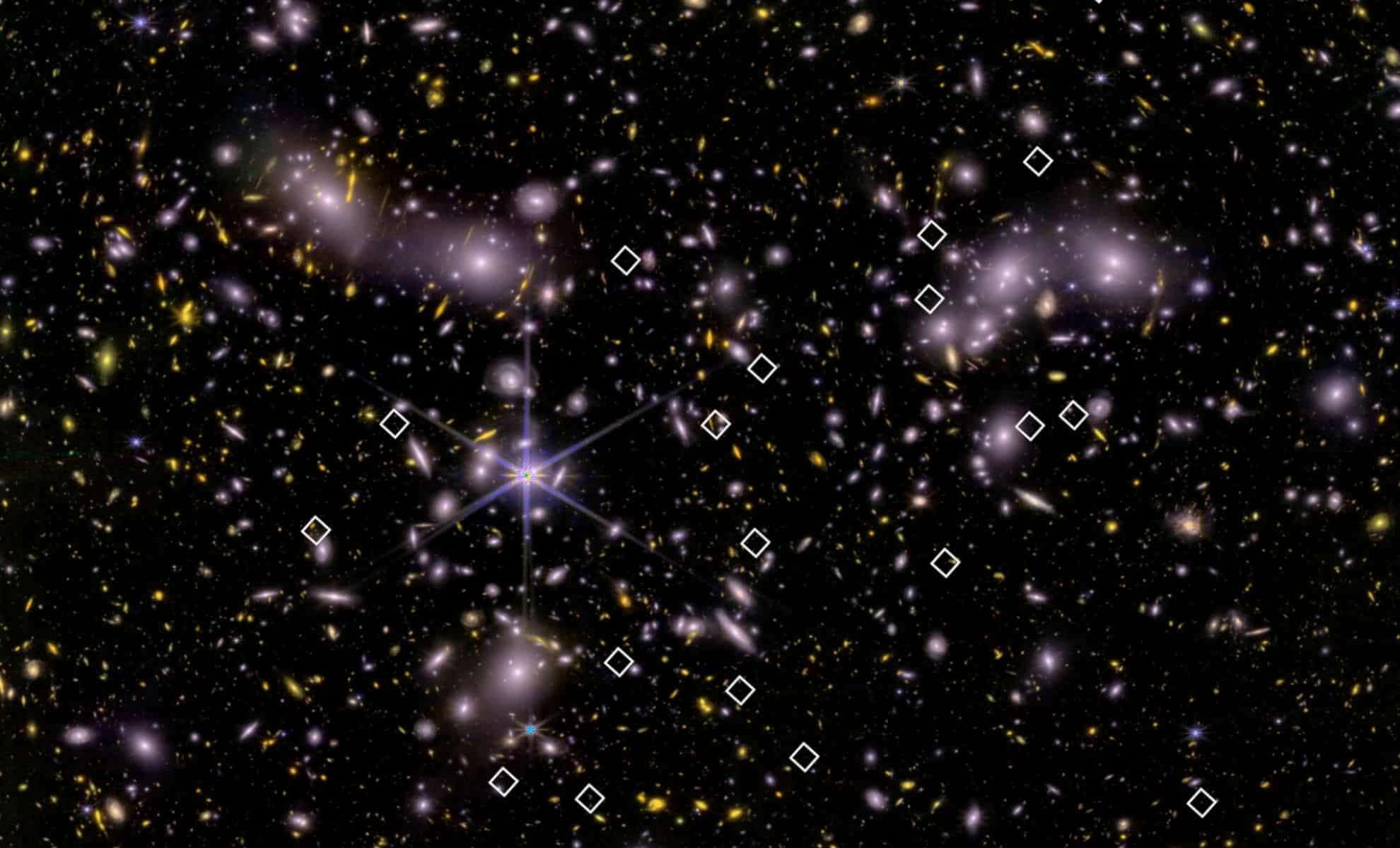
Researchers utilizing observations from NASA’s James Webb Space Telescope (JWST) have uncovered a remarkable population of small galaxies that played a crucial role in the universe’s early evolution. Presented at the 246th American Astronomical Society meeting in Anchorage, Alaska, this study sheds light on the cosmic forces behind the universe’s transformation. Examining galaxies from the reionization epoch, scientists found that these tiny galaxies—which are now rare—were once widespread and were key contributors to hydrogen ionization, a vital step in the universe’s development.
Illuminating the Impact of Minor Galaxies in Reionization
Past research often emphasized massive galaxies or supermassive black holes as the dominant agents of reionization. Yet, this latest investigation reveals that smaller galaxies, usually neglected in cosmological surveys, had a significant influence. Despite their diminutive stature, these galaxies emitted strong ultraviolet radiation essential for stripping electrons from hydrogen atoms during the reionization period. These galaxies existed around 800 million years after the Big Bang, a crucial era when neutral hydrogen became ionized. Isak Wold, assistant research scientist at the Catholic University of America and NASA’s Goddard Space Flight Center, explained, "When it comes to producing ultraviolet light, these small galaxies punch well above their weight. Our analysis of these tiny but mighty galaxies is 10 times more sensitive than previous studies, and shows they existed in sufficient numbers and packed enough ultraviolet power to drive this cosmic renovation."
Utilizing Gravitational Lensing to Boost Webb’s Vision
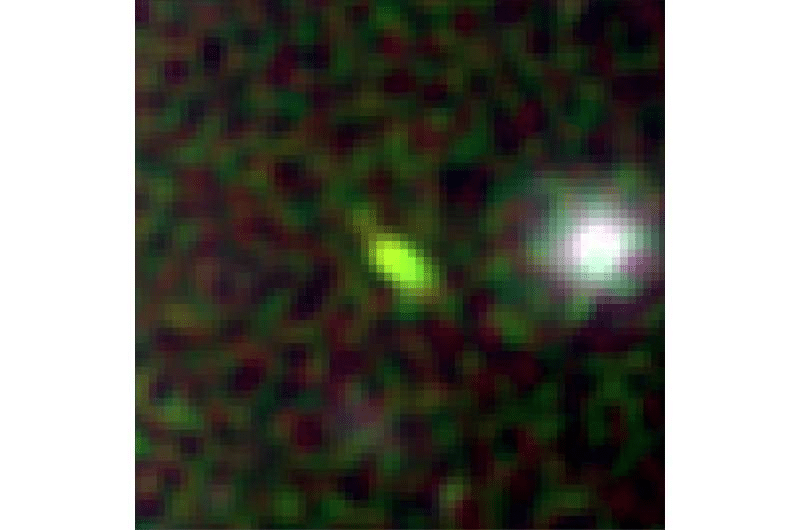
A major element behind the breakthrough was gravitational lensing, where the massive galaxy cluster Abell 2744 serves as a cosmic magnifier. This natural lens enabled JWST to look deeper into space than ever before, capturing galaxies that are typically too faint or too far away. The researchers studied 83 small galaxies detected in Webb’s NIRCam (Near-Infrared Camera) images. Thanks to gravitational lensing, the team collected valuable information about galaxies from a period when the universe was just 800 million years old—less than 6% of its present age of approximately 13.8 billion years. The magnifying effect, coupled with Webb’s advanced instruments, made it possible to observe these faint, low-mass galaxies in unprecedented detail.

Powerful Small Galaxies as Catalysts of Cosmic Change
While once considered minor players in cosmic history, these small galaxies have now been recognized as vital sources of ultraviolet radiation during a significant phase of the universe’s evolution. James Rhoads from NASA’s Goddard Space Flight Center noted, "Low-mass galaxies gather less neutral hydrogen gas around them, which makes it easier for ionizing ultraviolet light to escape. Likewise, starburst episodes not only produce plentiful ultraviolet light—they also carve channels into a galaxy’s interstellar matter that helps this light break out." This mechanism facilitated the escape of ultraviolet light, which in turn ionized the surrounding hydrogen gas, signaling a major transformation in the early cosmos.
- Categories:
- News





0 comments
Sign in to Comment