
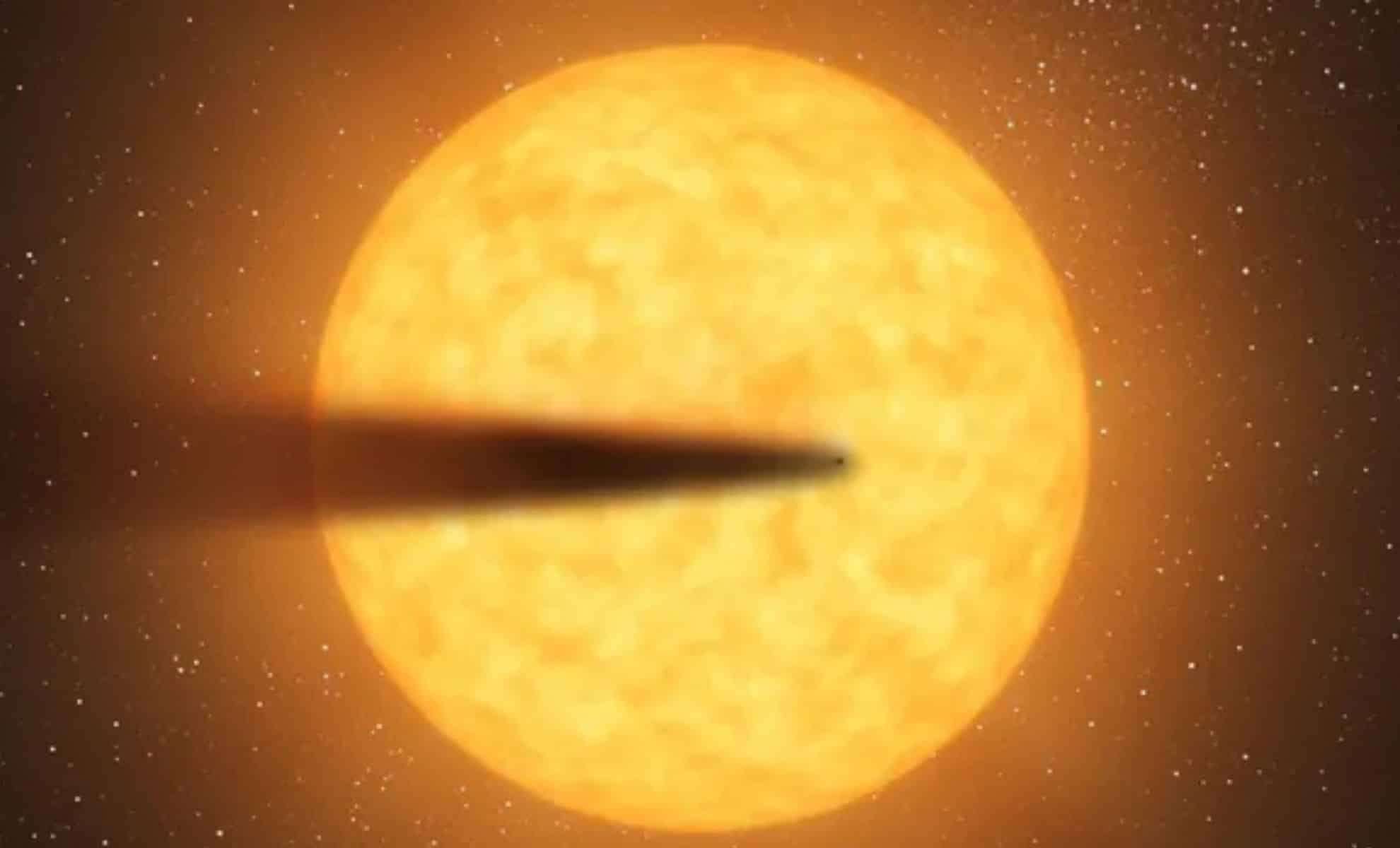
Astronomers have unveiled a remarkable discovery: for the first time, two alien planets have been witnessed in the process of disintegration. These distant exoplanets, each orbiting their own stars, are losing their outer material into space, allowing scientists unprecedented access to study their hidden interiors. The collaboration between the James Webb Space Telescope (JWST) and NASA’s Transiting Exoplanet Survey Satellite (TESS) made it possible to observe these extraordinary celestial events, offering new perspectives on planetary destruction and composition.
Revolutionary Insights into Planetary Disintegration
Two research papers currently undergoing peer review, released as preprints on arXiv, present in-depth analysis of these planets’ atmospheric signatures. Led by teams from Penn State University and MIT, the studies reveal how the extreme environments around these stars gradually strip the planets apart. The findings mark a milestone in planetary science, documenting a process never previously observed with such clarity.
“This is an exceptional chance to peer inside rocky planets beyond our solar system,” explains Jason Wright, astronomy professor at Penn State University and co-author of the work. These planetary remnants provide a glimpse beneath planetary surfaces, a feat unattainable for Earth’s neighbors.

Planet One: K2-22b—A Molten World Evaporating Into Space
Located several hundred light-years away, K2-22b is a rocky world roughly the size of Neptune, orbiting its star in less than half a day. Its surface endures scorching temperatures exceeding 3,320°F (1,826°C), hot enough to vaporize rock and metals. This intense heat drives the planet’s gradual evaporation, as its outer layers boil off into space.
Data from JWST show the escaping material trailing the planet in a comet-like tail, shaped by the star’s intense radiation pressure. This plume of vaporized rock and dust extends dramatically behind K2-22b as it speeds in orbit. Over time, the planet is expected to diminish into a barren core before ultimately vanishing.
Planet Two: BD+054868Ab—A World Shedding Twin Tails
BD+054868Ab, the closest evaporating exoplanet to Earth discovered so far, exhibits even more extraordinary behavior. This planet is losing material at such a pace that it generates two distinct tails: one composed of larger, sand-grain particles leading the way, and a second trail of finer, soot-like dust following behind.
These twin tails stretch across approximately 5.6 million miles (9 million kilometers), nearly covering half its orbital path. Scientists estimate that BD+054868Ab loses roughly a moon’s worth of matter every million years, predicting its complete disappearance within 1 to 2 million years—a fleeting moment in cosmic history.
“These planets are literally spilling their guts into space for us,” said Nick Tusay, a graduate researcher at Penn State and lead author of the JWST paper. “JWST finally opens a window to analyze the true makeup of planets orbiting other stars.”
Implications for Understanding Exoplanets
The discovery of these decomposing planets offers invaluable clues about how planets form and evolve. While most exoplanets observed to date remain intact, these unique cases reveal the composition beneath planetary surfaces directly.
JWST’s detection of gases such as carbon dioxide and nitric oxide on K2-22b—typically found in icy bodies—hints that this planet might have originated far from its star before migrating inward. Meanwhile, the dust streams of BD+054868Ab shed light on how stellar radiation interacts with planetary materials, influencing climates and even potential habitability on distant worlds.
- Categories:
- News








0 comments
Sign in to Comment