
Groundbreaking observations from the James Webb Space Telescope (JWST) are reshaping our understanding of the universe’s earliest epochs, revealing unprecedented details about galaxy formation shortly after the Big Bang.
These discoveries offer fresh perspectives on the mechanisms that governed the universe’s formative years and the birth of its earliest galaxies.
Revealing the Universe’s First Star Clusters
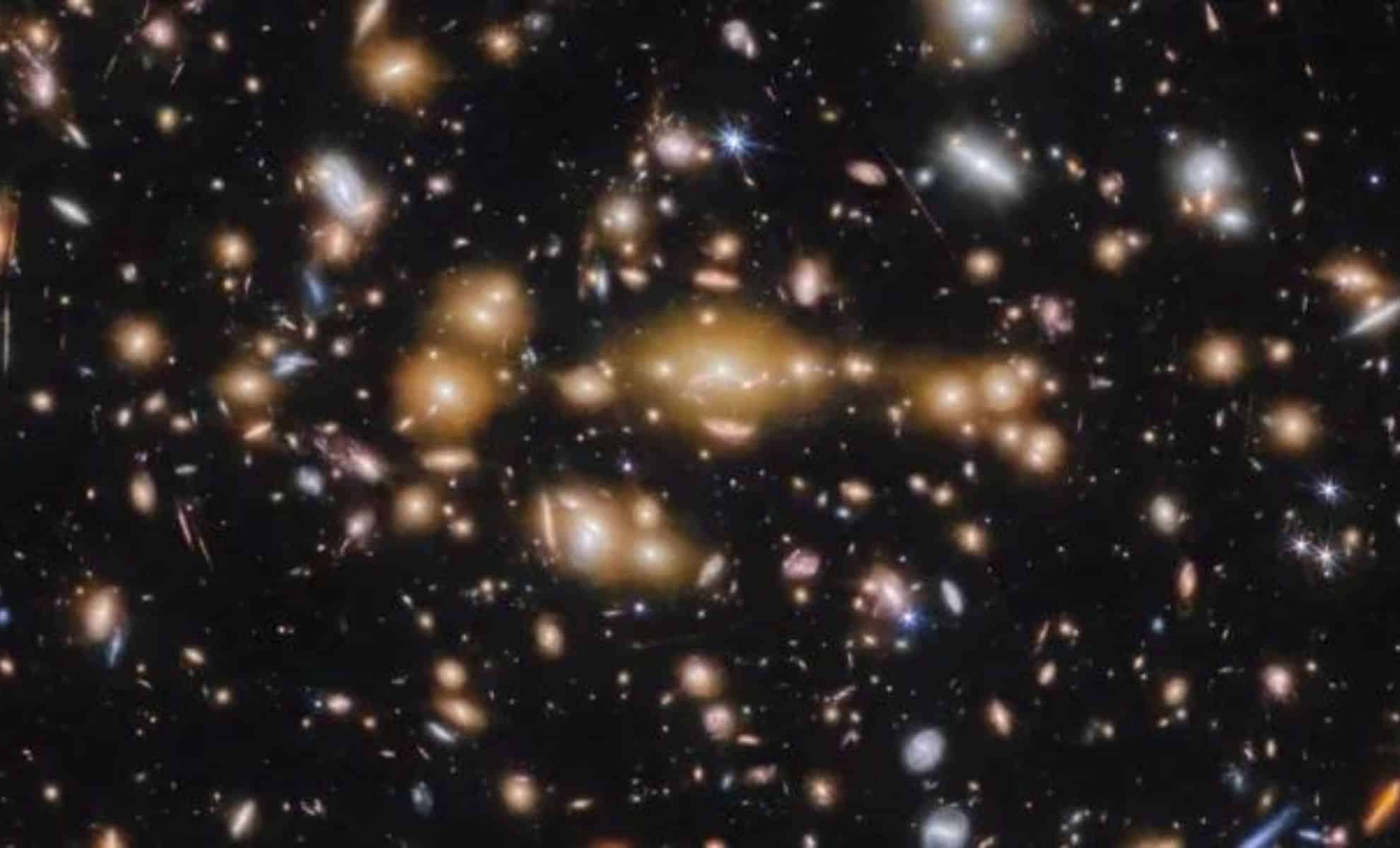
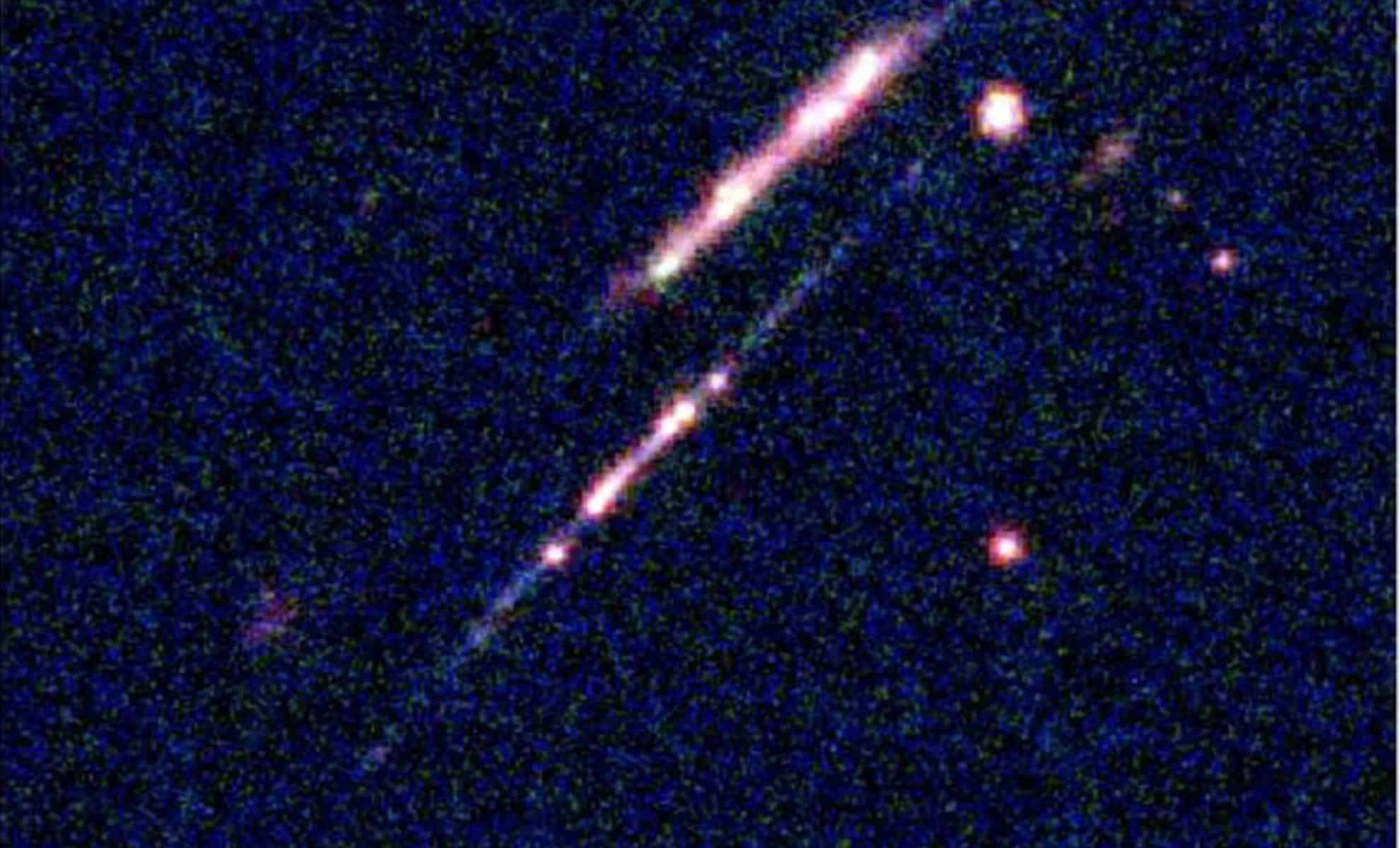
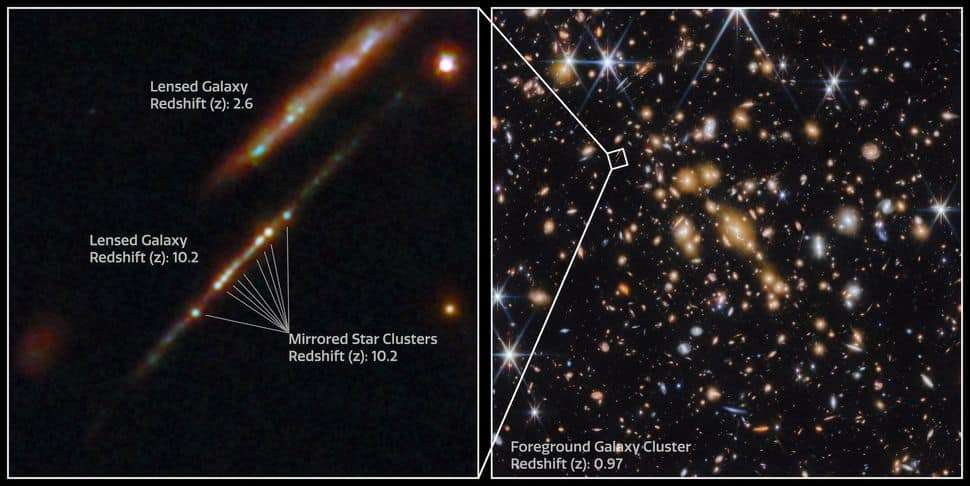
The JWST has captured what may be some of the universe’s first star clusters by studying the Cosmic Gems arc, a galaxy that emerged just 460 million years post-Big Bang. Benefiting from the gravitational lensing effect of a closer foreground galaxy, the Cosmic Gems arc appears as a slender arc, enabling scientists to examine it in exceptional resolution.

Angela Adamo, the principal investigator from Stockholm University, emphasized the breakthrough nature of these insights: “Our observations show that the early cosmos was vastly different from what we anticipated. Galaxies were vastly brighter, forming stars at an extraordinarily rapid pace within massive, compact star clusters. This is transforming our comprehension of early galaxy assembly.” This challenges long-held beliefs and paves the way for innovative research into galaxy evolution.
With JWST’s precision, astronomers detected five extremely dense proto-globular clusters inside the Cosmic Gems arc. These clusters exhibit stellar densities up to a thousand times greater than typical star-forming areas seen closer to Earth, offering an exceptional glimpse into the formative stages of ancient galaxies. “The excitement was overwhelming when we first reviewed the JWST photos,” Adamo added.
The data indicates that the galaxy produced these clusters with exceptional efficiency, implying vigorous stellar feedback during star formation. Adamo noted, “The energy output from stars in these clusters would have been immense.” Such efficiency and feedback mechanisms are key to decoding how galaxies evolved rapidly in the universe’s youth.
Gravitational Lensing and Insights into the Epoch of Reionization
The Cosmic Gems arc is visible due to gravitational lensing, where the warping of space-time amplifies and distorts light from faraway galaxies. This gravitational effect, predicted by Einstein’s general relativity, reveals distant galaxies that would otherwise remain hidden.
These findings enrich our knowledge of the Epoch of Reionization, occurring roughly 400 million years after the Big Bang, when early stars emitted radiation that ionized hydrogen gas and altered galaxy formation. Adamo remarked, “While we observe globular clusters in nearby galaxies, their exact origins remain a mystery. The insights from the Cosmic Gems arc give us an extraordinary look into the infancy of galaxies.”
Examining Stellar Feedback and Cluster Formation
Stars influence their environments by releasing matter through plasma winds and jets, a phenomenon known as stellar feedback. This process was evident during the development of the five star clusters within the Cosmic Gems arc. Adamo explained, “To produce these star clusters, the galaxy operated with remarkable star-formation efficiency. The resulting stellar feedback would have been substantial.”
This powerful feedback likely played a major role in shaping the structures of the earliest galaxies. Understanding how these clusters formed and persisted in such primitive conditions is vital for modeling galactic evolution.
Next Steps: Spectroscopy and Further Analysis
Scientists plan to enhance their study with spectroscopic investigations via JWST to map the clusters’ properties, determine their ages, and assess their influence within their host galaxy. Such analysis will deepen our grasp of the star and galaxy formation processes in the cosmic dawn. Adamo concluded, “Seeing the JWST images of the Cosmic Gems arc and recognizing star clusters in such a diminutive, young galaxy was astonishing. These observations are key to unraveling the complexities of galaxy formation and growth.”
JWST’s discoveries continue to revolutionize our picture of the early universe, delivering remarkable clarity and challenging previous models. The Cosmic Gems arc exemplifies the JWST’s groundbreaking capabilities to reveal the cosmos’ earliest secrets, with forthcoming research poised to further illuminate the universe’s nascent stages and its fundamental formation processes.
- Categories:
- Astronomy ,
- News ,
- Space ,
- Nasa






0 comments
Sign in to Comment