
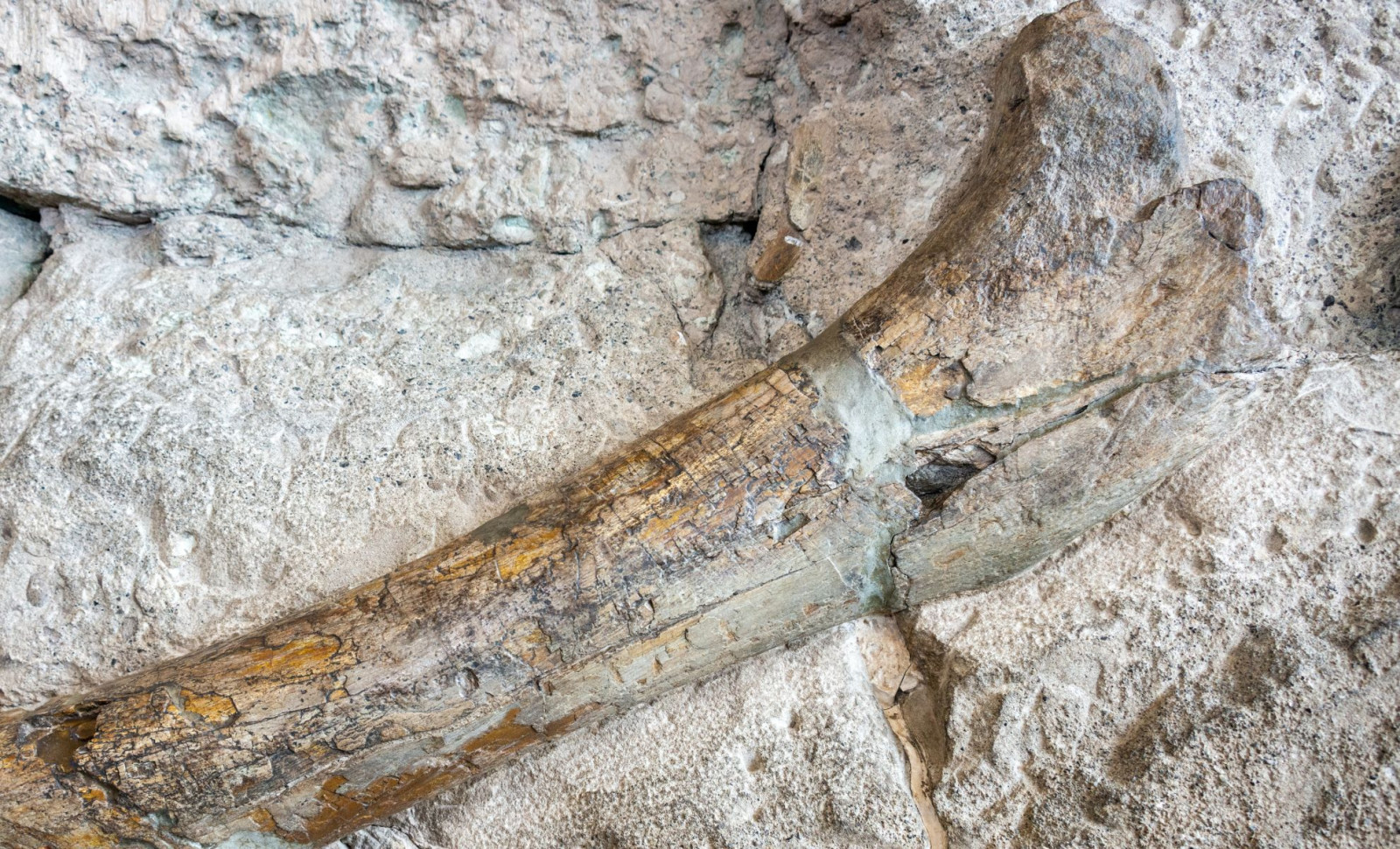
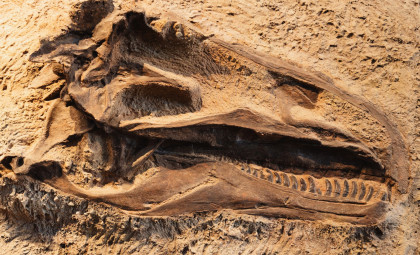
A colossal dinosaur fossil uncovered in New Mexico is providing new insights into the emergence of North America’s largest predatory dinosaurs. Scientists have identified the fossilized shinbone as belonging to a huge tyrannosaurid that roamed the Earth nearly 74 million years ago during the Late Cretaceous era.
Published in Scientific Reports, the study suggests this specimen could be the oldest known gigantic tyrannosaur from North America.
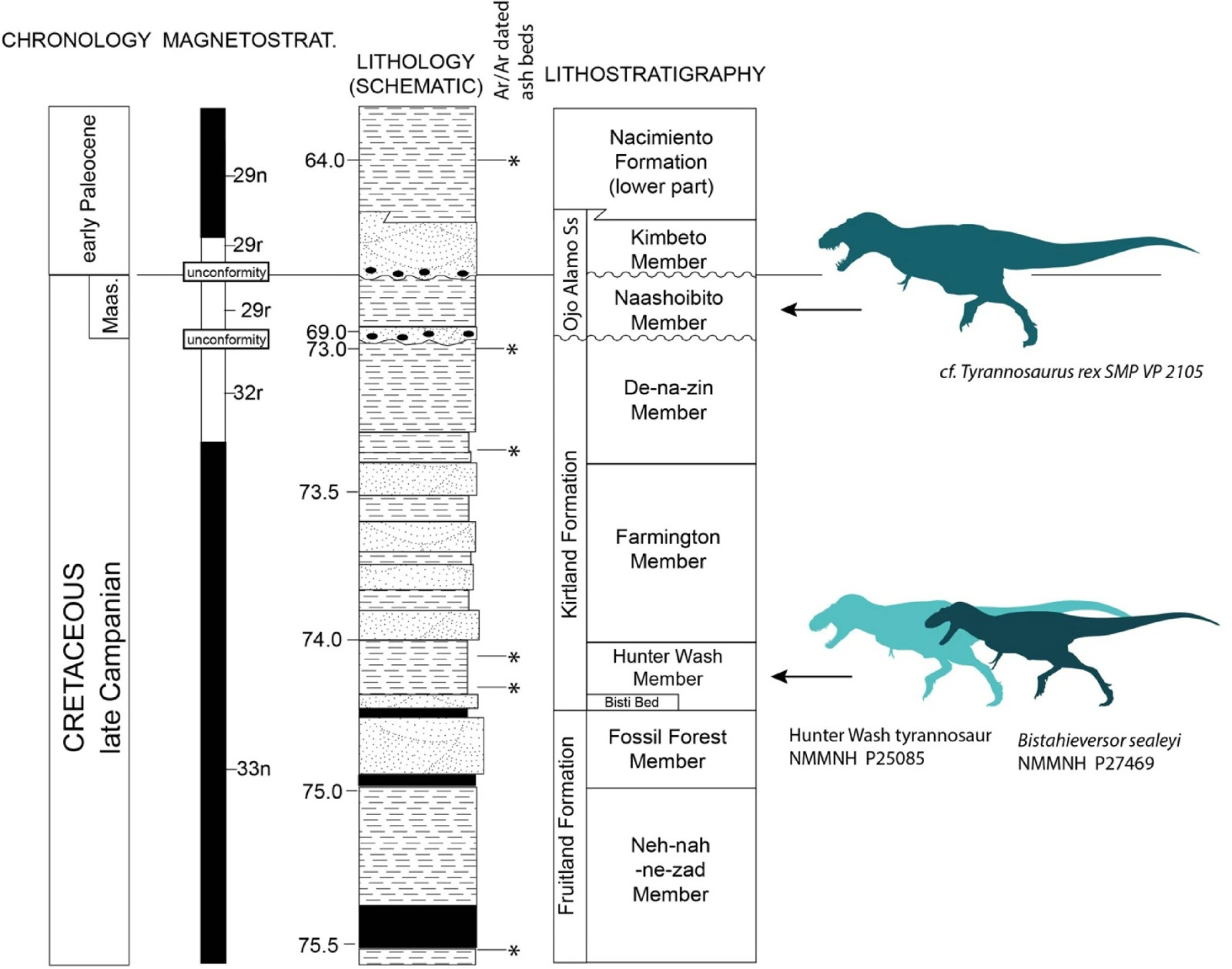
The discovery occurred within the Hunter Wash Member of the Kirtland Formation and was examined by experts from the University of Bath, Montana State University, and the New Mexico Museum of Natural History and Science. The team analyzed a notably large tibia recovered from sediment layers.

Tibia Size Comparable to a Tyrannosaurus Rex
The fossil measures 96 centimeters long and 12.8 centimeters wide. Researchers noted these measurements correspond to around 84% and 78% of the size of the biggest known Tyrannosaurus rex shinbone, respectively.
While tyrannosaurs were dominant predators toward the end of the dinosaur era, their evolutionary pathways are still debated. Lead researcher Dr. Nicholas Longrich and his team explained that tyrannosaurids diversified following the mid-Cretaceous extinction of carcharodontosaurs. By the Late Campanian, several groups had reached estimated weights of two to three tons. Comparisons suggest this titan weighed about four to five tons.
“This represents the oldest known giant tyrannosaur from North America and may represent the oldest known member of the Tyrannosaurini,” the researchers wrote in the study.
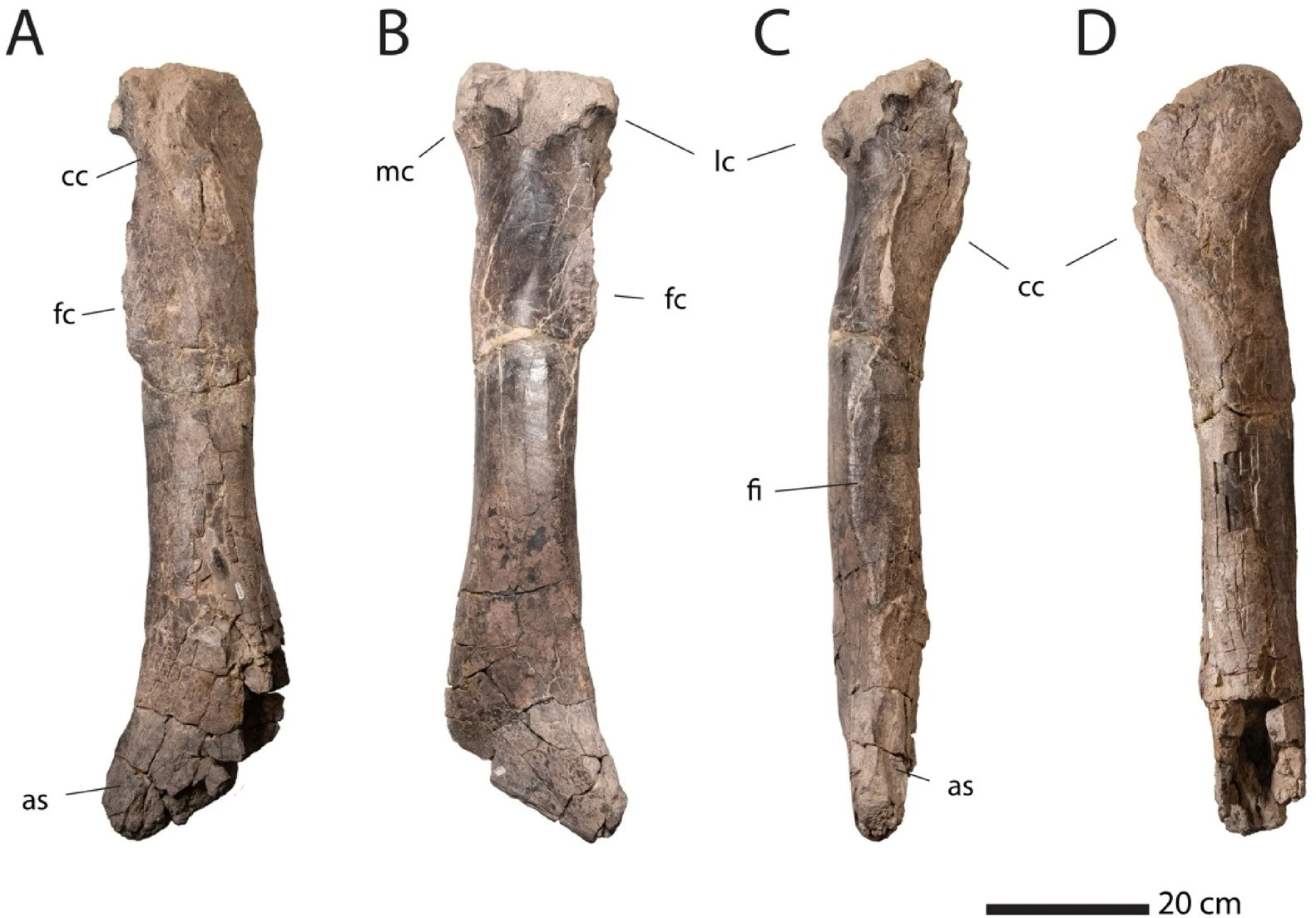
The research article highlights that this bone shares several anatomical traits with later tyrannosaurs, especially Tyrannosaurus rex. The fossil represents a surprisingly early example of a giant tyrannosaur, potentially reshaping prevailing theories about how large tyrannosaurs evolved.
“Regardless of which hypothesis is adopted, the unusual size of the Hunter Wash tyrannosaur is significant, as it represents a previously unrecognized appearance of large tyrannosaurids in the Late Campanian, and shows that they evolved earlier than previously believed,” the authors wrote.
Evaluating Three Possible Origins for the Fossil
The researchers investigated three potential identities for the shinbone before reaching their conclusion. One possibility was that it belonged to a notably large specimen of Bistahieversor sealeyi, a tyrannosaur species previously known from New Mexico.
Another theory proposed the bone belonged to a previously unrecognized giant tyrannosaur lineage. The final hypothesis suggested it was an early member of the Tyrannosaurini tribe, which eventually included Tyrannosaurus rex and its Asian counterparts.
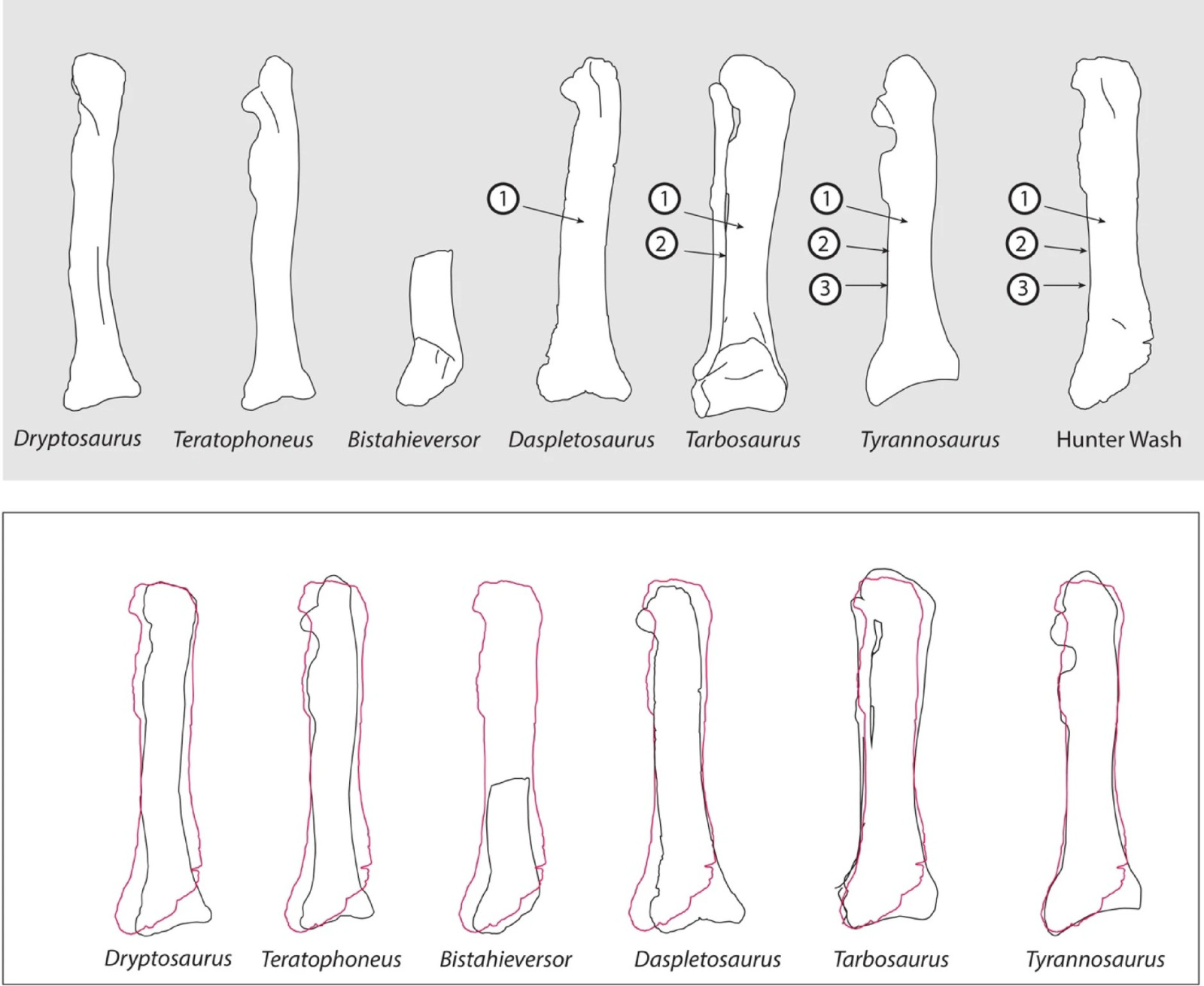
After detailed fossil comparisons and phylogenetic analysis, the team favored the third interpretation. The specimen's features were more consistent with early tyrannosaurins than with other regional tyrannosaurs.
The authors emphasized that no matter the precise classification, the tibia confirms that giant tyrannosaurs appeared earlier in the fossil record than previously documented.
Supports the Hypothesis of a Southern Origin
The evolutionary roots of giant tyrannosaurs have been hotly debated. Some paleontologists argue these giants first evolved in Asia before migrating to North America, while others suggest southern Laramidia—the western landmass that divided prehistoric North America—as the place of origin.
The research team believes this New Mexico find supports the idea that large tyrannosaurs originated in southern Laramidia. Their findings underscore notable differences between dinosaur communities in the northern versus southern regions of Laramidia during the Late Cretaceous.
Scientists note that smaller tyrannosaurs like Albertosaurinae and Daspletosaurini generally inhabited northern zones, while enormous tyrannosaurins dominated southern areas. This newly discovered fossil fits within this biogeographic pattern.
- Categories:
- Science





0 comments
Sign in to Comment