
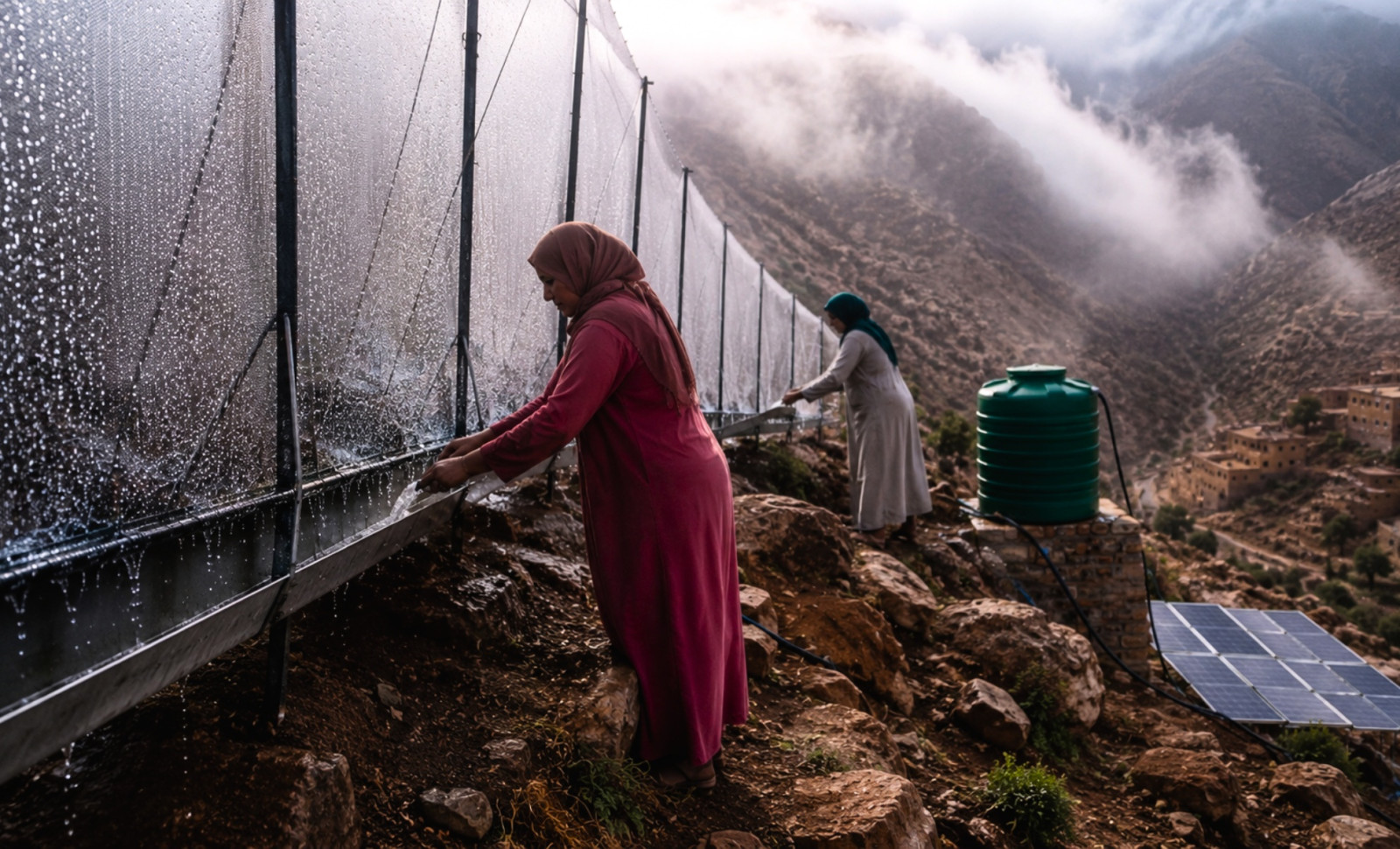
In Morocco’s southwest Aït Baâmrane area, women traditionally devoted several hours daily trekking to distant wells, carrying heavy five-gallon water containers—each weighing nearly 50 pounds—on their heads. This exhausting routine shaped family life and kept many girls away from schooling in this region bordering the Sahara.
Everything shifted with the introduction of large polymer fog-catching nets installed on Mt. Boutmezguida’s slopes.
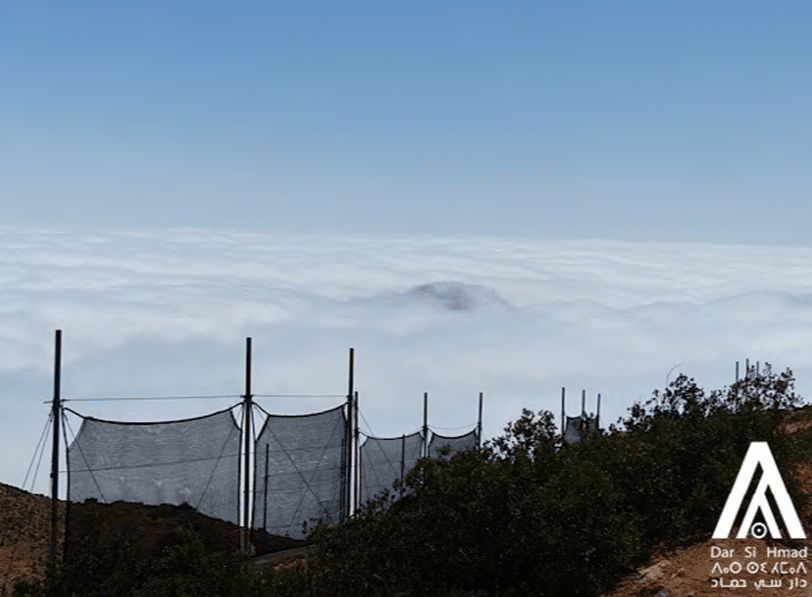
Situated over 4,000 feet high and mounted on steel frames, these nets capture moisture from Atlantic fog as it moves through the Anti-Atlas Mountains. The condensed water is funneled into storage tanks and travels through gravity-powered pipelines to village taps located over 10 kilometers away. This system operates without wells or pumps, relying solely on fog, elevation, and natural humidity.

In May 2026, the UNFCCC recognized this installation as an exemplary climate adaptation technique in an area severely impacted by ongoing desertification.
The Science Behind Capturing Fog
The concept of collecting water from fog, dating back to the 1500s as noted by Bartolomé de las Casas in his History of the Indies, has been refined through modern technology.
M.I.T. professor Gareth McKinley highlighted advancements: “By optimizing fiber size, hole dimensions, and fiber coatings, fog collection efficiency has improved about fivefold,” he shared with The New Yorker. The nets on Mt. Boutmezguida can yield up to 17 gallons per square yard of mesh over a full day.
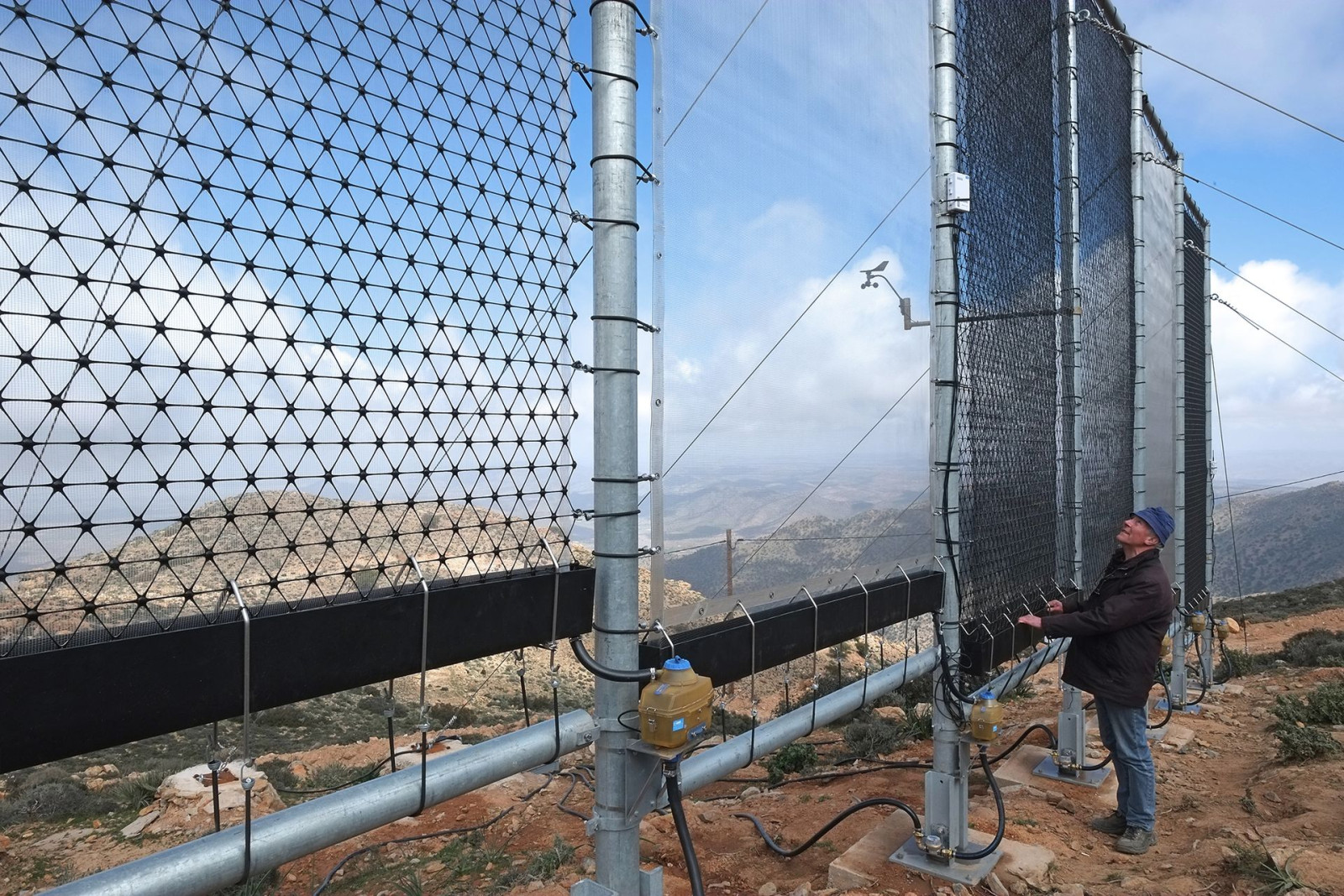
The system spans 600 square meters of netting. Solar panels power essential components, while tough materials ensure locals can maintain the infrastructure, improving on earlier fog collection trials in Eritrea, Chile, and Yemen.
From Mountain Fog to Household Water Access
The Moroccan NGO Dar Si Hmad, active since 2006, spearheaded this initiative to supply clean water to the arid and desert-encroached Aït Baâmrane tribal zone.
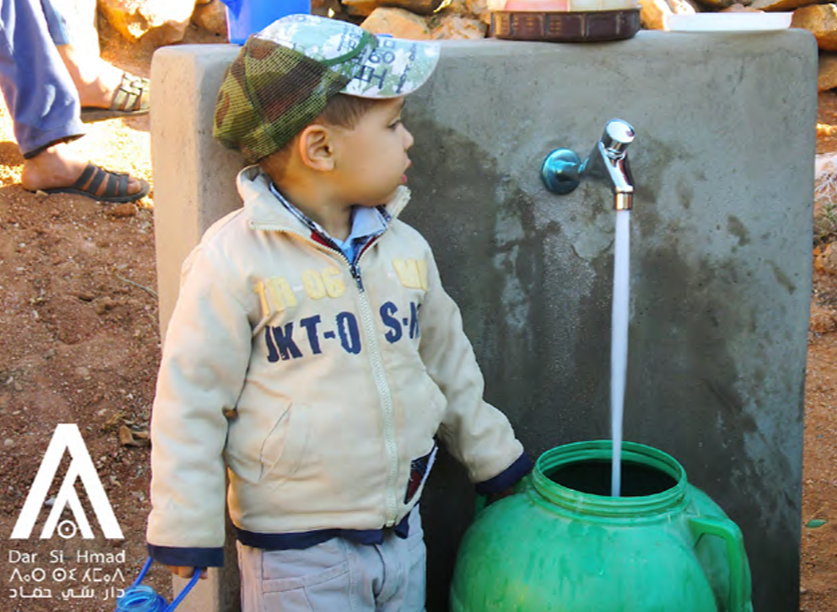
When water first flowed through the system, the community celebrated as taps inside homes were turned on. People drank what they call l’eau du brouillard — the fog water.
Jamila Bargach, Dar Si Hmad’s co-founder and director, described her experience: “When fog is abundant, I feel empowered, but on scarce days, it controls me.”
Today, a network extending over 10 kilometers pipes safe drinking water right to homes. Women no longer bear the daily burden of hauling heavy barrels, and girls now consistently attend school instead of fetching water.
Overcoming Doubt About Fog-Derived Water
Though functional, the pipeline met initial skepticism.
Some locals doubted water that never touched the earth could possess the necessary minerals or spiritual qualities required for drinking and rituals.
Fadma, a 52-year-old grandmother and early critic, feared the fog as something uncertain and ambiguous, according to Bargach. Over time, her perspective changed. Now, she trusts fog water and her granddaughters benefit from better educational opportunities.
The introduction of piped water also altered household power dynamics. Women lost some authority once solely tied to securing water. In response, Dar Si Hmad launched water education programs emphasizing literacy and conservation skills. These efforts address practical needs, enabling women to report issues like pipe leaks before they cause damage.
A 2022 analysis by the Reach Alliance at the University of Toronto reviewed this transition, underscoring the importance of local involvement, cultural respect, and female empowerment to the project’s success.
Advantages and Limitations of Fog Harvesting
The 2026 UNFCCC commendation has shone light again on fog harvesting as aquifers decline across North Africa and other coastal regions. The World Health Organization recommends approximately 20 gallons per person daily to support community needs, including agriculture and livestock. Modest fog capturing systems can meet this demand for small villages.
Across Africa, women collectively spend an estimated 40 billion hours each year collecting water. The Moroccan pipeline dramatically reduces this burden for its beneficiaries.
However, fog harvesting is location-specific, requiring steady fog, elevated terrain, and particular geography. For dry areas lacking foggy mountains, such as Saudi Arabia’s coastline, large investments in desalination—like a recent $7.2 billion plant on the Persian Gulf—remain necessary.
The network on Mt. Boutmezguida benefits from frequent Atlantic moisture trapped at altitude by the Anti-Atlas Mountains. This visually simple arrangement of polymer mesh stretched on poles displays how innovative yet low-tech solutions can tackle water scarcity where traditional methods, like wells or trucks, have failed.
- Categories:
- News







0 comments
Sign in to Comment