
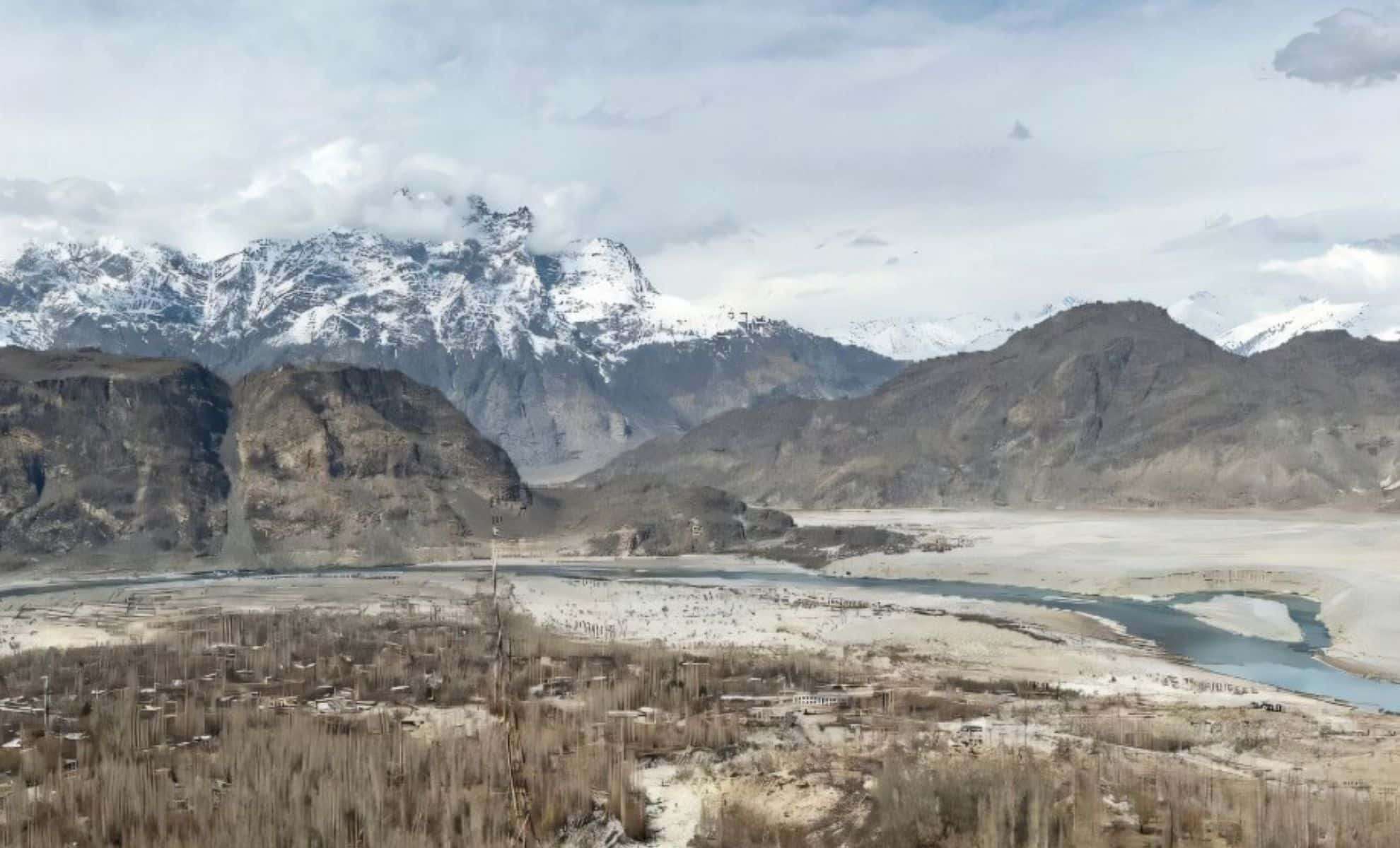
In the rugged Himalayan region of northern Pakistan, residents are tackling the pressing challenge of dwindling water supplies by crafting artificial ice formations known as “ice stupas.” These structures provide a dependable source of water for agriculture without the need for traditional dams or reservoirs, according to a report from Phys.org.
Borrowing ideas that originated in Ladakh, India, villagers divert stream water into the cold winter air where it freezes into tall, conical ice mounds. These engineered glaciers gradually thaw in spring, delivering valuable irrigation water during crucial growing periods.
Mechanics Behind the Ice Stupas
The artificial glacier technique, inspired by environmentalist Sonam Wangchuk, arrived in the region in 2018. Local communities adapted the method to fit their own high-altitude environment after learning about it online.

When temperatures plunge below freezing in winter, water is sprayed upwards from streams, solidifying into cone-shaped ice formations that mirror the design of Buddhist stupas. These ice towers serve as natural reservoirs, melting slowly as the weather warms, ensuring water is released when farmers need it most.
Professor Zakir Hussain Zakir from the University of Baltistan explains, “It’s necessary to project the water high enough that it freezes midair once temperatures are below zero, forming these distinctive ice mounds.”
Adapting Locally to a Changing World
With approximately 13,000 glaciers—the most outside polar regions—Northern Pakistan’s water systems are deeply impacted by climate change. Rising temperatures mean winters now see less snowfall, forcing agricultural communities to explore new solutions.
“Heavy snowfall, once constant from late October to early April, has diminished drastically in recent years,” notes Sher Muhammad, a glacier expert at ICIMOD.
More than 20 villages have embraced the ice stupa approach, benefitting over 16,000 people by reducing reliance on costly water infrastructure. In one recent season, eight stupas in Hussainabad captured close to 20 million liters of water.
Boosting Crop Yields and Agricultural Timelines
The arrival of ice stupas has transformed farming schedules. Farmers such as Ali Kazim and Muhammad Raza no longer struggle with delayed irrigation caused by slow glacier melts in summer.
“Planting now proceeds without water shortages,” Raza states. “Our crops are thriving thanks to the stupas.”
In Pari village, 26-year-old Bashir Ahmed is harvesting two to three times annually instead of only once. The increased and earlier water availability from the ice stupas supports growing diverse crops like potatoes, wheat, and barley multiple times throughout the year in an otherwise arid setting.
Community Innovation as Climate Adaptation
Pakistan’s temperature rise between 1981 and 2005 was double the global average, posing serious risks to its 240 million predominantly arid country residents who rely heavily on shared water sources.
The GLOF-2 initiative, a collaboration between the United Nations and Pakistan, backs ice stupa projects as cost-efficient, grassroots climate adaptation techniques.
“Climate change affects everyone, regardless of status or location,” reflects 24-year-old local resident Yasir Parvi. “We in our village chose to embrace the opportunity ice stupas present.”
These human-crafted glaciers, combining simplicity and local knowledge, offer a promising template for other mountainous areas confronting water shortages intensified by global warming.
- Categories:
- News












0 comments
Sign in to Comment